Locus Biosciences, Inc., Morrisville, North Carolina, USA.
Department of Population Health and Pathobiology, College of Veterinary Medicine, North Carolina State University, Raleigh, North Carolina, USA.
mBio. 2020 Mar 10;11(2):e00019-20. doi: 10.1128/mBio.00019-20.
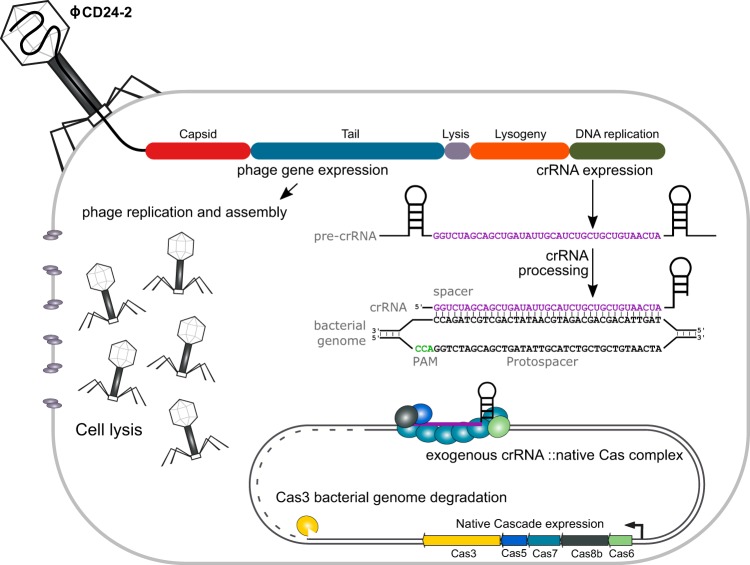
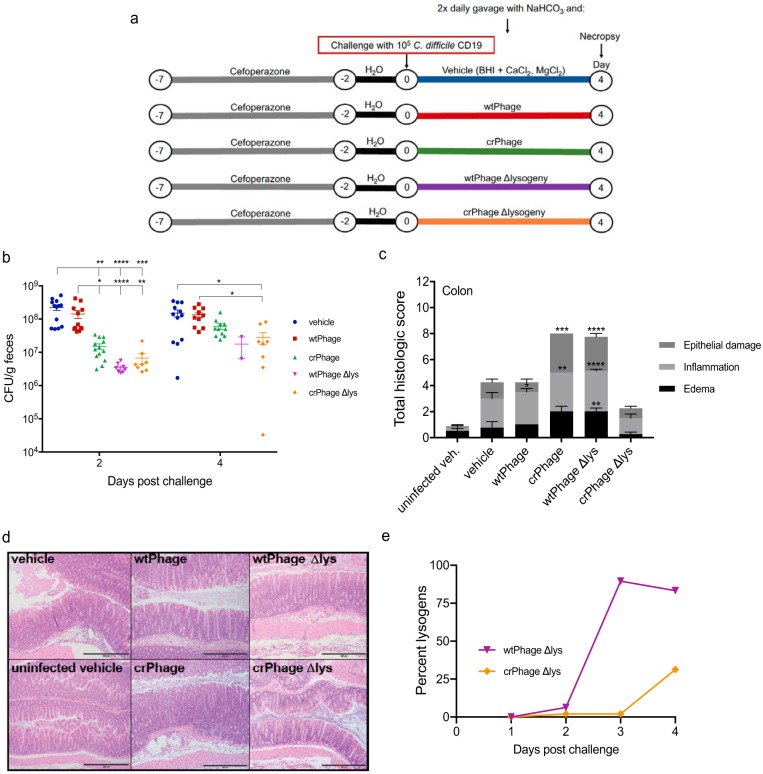
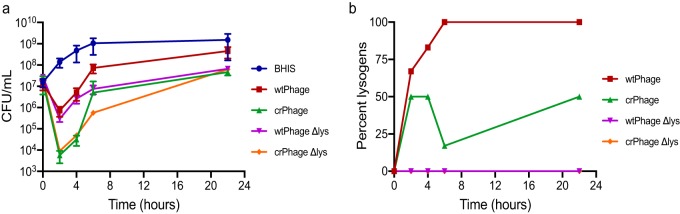
is an important nosocomial pathogen that causes approximately 500,000 cases of infection (CDI) and 29,000 deaths annually in the United States. Antibiotic use is a major risk factor for CDI because broad-spectrum antimicrobials disrupt the indigenous gut microbiota, decreasing colonization resistance against Vancomycin is the standard of care for the treatment of CDI, likely contributing to the high recurrence rates due to the continued disruption of the gut microbiota. Thus, there is an urgent need for the development of novel therapeutics that can prevent and treat CDI and precisely target the pathogen without disrupting the gut microbiota. Here, we show that the endogenous type I-B CRISPR-Cas system in can be repurposed as an antimicrobial agent by the expression of a self-targeting CRISPR that redirects endogenous CRISPR-Cas3 activity against the bacterial chromosome. We demonstrate that a recombinant bacteriophage expressing bacterial genome-targeting CRISPR RNAs is significantly more effective than its wild-type parent bacteriophage at killing both and in a mouse model of CDI. We also report that conversion of the phage from temperate to obligately lytic is feasible and contributes to the therapeutic suitability of intrinsic phages, despite the specific challenges encountered in the disease phenotypes of phage-treated animals. Our findings suggest that phage-delivered programmable CRISPR therapeutics have the potential to leverage the specificity and apparent safety of phage therapies and improve their potency and reliability for eradicating specific bacterial species within complex communities, offering a novel mechanism to treat pathogenic and/or multidrug-resistant organisms. is a bacterial pathogen responsible for significant morbidity and mortality across the globe. Current therapies based on broad-spectrum antibiotics have some clinical success, but approximately 30% of patients have relapses, presumably due to the continued perturbation to the gut microbiota. Here, we show that phages can be engineered with type I CRISPR-Cas systems and modified to reduce lysogeny and to enable the specific and efficient targeting and killing of and Additional genetic engineering to disrupt phage modulation of toxin expression by lysogeny or other mechanisms would be required to advance a CRISPR-enhanced phage antimicrobial for toward clinical application. These findings provide evidence into how phage can be combined with CRISPR-based targeting to develop novel therapies and modulate microbiomes associated with health and disease.
艰难梭菌是一种重要的医院获得性病原体,每年在美国导致约 500,000 例艰难梭菌感染 (CDI) 和 29,000 例死亡。抗生素的使用是 CDI 的一个主要危险因素,因为广谱抗生素会破坏肠道固有微生物群,降低定植抵抗。万古霉素是 CDI 治疗的标准护理方法,这可能导致由于肠道微生物群的持续破坏而导致高复发率。因此,迫切需要开发新型疗法,可以预防和治疗 CDI,并在不破坏肠道微生物群的情况下精确靶向病原体。在这里,我们表明, 内源性 I-B 型 CRISPR-Cas 系统可以通过表达靶向自身的 CRISPR 来重新用作抗菌剂,该 CRISPR 将内源性 CRISPR-Cas3 活性重定向到细菌染色体上。我们证明,表达靶向细菌基因组的 CRISPR RNA 的重组噬菌体比其野生型亲代噬菌体更有效地杀死 和 在 CDI 小鼠模型中。我们还报告说,尽管在噬菌体处理动物的疾病表型中遇到了特定的挑战,但将噬菌体从温和型转换为强制性裂解型是可行的,并有助于内在噬菌体的治疗适用性。我们的研究结果表明,噬菌体递送的可编程 CRISPR 疗法有可能利用噬菌体疗法的特异性和明显安全性,并提高其针对复杂群落中特定细菌物种的根除能力和可靠性,为治疗致病性和/或多药耐药性生物体提供了一种新的机制。 是一种导致全球发病率和死亡率的细菌病原体。目前基于广谱抗生素的治疗方法取得了一定的临床成功,但约 30%的患者会复发,这可能是由于肠道微生物群的持续失调。在这里,我们表明可以用 I 型 CRISPR-Cas 系统对噬菌体进行工程改造,并对其进行修饰以减少溶原性并实现对 和 的特异性和高效靶向杀伤。需要进一步的遗传工程改造来破坏溶原性或其他机制对噬菌体调节毒素表达的调制,以将增强 CRISPR 的噬菌体抗菌剂推进到用于 的临床应用。这些发现为噬菌体如何与基于 CRISPR 的靶向结合以开发新型疗法和调节与健康和疾病相关的微生物组提供了证据。