• 文献检索
  • 文档翻译
  • 深度研究
  • 学术资讯
  • Suppr Zotero 插件Zotero 插件
  • 邀请有礼
  • 套餐&价格
  • 历史记录
应用&插件
Suppr Zotero 插件Zotero 插件浏览器插件Mac 客户端Windows 客户端微信小程序
定价
高级版会员购买积分包购买API积分包
服务
文献检索文档翻译深度研究API 文档MCP 服务
关于我们
关于 Suppr公司介绍联系我们用户协议隐私条款
关注我们

Suppr 超能文献

核心技术专利:CN118964589B侵权必究
粤ICP备2023148730 号-1Suppr @ 2026

文献检索

告别复杂PubMed语法,用中文像聊天一样搜索,搜遍4000万医学文献。AI智能推荐,让科研检索更轻松。

立即免费搜索

文件翻译

保留排版,准确专业,支持PDF/Word/PPT等文件格式,支持 12+语言互译。

免费翻译文档

深度研究

AI帮你快速写综述,25分钟生成高质量综述,智能提取关键信息,辅助科研写作。

立即免费体验

生物对流纳米流体在两个可伸缩旋转盘之间的流动中的熵产生。

Entropy generation in bioconvection nanofluid flow between two stretchable rotating disks.

机构信息

Department of Mathematics, Abdul Wali Khan University, Mardan, 23200, Khyber Pakhtunkhwa, Pakistan.

Department of Basic Sciences and Islamiyat, University of Engineering & Technology, Peshawar, 25000, Khyber Pakhtunkhwa, Pakistan.

出版信息

Sci Rep. 2020 Mar 10;10(1):4448. doi: 10.1038/s41598-020-61172-2.

DOI:10.1038/s41598-020-61172-2
PMID:32157121
原文链接:https://pmc.ncbi.nlm.nih.gov/articles/PMC7064608/
Abstract

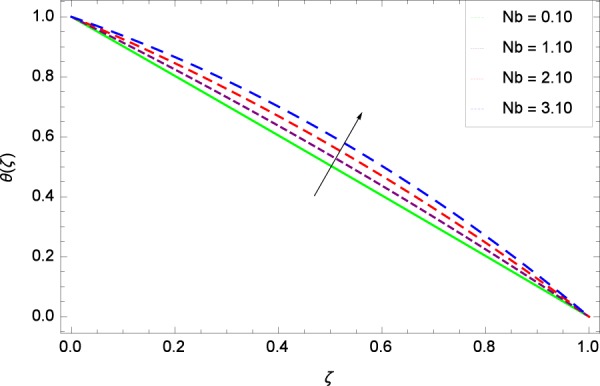
Buongiorno's nanofluid model is followed to study the bioconvection in two stretchable rotating disks with entropy generation. Similarity transformations are used to handle the problem equations for non-dimensionality. For the simulation of the modeled equations, Homotopy Analysis Method is applied. The biothermal system is explored for all the embedded parameters whose effects are shown through different graphs. There exists interesting results due to the effects of different parameters on different profiles. Radial velocity decreases with increasing stretching and magnetic field parameters. Temperature increases with Brownian motion and thermophoresis parameters. Nanoparticles concentration decreases on increasing Lewis number and thermophoresis parameter while motile gyrotactic microorganisms profile increases with increasing Lewis and Peclet numbers. Convergence of the solution is found and good agreement is obtained when the results are compared with published work.

摘要

本文采用布昂吉奥诺的纳米流体模型研究了两个可伸缩旋转盘内的生物对流及其熵产生。相似变换被用于对无量纲问题方程进行处理。同伦分析方法被应用于模拟方程的求解。对所有嵌入参数进行了生物热系统的模拟,通过不同的图形展示了它们的影响。由于不同参数对不同分布的影响,存在着有趣的结果。随着拉伸和磁场参数的增加,径向速度减小。随着布朗运动和热泳参数的增加,温度升高。随着刘易斯数和热泳参数的增加,纳米颗粒浓度减小,而游动旋毛虫微生物的分布随着刘易斯数和佩克莱特数的增加而增加。当将结果与已发表的工作进行比较时,发现了解的收敛性并获得了很好的一致性。
https://cdn.ncbi.nlm.nih.gov/pmc/blobs/e866/7064608/aa528f3c5204/41598_2020_61172_Fig39_HTML.jpg
https://cdn.ncbi.nlm.nih.gov/pmc/blobs/e866/7064608/5f228e35a76b/41598_2020_61172_Fig1_HTML.jpg
https://cdn.ncbi.nlm.nih.gov/pmc/blobs/e866/7064608/aae920434c22/41598_2020_61172_Fig2_HTML.jpg
https://cdn.ncbi.nlm.nih.gov/pmc/blobs/e866/7064608/e6e2aa17e1ba/41598_2020_61172_Fig3_HTML.jpg
https://cdn.ncbi.nlm.nih.gov/pmc/blobs/e866/7064608/90e3cbb2289b/41598_2020_61172_Fig4_HTML.jpg
https://cdn.ncbi.nlm.nih.gov/pmc/blobs/e866/7064608/9ca4c36e8467/41598_2020_61172_Fig5_HTML.jpg
https://cdn.ncbi.nlm.nih.gov/pmc/blobs/e866/7064608/a6664f4a9953/41598_2020_61172_Fig6_HTML.jpg
https://cdn.ncbi.nlm.nih.gov/pmc/blobs/e866/7064608/ecdf854ff178/41598_2020_61172_Fig7_HTML.jpg
https://cdn.ncbi.nlm.nih.gov/pmc/blobs/e866/7064608/41b17b0b54b9/41598_2020_61172_Fig8_HTML.jpg
https://cdn.ncbi.nlm.nih.gov/pmc/blobs/e866/7064608/95e51d5024ba/41598_2020_61172_Fig9_HTML.jpg
https://cdn.ncbi.nlm.nih.gov/pmc/blobs/e866/7064608/750e5ded41bc/41598_2020_61172_Fig10_HTML.jpg
https://cdn.ncbi.nlm.nih.gov/pmc/blobs/e866/7064608/2ab614b2539c/41598_2020_61172_Fig11_HTML.jpg
https://cdn.ncbi.nlm.nih.gov/pmc/blobs/e866/7064608/db5c19d9fb82/41598_2020_61172_Fig12_HTML.jpg
https://cdn.ncbi.nlm.nih.gov/pmc/blobs/e866/7064608/156615adf7b1/41598_2020_61172_Fig13_HTML.jpg
https://cdn.ncbi.nlm.nih.gov/pmc/blobs/e866/7064608/55a54c28ac16/41598_2020_61172_Fig14_HTML.jpg
https://cdn.ncbi.nlm.nih.gov/pmc/blobs/e866/7064608/b11c13bc0127/41598_2020_61172_Fig15_HTML.jpg
https://cdn.ncbi.nlm.nih.gov/pmc/blobs/e866/7064608/ad30af1808f6/41598_2020_61172_Fig16_HTML.jpg
https://cdn.ncbi.nlm.nih.gov/pmc/blobs/e866/7064608/c564e0d94cd7/41598_2020_61172_Fig17_HTML.jpg
https://cdn.ncbi.nlm.nih.gov/pmc/blobs/e866/7064608/074a07a726ea/41598_2020_61172_Fig18_HTML.jpg
https://cdn.ncbi.nlm.nih.gov/pmc/blobs/e866/7064608/cd5b1fcc20be/41598_2020_61172_Fig19_HTML.jpg
https://cdn.ncbi.nlm.nih.gov/pmc/blobs/e866/7064608/14e262e66e8e/41598_2020_61172_Fig20_HTML.jpg
https://cdn.ncbi.nlm.nih.gov/pmc/blobs/e866/7064608/8063b7db1838/41598_2020_61172_Fig21_HTML.jpg
https://cdn.ncbi.nlm.nih.gov/pmc/blobs/e866/7064608/75adb49aec80/41598_2020_61172_Fig22_HTML.jpg
https://cdn.ncbi.nlm.nih.gov/pmc/blobs/e866/7064608/1ae1e80d9874/41598_2020_61172_Fig23_HTML.jpg
https://cdn.ncbi.nlm.nih.gov/pmc/blobs/e866/7064608/976db24633df/41598_2020_61172_Fig24_HTML.jpg
https://cdn.ncbi.nlm.nih.gov/pmc/blobs/e866/7064608/6057bcc63e6d/41598_2020_61172_Fig25_HTML.jpg
https://cdn.ncbi.nlm.nih.gov/pmc/blobs/e866/7064608/dd35331462d2/41598_2020_61172_Fig26_HTML.jpg
https://cdn.ncbi.nlm.nih.gov/pmc/blobs/e866/7064608/c96553cd5c32/41598_2020_61172_Fig27_HTML.jpg
https://cdn.ncbi.nlm.nih.gov/pmc/blobs/e866/7064608/08a9357d32ae/41598_2020_61172_Fig28_HTML.jpg
https://cdn.ncbi.nlm.nih.gov/pmc/blobs/e866/7064608/8b8446f51bc3/41598_2020_61172_Fig29_HTML.jpg
https://cdn.ncbi.nlm.nih.gov/pmc/blobs/e866/7064608/f4044ff336fa/41598_2020_61172_Fig30_HTML.jpg
https://cdn.ncbi.nlm.nih.gov/pmc/blobs/e866/7064608/1477d219361a/41598_2020_61172_Fig31_HTML.jpg
https://cdn.ncbi.nlm.nih.gov/pmc/blobs/e866/7064608/061d5f7dc093/41598_2020_61172_Fig32_HTML.jpg
https://cdn.ncbi.nlm.nih.gov/pmc/blobs/e866/7064608/ab5a983a4472/41598_2020_61172_Fig33_HTML.jpg
https://cdn.ncbi.nlm.nih.gov/pmc/blobs/e866/7064608/caf9113f16de/41598_2020_61172_Fig34_HTML.jpg
https://cdn.ncbi.nlm.nih.gov/pmc/blobs/e866/7064608/247945148b60/41598_2020_61172_Fig35_HTML.jpg
https://cdn.ncbi.nlm.nih.gov/pmc/blobs/e866/7064608/59f4727bf91a/41598_2020_61172_Fig37_HTML.jpg
https://cdn.ncbi.nlm.nih.gov/pmc/blobs/e866/7064608/02407f2a2cd0/41598_2020_61172_Fig38_HTML.jpg
https://cdn.ncbi.nlm.nih.gov/pmc/blobs/e866/7064608/aa528f3c5204/41598_2020_61172_Fig39_HTML.jpg
https://cdn.ncbi.nlm.nih.gov/pmc/blobs/e866/7064608/5f228e35a76b/41598_2020_61172_Fig1_HTML.jpg
https://cdn.ncbi.nlm.nih.gov/pmc/blobs/e866/7064608/aae920434c22/41598_2020_61172_Fig2_HTML.jpg
https://cdn.ncbi.nlm.nih.gov/pmc/blobs/e866/7064608/e6e2aa17e1ba/41598_2020_61172_Fig3_HTML.jpg
https://cdn.ncbi.nlm.nih.gov/pmc/blobs/e866/7064608/90e3cbb2289b/41598_2020_61172_Fig4_HTML.jpg
https://cdn.ncbi.nlm.nih.gov/pmc/blobs/e866/7064608/9ca4c36e8467/41598_2020_61172_Fig5_HTML.jpg
https://cdn.ncbi.nlm.nih.gov/pmc/blobs/e866/7064608/a6664f4a9953/41598_2020_61172_Fig6_HTML.jpg
https://cdn.ncbi.nlm.nih.gov/pmc/blobs/e866/7064608/ecdf854ff178/41598_2020_61172_Fig7_HTML.jpg
https://cdn.ncbi.nlm.nih.gov/pmc/blobs/e866/7064608/41b17b0b54b9/41598_2020_61172_Fig8_HTML.jpg
https://cdn.ncbi.nlm.nih.gov/pmc/blobs/e866/7064608/95e51d5024ba/41598_2020_61172_Fig9_HTML.jpg
https://cdn.ncbi.nlm.nih.gov/pmc/blobs/e866/7064608/750e5ded41bc/41598_2020_61172_Fig10_HTML.jpg
https://cdn.ncbi.nlm.nih.gov/pmc/blobs/e866/7064608/2ab614b2539c/41598_2020_61172_Fig11_HTML.jpg
https://cdn.ncbi.nlm.nih.gov/pmc/blobs/e866/7064608/db5c19d9fb82/41598_2020_61172_Fig12_HTML.jpg
https://cdn.ncbi.nlm.nih.gov/pmc/blobs/e866/7064608/156615adf7b1/41598_2020_61172_Fig13_HTML.jpg
https://cdn.ncbi.nlm.nih.gov/pmc/blobs/e866/7064608/55a54c28ac16/41598_2020_61172_Fig14_HTML.jpg
https://cdn.ncbi.nlm.nih.gov/pmc/blobs/e866/7064608/b11c13bc0127/41598_2020_61172_Fig15_HTML.jpg
https://cdn.ncbi.nlm.nih.gov/pmc/blobs/e866/7064608/ad30af1808f6/41598_2020_61172_Fig16_HTML.jpg
https://cdn.ncbi.nlm.nih.gov/pmc/blobs/e866/7064608/c564e0d94cd7/41598_2020_61172_Fig17_HTML.jpg
https://cdn.ncbi.nlm.nih.gov/pmc/blobs/e866/7064608/074a07a726ea/41598_2020_61172_Fig18_HTML.jpg
https://cdn.ncbi.nlm.nih.gov/pmc/blobs/e866/7064608/cd5b1fcc20be/41598_2020_61172_Fig19_HTML.jpg
https://cdn.ncbi.nlm.nih.gov/pmc/blobs/e866/7064608/14e262e66e8e/41598_2020_61172_Fig20_HTML.jpg
https://cdn.ncbi.nlm.nih.gov/pmc/blobs/e866/7064608/8063b7db1838/41598_2020_61172_Fig21_HTML.jpg
https://cdn.ncbi.nlm.nih.gov/pmc/blobs/e866/7064608/75adb49aec80/41598_2020_61172_Fig22_HTML.jpg
https://cdn.ncbi.nlm.nih.gov/pmc/blobs/e866/7064608/1ae1e80d9874/41598_2020_61172_Fig23_HTML.jpg
https://cdn.ncbi.nlm.nih.gov/pmc/blobs/e866/7064608/976db24633df/41598_2020_61172_Fig24_HTML.jpg
https://cdn.ncbi.nlm.nih.gov/pmc/blobs/e866/7064608/6057bcc63e6d/41598_2020_61172_Fig25_HTML.jpg
https://cdn.ncbi.nlm.nih.gov/pmc/blobs/e866/7064608/dd35331462d2/41598_2020_61172_Fig26_HTML.jpg
https://cdn.ncbi.nlm.nih.gov/pmc/blobs/e866/7064608/c96553cd5c32/41598_2020_61172_Fig27_HTML.jpg
https://cdn.ncbi.nlm.nih.gov/pmc/blobs/e866/7064608/08a9357d32ae/41598_2020_61172_Fig28_HTML.jpg
https://cdn.ncbi.nlm.nih.gov/pmc/blobs/e866/7064608/8b8446f51bc3/41598_2020_61172_Fig29_HTML.jpg
https://cdn.ncbi.nlm.nih.gov/pmc/blobs/e866/7064608/f4044ff336fa/41598_2020_61172_Fig30_HTML.jpg
https://cdn.ncbi.nlm.nih.gov/pmc/blobs/e866/7064608/1477d219361a/41598_2020_61172_Fig31_HTML.jpg
https://cdn.ncbi.nlm.nih.gov/pmc/blobs/e866/7064608/061d5f7dc093/41598_2020_61172_Fig32_HTML.jpg
https://cdn.ncbi.nlm.nih.gov/pmc/blobs/e866/7064608/ab5a983a4472/41598_2020_61172_Fig33_HTML.jpg
https://cdn.ncbi.nlm.nih.gov/pmc/blobs/e866/7064608/caf9113f16de/41598_2020_61172_Fig34_HTML.jpg
https://cdn.ncbi.nlm.nih.gov/pmc/blobs/e866/7064608/247945148b60/41598_2020_61172_Fig35_HTML.jpg
https://cdn.ncbi.nlm.nih.gov/pmc/blobs/e866/7064608/59f4727bf91a/41598_2020_61172_Fig37_HTML.jpg
https://cdn.ncbi.nlm.nih.gov/pmc/blobs/e866/7064608/02407f2a2cd0/41598_2020_61172_Fig38_HTML.jpg
https://cdn.ncbi.nlm.nih.gov/pmc/blobs/e866/7064608/aa528f3c5204/41598_2020_61172_Fig39_HTML.jpg

相似文献

1
Entropy generation in bioconvection nanofluid flow between two stretchable rotating disks.生物对流纳米流体在两个可伸缩旋转盘之间的流动中的熵产生。
Sci Rep. 2020 Mar 10;10(1):4448. doi: 10.1038/s41598-020-61172-2.
2
Numerical study of nano-biofilm stagnation flow from a nonlinear stretching/shrinking surface with variable nanofluid and bioconvection transport properties.纳米-生物膜停流的数值研究:来自非线性拉伸/收缩表面的流动,同时考虑可变的纳米流体和生物对流传输特性。
Sci Rep. 2021 May 10;11(1):9877. doi: 10.1038/s41598-021-88935-9.
3
Computational optimization for the deposition of bioconvection thin Oldroyd-B nanofluid with entropy generation.生物对流薄 Oldroyd-B 纳米流体沉积的计算优化与熵产生。
Sci Rep. 2021 Jun 2;11(1):11641. doi: 10.1038/s41598-021-91041-5.
4
Exploring the nanomechanical concepts of development through recent updates in magnetically guided system.通过最新的磁引导系统研究发展的纳机械概念。
Sci Rep. 2021 Jun 30;11(1):13576. doi: 10.1038/s41598-021-92440-4.
5
Bio-convective and chemically reactive hybrid nanofluid flow upon a thin stirring needle with viscous dissipation.生物对流和化学反应混合纳米流体流经带有粘性耗散的薄搅拌针。
Sci Rep. 2021 Apr 13;11(1):8066. doi: 10.1038/s41598-021-86968-8.
6
Hall current effect in bioconvection Oldroyd-B nanofluid flow through a porous medium with Cattaneo-Christov heat and mass flux theory.基于卡塔尼奥-克里斯托夫热质通量理论的Oldroyd-B纳米流体在多孔介质中流动时的生物对流霍尔电流效应
Sci Rep. 2022 Nov 17;12(1):19821. doi: 10.1038/s41598-022-23932-0.
7
Numerical study for bioconvection peristaltic flow of Sisko nanofluid with Joule heating and thermal radiation.焦耳热和热辐射作用下西斯科纳米流体生物对流蠕动流的数值研究
Heliyon. 2023 Nov 22;9(12):e22505. doi: 10.1016/j.heliyon.2023.e22505. eCollection 2023 Dec.
8
Entropy generation in bioconvection hydromagnetic flow with gyrotactic motile microorganisms.具有趋旋光性运动微生物的生物对流磁流体流动中的熵产生
Nanoscale Adv. 2023 Aug 8;5(18):4863-4872. doi: 10.1039/d3na00338h. eCollection 2023 Sep 12.
9
Magneto-bioconvection flow of Casson nanofluid configured by a rotating disk in the presence of gyrotatic microorganisms and Joule heating.在存在旋转微生物和焦耳热的情况下,由旋转圆盘构成的Casson纳米流体的磁生物对流流动。
Heliyon. 2023 Jul 6;9(8):e18028. doi: 10.1016/j.heliyon.2023.e18028. eCollection 2023 Aug.
10
Chemically reactive bioconvection flow of tangent hyperbolic nanoliquid with gyrotactic microorganisms and nonlinear thermal radiation.具有趋旋光性微生物和非线性热辐射的正切双曲纳米流体的化学反应性生物对流流动
Heliyon. 2019 Dec 30;6(1):e03117. doi: 10.1016/j.heliyon.2019.e03117. eCollection 2020 Jan.

引用本文的文献

1
Non-similar bioconvective analysis of magnetized hybrid nanofluid ( + ) flow over exponential stretching surface.磁化混合纳米流体(+)在指数拉伸表面上流动的非相似生物对流分析。
Heliyon. 2024 Apr 2;10(9):e28993. doi: 10.1016/j.heliyon.2024.e28993. eCollection 2024 May 15.
2
Bioconvective flow of Maxwell nanoparticles with variable thermal conductivity and convective boundary conditions.具有可变热导率和对流边界条件的麦克斯韦纳米颗粒的生物对流流动。
Sci Rep. 2024 Jan 17;14(1):1480. doi: 10.1038/s41598-023-51113-0.
3
Investigating the effect of structural changes of two stretching disks on the dynamics of the MHD model.

本文引用的文献

1
Numerical simulation of oscillatory oblique stagnation point flow of a magneto micropolar nanofluid.磁微极纳米流体振荡斜驻点流动的数值模拟
RSC Adv. 2019 Feb 6;9(9):4751-4764. doi: 10.1039/c8ra09698h. eCollection 2019 Feb 5.
2
Entropy Generation in MHD Mixed Convection Non-Newtonian Second-Grade Nanoliquid Thin Film Flow through a Porous Medium with Chemical Reaction and Stratification.通过具有化学反应和分层的多孔介质的磁流体动力学混合对流非牛顿二级纳米流体薄膜流动中的熵产生
Entropy (Basel). 2019 Feb 1;21(2):139. doi: 10.3390/e21020139.
3
Second law analysis with effects of Arrhenius activation energy and binary chemical reaction on nanofluid flow.
研究两个拉伸盘的结构变化对磁流体动力学(MHD)模型动力学的影响。
Sci Rep. 2023 Dec 9;13(1):21833. doi: 10.1038/s41598-023-48988-4.
4
Numerical investigation of dusty tri-hybrid Ellis rotating nanofluid flow and thermal transportation over a stretchable Riga plate.含尘三元混合埃利斯旋转纳米流体在可拉伸里加板上流动与热传输的数值研究
Sci Rep. 2023 Aug 31;13(1):14272. doi: 10.1038/s41598-023-41141-1.
5
Significance of melting heat in bioconvection flow of micropolar nanofluid over an oscillating surface.微极纳米流体在振荡表面上生物对流流动中熔化热的意义。
Sci Rep. 2023 Jul 20;13(1):11692. doi: 10.1038/s41598-023-38361-w.
6
Numerical Study of the Electromagnetohydrodynamic Bioconvection Flow of Micropolar Nanofluid through a Stretching Sheet with Thermal Radiation and Stratification.通过具有热辐射和分层的拉伸片的微极纳米流体的电磁流体动力学生物对流流动的数值研究
ACS Omega. 2022 Nov 16;7(47):42733-42751. doi: 10.1021/acsomega.2c04145. eCollection 2022 Nov 29.
7
Computational Analysis for Bioconvection of Microorganisms in Prandtl Nanofluid Darcy-Forchheimer Flow across an Inclined Sheet.普朗特纳米流体达西-福希海默流动中微生物在倾斜平板上生物对流的计算分析
Nanomaterials (Basel). 2022 May 24;12(11):1791. doi: 10.3390/nano12111791.
8
Discovery of nanoscale sanal flow choking in cardiovascular system: exact prediction of the 3D boundary-layer-blockage factor in nanotubes.心血管系统中纳米级正弦流阻塞的发现:对纳米管中三维边界层阻塞因子的精确预测。
Sci Rep. 2021 Jul 29;11(1):15429. doi: 10.1038/s41598-021-94450-8.
9
Computational optimization for the deposition of bioconvection thin Oldroyd-B nanofluid with entropy generation.生物对流薄 Oldroyd-B 纳米流体沉积的计算优化与熵产生。
Sci Rep. 2021 Jun 2;11(1):11641. doi: 10.1038/s41598-021-91041-5.
10
Peristaltic channel flow and heat transfer of Carreau magneto hybrid nanofluid in the presence of homogeneous/heterogeneous reactions.均匀/非均匀反应存在下Carreau磁混合纳米流体的蠕动通道流动与传热
Sci Rep. 2020 Jul 13;10(1):11499. doi: 10.1038/s41598-020-68409-0.
考虑阿累尼乌斯活化能和二元化学反应对纳米流体流动影响的第二定律分析。
Sci Rep. 2020 Jan 27;10(1):1226. doi: 10.1038/s41598-020-57802-4.
4
On the convective heat and zero nanoparticle mass flux conditions in the flow of 3D MHD Couple Stress nanofluid over an exponentially stretched surface.关于三维磁流体动力学耦合应力纳米流体在指数拉伸表面流动中的对流热和零纳米颗粒质量通量条件。
Sci Rep. 2019 Jan 24;9(1):562. doi: 10.1038/s41598-018-37267-2.