College of Aeronautical Engineering, National University of Sciences and Technology (NUST), Sector H-12, Islamabad, 44000, Pakistan.
Department of Mathematics, Abdul Wali Khan University, Mardan, Khyber, Pakhtunkhwa, 23200, Pakistan.
Sci Rep. 2021 Apr 13;11(1):8066. doi: 10.1038/s41598-021-86968-8.
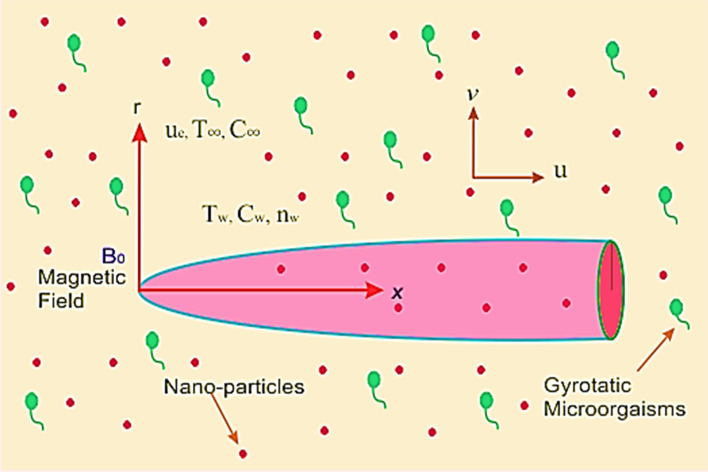
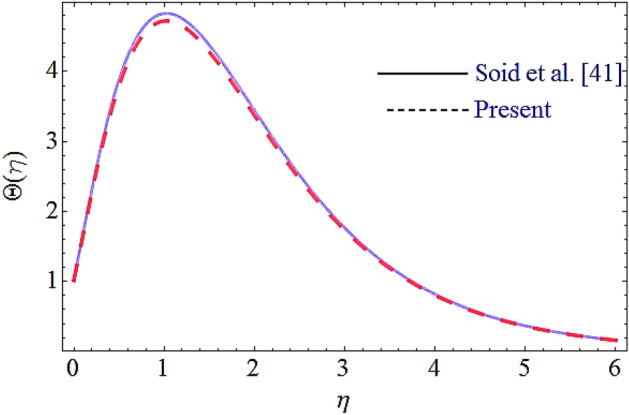
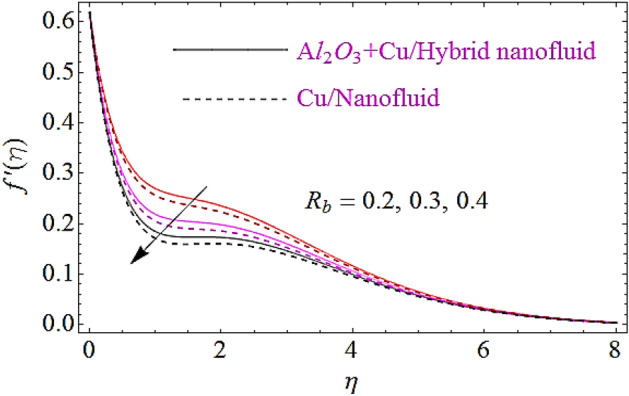
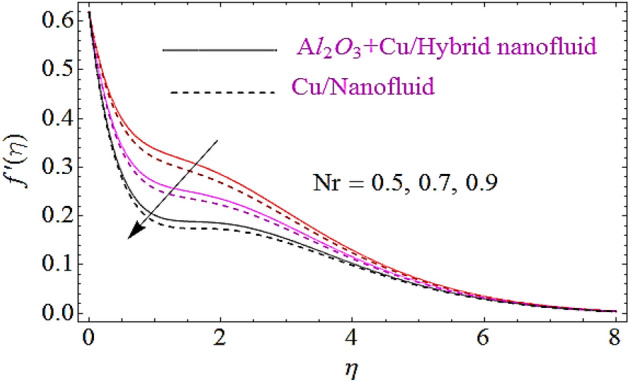
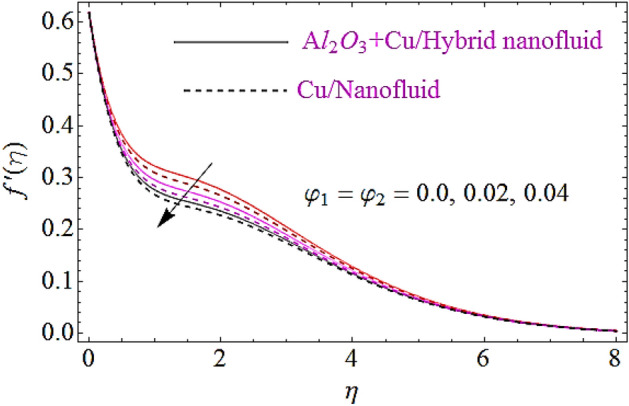
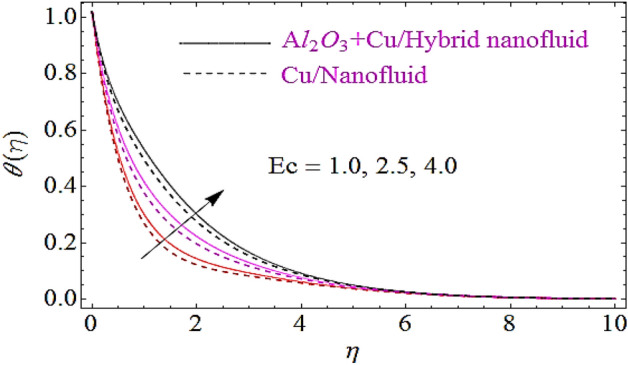
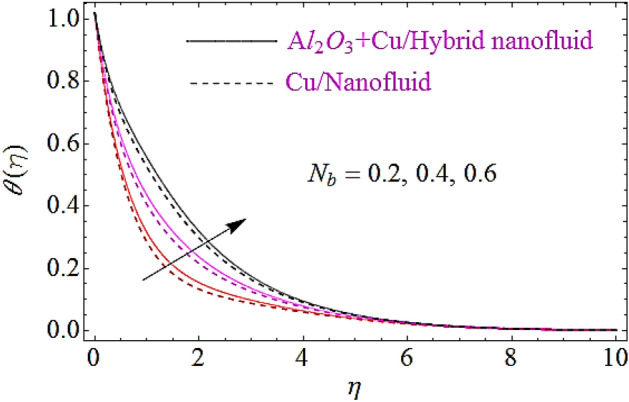
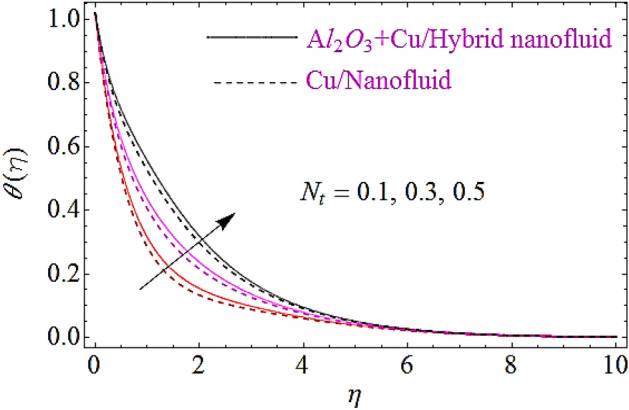
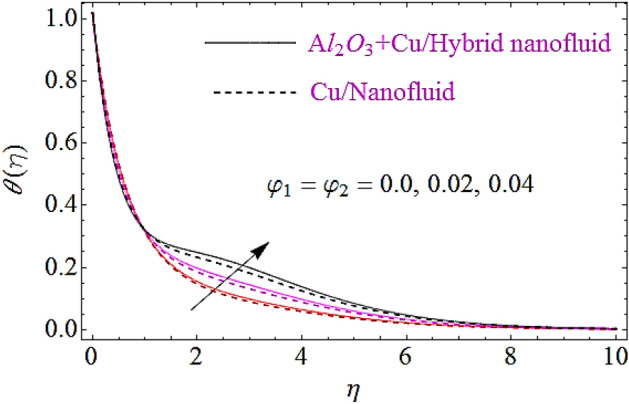
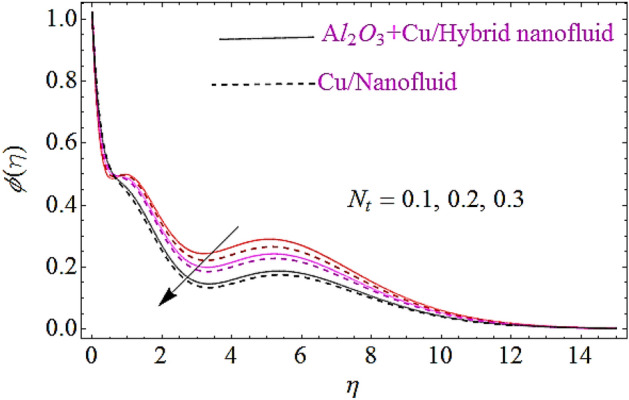
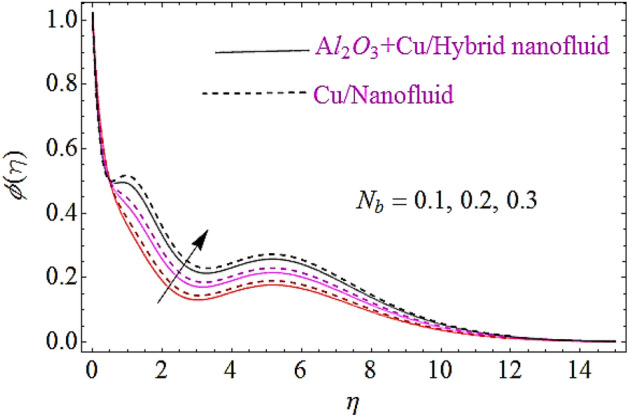
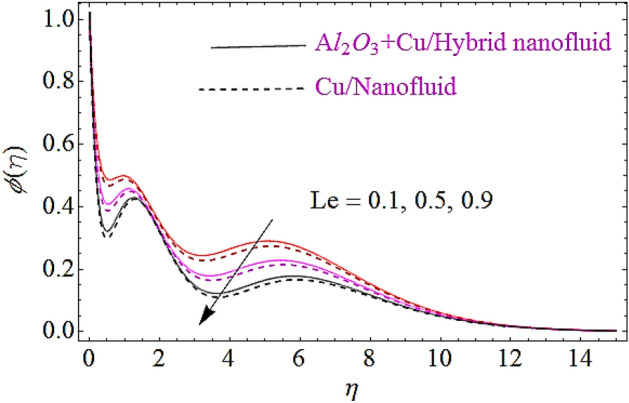
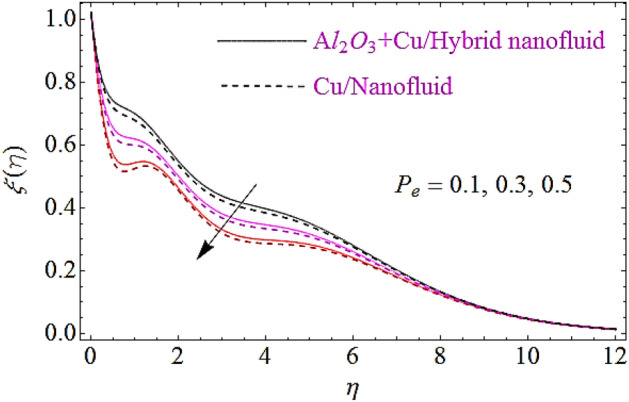
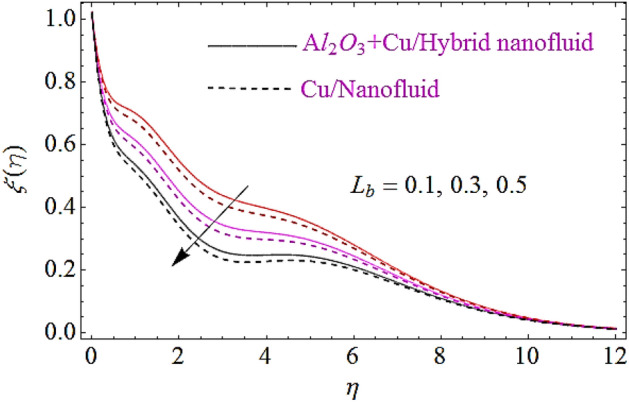
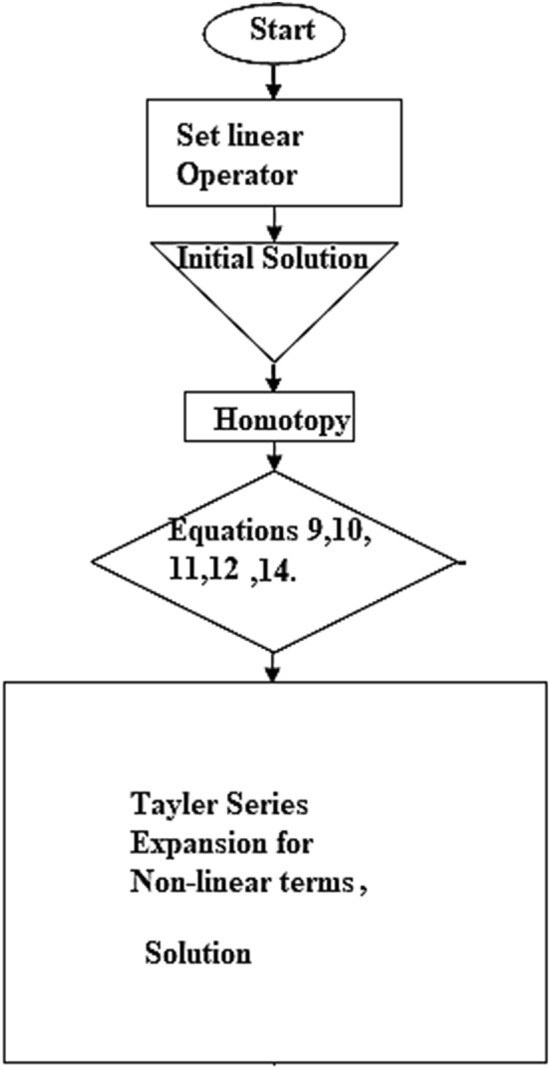
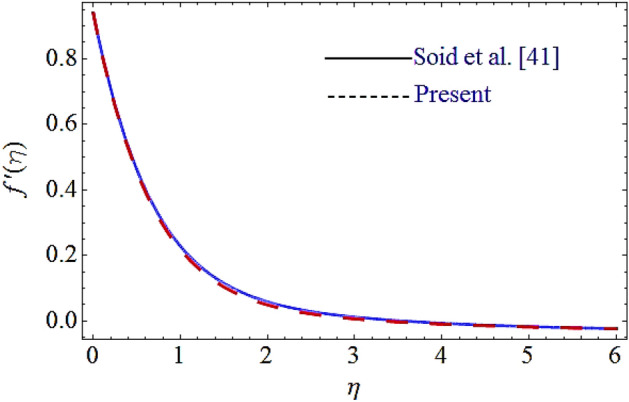
In this work, the thermal analysis for bio-convective hybrid nanofluid flowing upon a thin horizontally moving needle is carried out. The chemical reaction and viscous dissipation has also considered for flow system in the presence of microorganism. The hybrid nanoparticles comprising of Copper [Formula: see text] and Alumina [Formula: see text] are considered for current flow problem. Mathematically the flow problem is formulated by employing the famous Buongiorno's model that will also investigate the consequences of thermophoretic forces and Brownian motion upon flow system. Group of similar variables is used to transform the model equations into dimensionless form and have then solved analytically by homotopy analysis method (HAM). It has established in this work that, flow of fluid declines due to increase in bioconvection Rayleigh number, buoyancy ratio and volume fractions of nanoparticles. Thermal flow grows due to rise in Eckert number, Brownian, thermophoresis parameters and volume fraction of nanoparticles. Concentration profiles increase due to growth in Brownian motion parameter and reduces due to increase in thermophoresis parameter and Lewis number. Motile microorganism profile declines due to augmentation in Peclet and bioconvection Lewis numbers. Moreover, the percentage enhancement in the drag force and rate of heat transfer using conventional nanofluid and hybrid nanofluid are observed and discussed. The hybrid nanofluid increases the skin friction and heat transfer rate more rapidly and efficiently as compared to other traditional fluids. A comparison of the present study with the existing literature is also conducted with a closed agreement between both results for variations in thickness of the needle.
本文针对水平运动细针上的生物对流混合纳米流体进行了热分析。在微生物存在的情况下,还考虑了流动系统中的化学反应和粘性耗散。当前的流动问题考虑了由铜[化学式:见文本]和氧化铝[化学式:见文本]组成的混合纳米粒子。该流动问题通过采用著名的 Buongiorno 模型进行数学建模,该模型还将研究热泳力和布朗运动对流动系统的影响。相似变量组用于将模型方程转换为无量纲形式,并通过同伦分析方法(HAM)进行解析求解。结果表明,由于生物对流瑞利数、浮力比和纳米粒子体积分数的增加,流体的流动会减少。由于 Eckert 数、布朗、热泳参数和纳米粒子体积分数的增加,热流会增加。由于布朗运动参数的增加,浓度分布增加,而由于热泳参数和刘易斯数的增加,浓度分布减少。由于游动微生物的 Peclet 和生物对流刘易斯数的增加,微生物的分布减少。此外,还观察和讨论了使用传统纳米流体和混合纳米流体时阻力和传热速率的百分比增强。与其他传统流体相比,混合纳米流体更迅速有效地增加了摩擦阻力和传热速率。还对本研究与现有文献进行了比较,对于针的厚度变化,两者的结果之间存在紧密的一致性。