Cell Biology and Immunology Group, Wageningen University & Research, Wageningen, Netherlands.
Human and Animal Physiology Group, Wageningen University & Research, Wageningen, Netherlands.
Front Immunol. 2020 Feb 25;11:152. doi: 10.3389/fimmu.2020.00152. eCollection 2020.
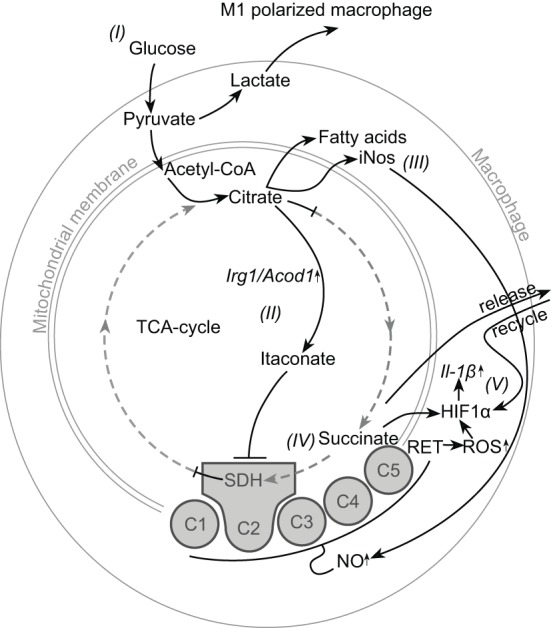
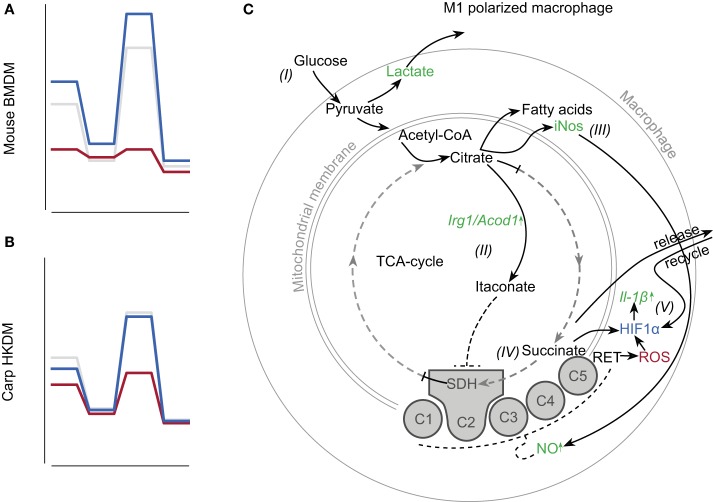
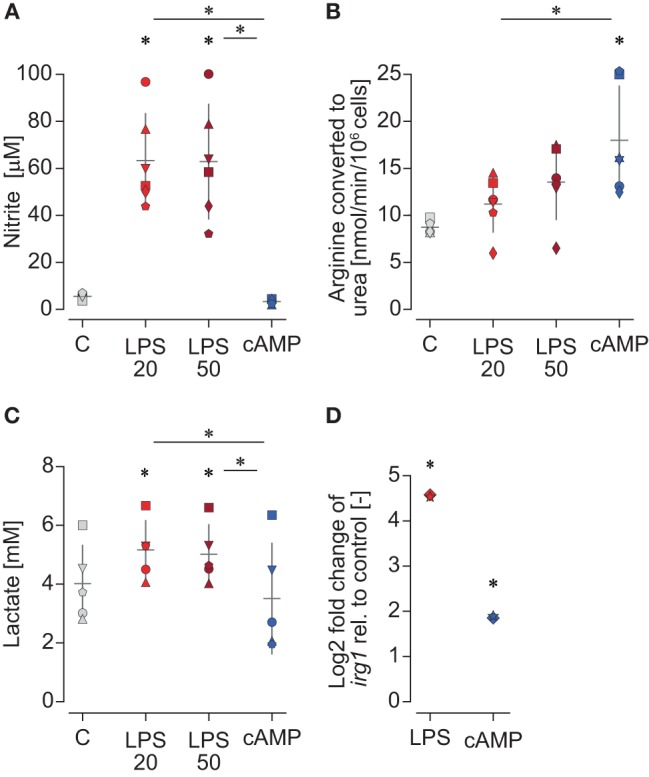
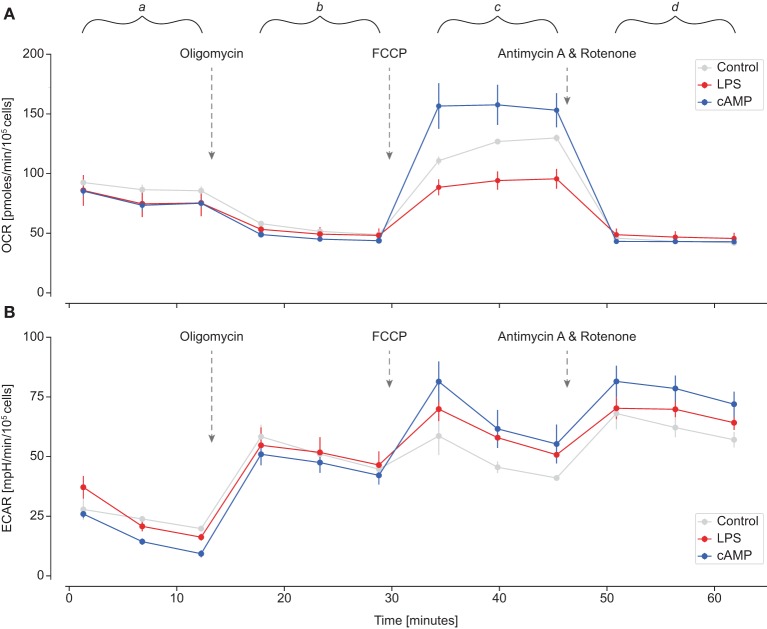
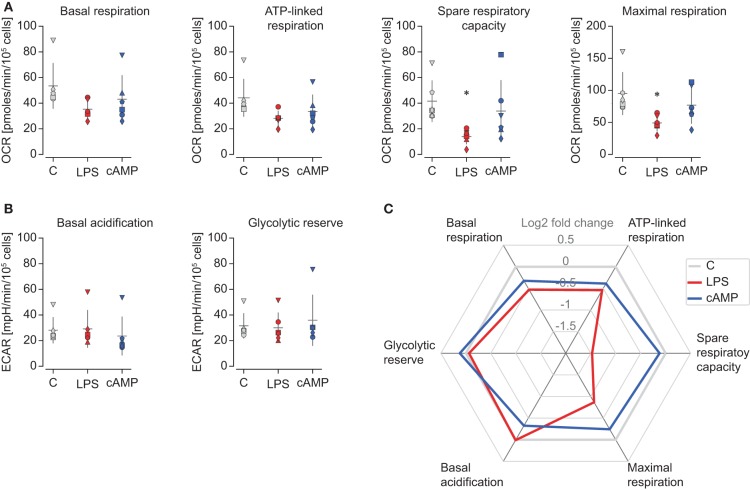
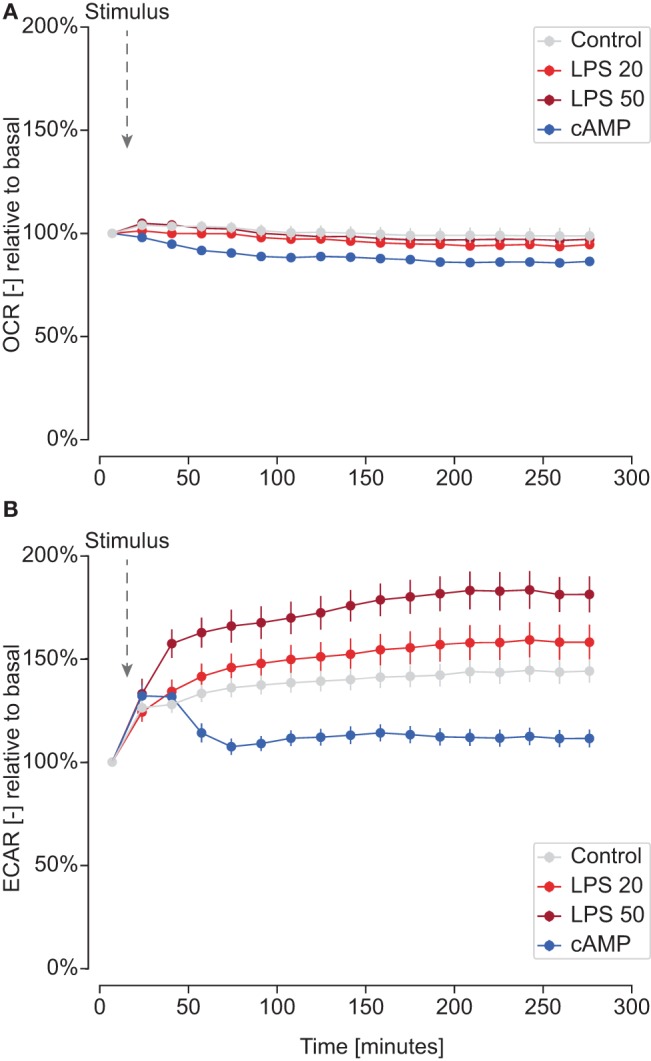
Macrophages play important roles in conditions ranging from host immune defense to tissue regeneration and polarize their functional phenotype accordingly. Next to differences in the use of L-arginine and the production of different cytokines, inflammatory M1 macrophages and anti-inflammatory M2 macrophages are also metabolically distinct. In mammals, M1 macrophages show metabolic reprogramming toward glycolysis, while M2 macrophages rely on oxidative phosphorylation to generate energy. The presence of polarized functional immune phenotypes conserved from mammals to fish led us to hypothesize that a similar metabolic reprogramming in polarized macrophages exists in carp. We studied mitochondrial function of M1 and M2 carp macrophages under basal and stressed conditions to determine oxidative capacity by real-time measurements of oxygen consumption and glycolytic capacity by measuring lactate-based acidification. In M1 macrophages, we found increased nitric oxide production and expression in addition to altered oxidative phosphorylation and glycolysis. In M2 macrophages, we found increased arginase activity, and both oxidative phosphorylation and glycolysis were similar to control macrophages. These results indicate that M1 and M2 carp macrophages show distinct metabolic signatures and indicate that metabolic reprogramming may occur in carp M1 macrophages. This immunometabolic reprogramming likely supports the inflammatory phenotype of polarized macrophages in teleost fish such as carp, similar to what has been shown in mammals.
巨噬细胞在从宿主免疫防御到组织再生等各种情况下都发挥着重要作用,并相应地使其功能表型发生极化。除了在使用 L-精氨酸和产生不同细胞因子方面的差异外,炎症性 M1 巨噬细胞和抗炎性 M2 巨噬细胞在代谢上也存在明显的不同。在哺乳动物中,M1 巨噬细胞表现出向糖酵解的代谢重编程,而 M2 巨噬细胞则依赖氧化磷酸化来产生能量。从哺乳动物到鱼类,极化的功能性免疫表型的存在使我们假设,在鲤鱼中也存在极化巨噬细胞的类似代谢重编程。我们研究了 M1 和 M2 鲤鱼巨噬细胞在基础和应激条件下的线粒体功能,通过实时测量耗氧量和测量基于乳酸的酸化来测量糖酵解能力来确定氧化能力。在 M1 巨噬细胞中,我们发现一氧化氮的产生和表达增加,以及氧化磷酸化和糖酵解的改变。在 M2 巨噬细胞中,我们发现精氨酸酶活性增加,氧化磷酸化和糖酵解与对照巨噬细胞相似。这些结果表明,M1 和 M2 鲤鱼巨噬细胞表现出不同的代谢特征,并表明代谢重编程可能发生在鲤鱼 M1 巨噬细胞中。这种免疫代谢重编程可能支持像鲤鱼这样的硬骨鱼类极化巨噬细胞的炎症表型,类似于在哺乳动物中所显示的那样。