University of Bologna, Department of Civil, Chemical, Environmental, and Materials Engineering, Via Terracini 28, Bologna, 40131, Italy.
KTH Royal Institute of Technology, Department of Fibre and Polymer Technology, Teknikringen, 56-58, Stockholm, 100 44, Sweden.
Biomacromolecules. 2020 May 11;21(5):1920-1928. doi: 10.1021/acs.biomac.0c00057. Epub 2020 Mar 19.
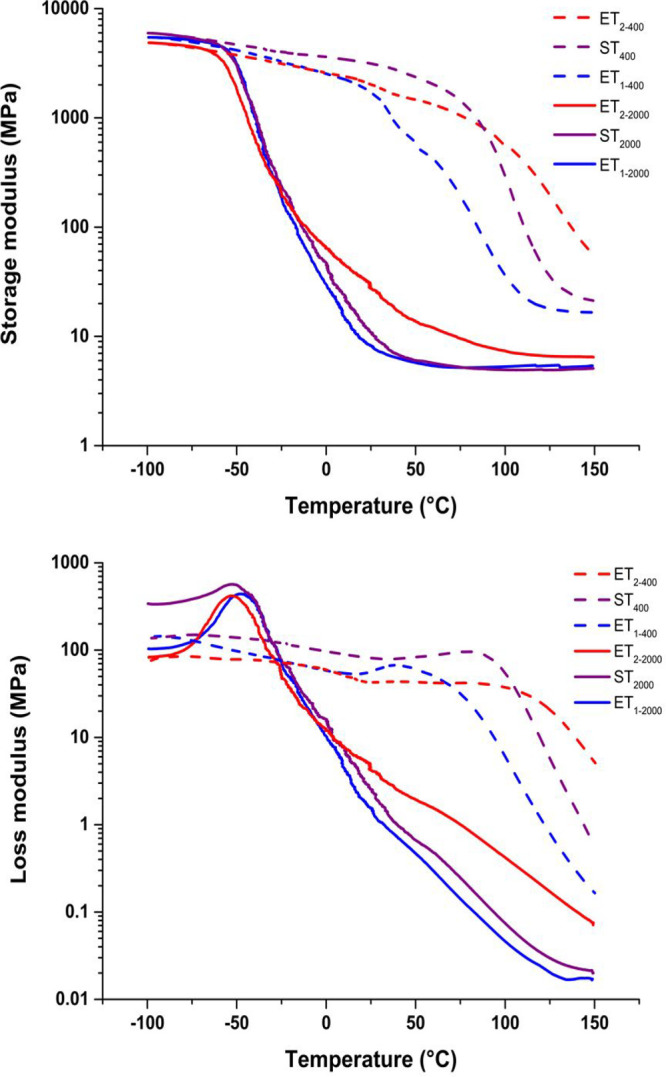
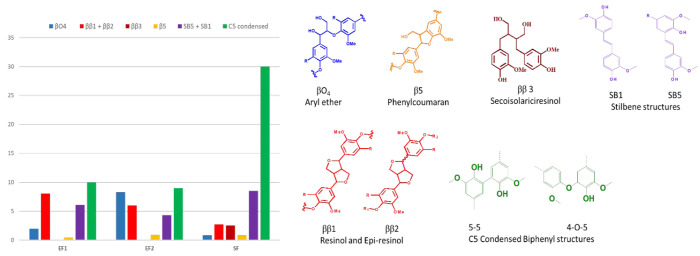
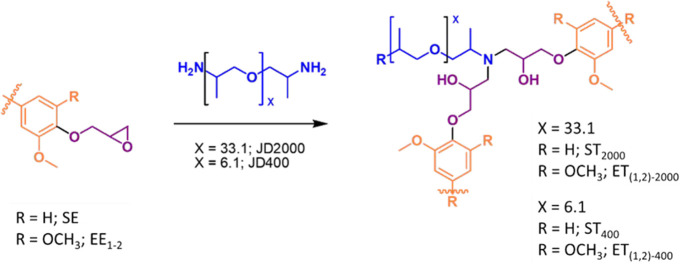
Here we investigate the relationship between thermomechanical properties and chemical structure of well-characterized lignin-based epoxy resins. For this purpose, technical lignins from eucalyptus and spruce, obtained from the Kraft process, were used. The choice of lignins was based on the expected differences in molecular structure. The lignins were then refined by solvent fractionation, and three fractions with comparable molecular weights were selected to reduce effects of molar mass on the properties of the final thermoset resins. Consequently, any differences in thermomechanical properties are expected to correlate with molecular structure differences between the lignins. Oxirane moieties were selectively introduced to the refined fractions, and the resulting lignin epoxides were subsequently cross-linked with two commercially available polyether diamines (Mn = 2000 and 400) to obtain lignin-based epoxy resins. Molecular-scale characterization of the refined lignins and their derivatives were performed by P NMR, 2D-NMR, and DSC methods to obtain the detailed chemical structure of original and derivatized lignins. The thermosets were studied by DSC, DMA, and tensile tests and demonstrated diverse thermomechanical properties attributed to structural components in lignin and selected amine cross-linker. An epoxy resin with a lignin content of 66% showed a Tg of 79 °C from DMA, Young's modulus of 1.7 GPa, tensile strength of 66 MPa, and strain to failure of 8%. The effect of molecular lignin structure on thermomechanical properties was analyzed, finding significant differences between the rigid guaiacyl units in spruce lignin compared with sinapyl units in eucalyptus lignin. The methodology points toward rational design of molecularly tailored lignin-based thermosets.
在这里,我们研究了具有良好特征的木质素基环氧树脂的热机械性能和化学结构之间的关系。为此,我们使用了源自 Kraft 工艺的桉树和云杉技术木质素。选择木质素的依据是预期的分子结构差异。然后通过溶剂分级精制木质素,并选择三种具有可比分子量的级分,以减少摩尔质量对最终热固性树脂性能的影响。因此,热机械性能的任何差异预计都与木质素之间的分子结构差异相关。选择将环氧化物基团选择性引入精制级分中,然后用两种市售的聚醚二胺(Mn = 2000 和 400)交联得到的木质素环氧化物,以获得木质素基环氧树脂。通过 P NMR、2D-NMR 和 DSC 方法对精制木质素及其衍生物进行了分子尺度的表征,以获得原始和衍生木质素的详细化学结构。通过 DSC、DMA 和拉伸试验研究了热固性树脂,并表现出多样化的热机械性能,归因于木质素和所选胺交联剂中的结构成分。一种木质素含量为 66%的环氧树脂,其 DMA 的 Tg 为 79°C,杨氏模量为 1.7 GPa,拉伸强度为 66 MPa,断裂伸长率为 8%。分析了分子木质素结构对热机械性能的影响,发现云杉木质素中的刚性愈创木基单元与桉树木质素中的松柏基单元之间存在显著差异。该方法为合理设计分子定制木质素基热固性树脂指明了方向。