Indian Institute of Science Education and Research, Kolkata, India.
Sci Rep. 2020 Mar 11;10(1):4473. doi: 10.1038/s41598-020-61361-z.
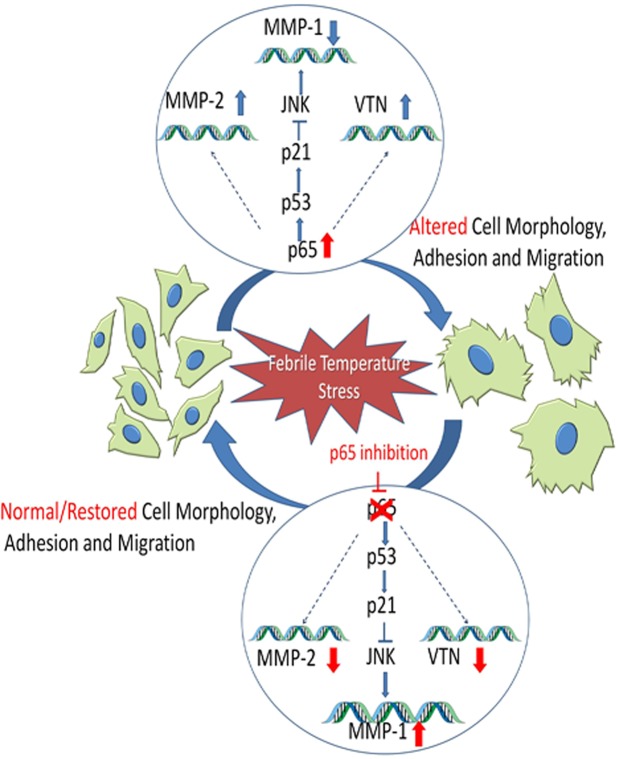
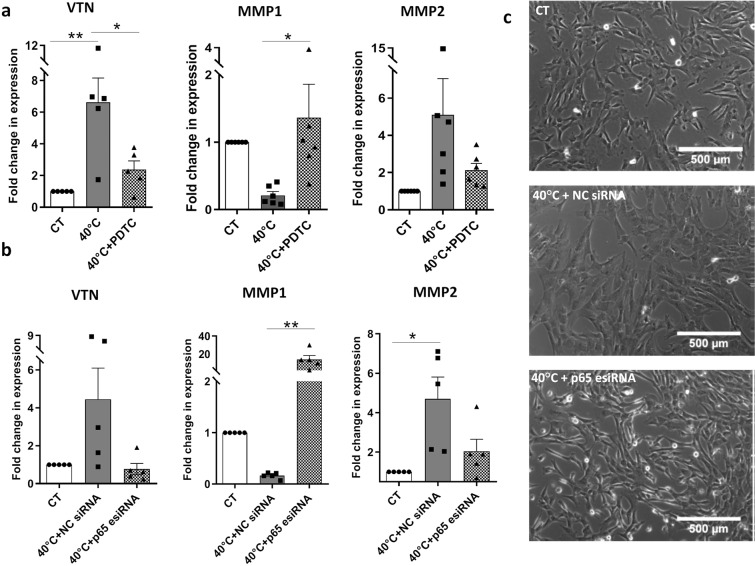
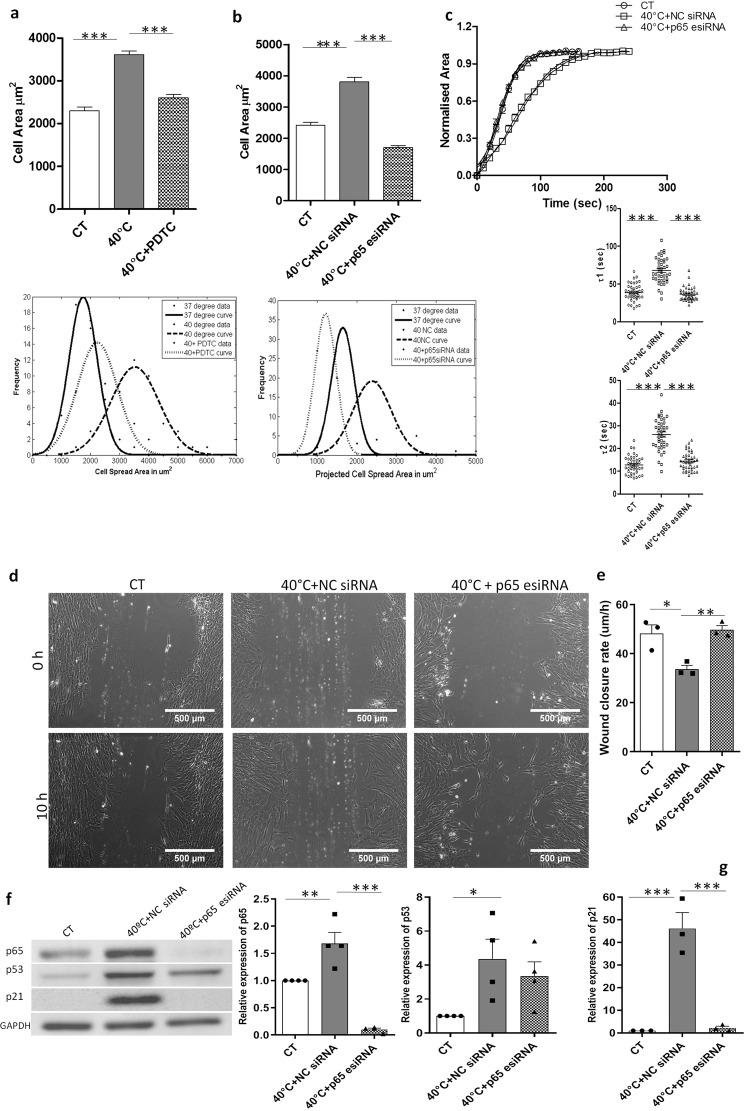
Mesenchymal stromal cells (MSCs) are clinically beneficial for regenerative treatment of chronic inflammation and autoimmune disorders. However, to attain maximum efficacy from the transplanted MSCs, evaluation of its interaction with the microenvironment, becomes critical. Fever being an important hallmark of inflammation, we investigated the effect of febrile temperature stress on adhesion and migration of umbilical cord-derived MSCs. 40 °C-exposure altered cellular morphology with significant cell flattening, delayed cell-matrix de-adhesion response and slower migration of MSCs, accompanied by suppressed directionality ratio and cell trajectory. Corresponding to the observed changes, mRNA expression of extracellular matrix genes like COLs and VTN were upregulated, while matrix metalloproteinase MMP-1, showed a significant downregulation. NF-κβ pathway inhibition at 40 °C, led to reversal of gene expression pattern, cell spreading, de-adhesion dynamics and migration rate. Independent knockdown of p65 and p53 at 40 °C indicated inhibitory role of p65/p53/p21 axis in regulation of MMP-1 expression. P21 inhibits JNK activity, and JNK pathway inhibition at 40 °C resulted in further downregulation of MMP-1. Hence, our study provides the first evidence of cell migration getting adversely affected in MSCs under elevated temperature stress due to an inverse relationship between p65/p53/p21 and MMP1 with a possible involvement of the JNK pathway.
间充质基质细胞 (MSCs) 对慢性炎症和自身免疫性疾病的再生治疗具有临床益处。然而,为了从移植的 MSCs 中获得最大疗效,评估其与微环境的相互作用变得至关重要。发热是炎症的一个重要标志,我们研究了发热温度应激对脐带来源的 MSCs 黏附和迁移的影响。40°C 暴露会改变细胞形态,导致细胞显著变平,细胞与基质的脱黏附反应延迟,细胞迁移速度减慢,同时方向比和细胞轨迹受到抑制。与观察到的变化相对应,细胞外基质基因如 COLs 和 VTN 的 mRNA 表达上调,而基质金属蛋白酶 MMP-1 的表达则显著下调。在 40°C 时抑制 NF-κβ 通路会导致基因表达模式、细胞铺展、脱黏附动力学和迁移率的逆转。在 40°C 时独立敲低 p65 和 p53 表明 p65/p53/p21 轴在调节 MMP-1 表达中的抑制作用。P21 抑制 JNK 活性,在 40°C 时抑制 JNK 通路会导致 MMP-1 的进一步下调。因此,我们的研究首次提供了证据表明,由于 p65/p53/p21 和 MMP1 之间的反比关系,以及 JNK 通路的可能参与,在高温应激下,MSCs 的细胞迁移受到不利影响。