Murphy Sandra, Henry Michael, Meleady Paula, Ohlendieck Kay
Department of Biology, Maynooth University, National University of Ireland, Maynooth, Co. Kildare, Ireland.
National Institute for Cellular Biotechnology, Dublin City University, Dublin 9, Ireland.
Biol Methods Protoc. 2018 Aug 17;3(1):bpy008. doi: 10.1093/biomethods/bpy008. eCollection 2018.
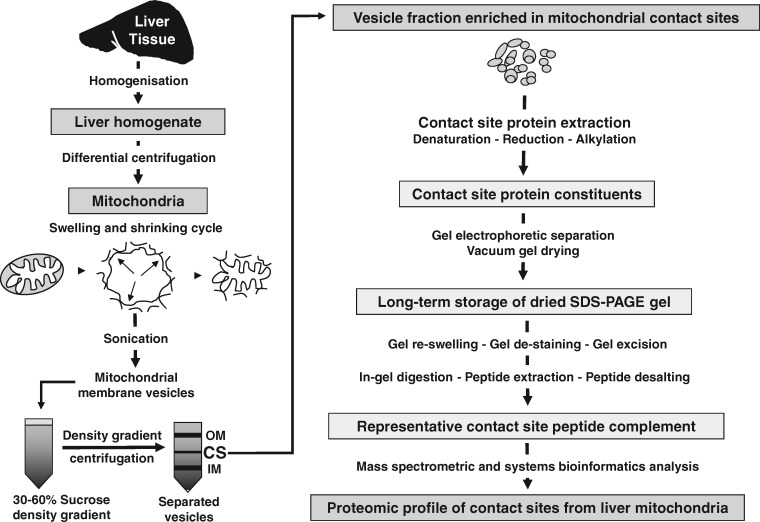
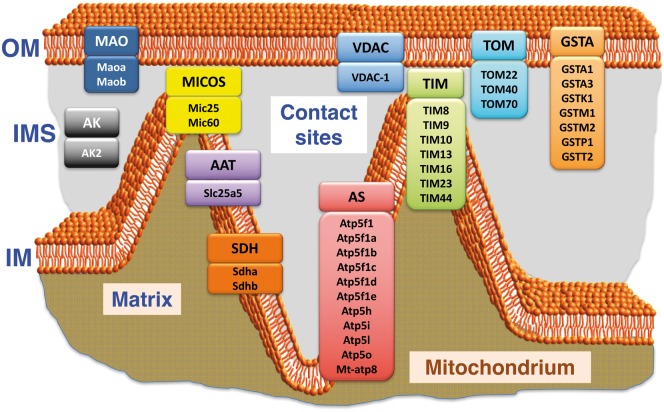
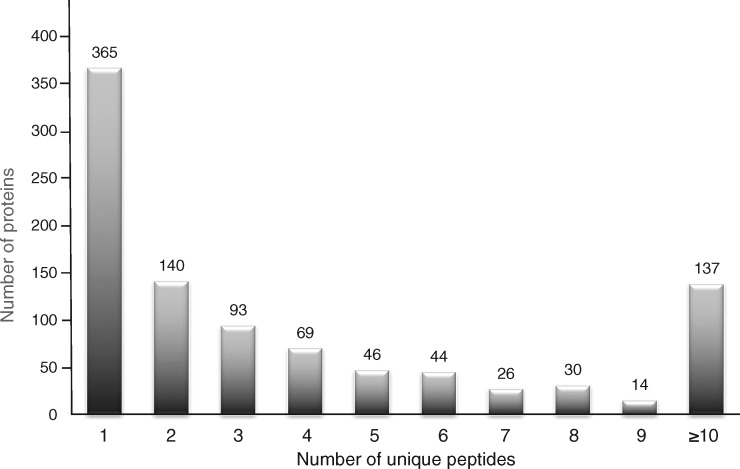
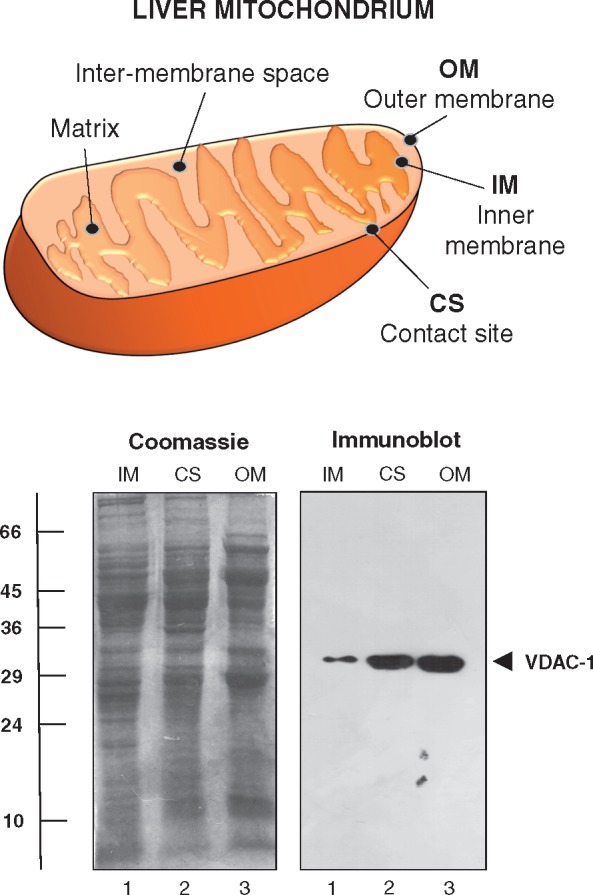
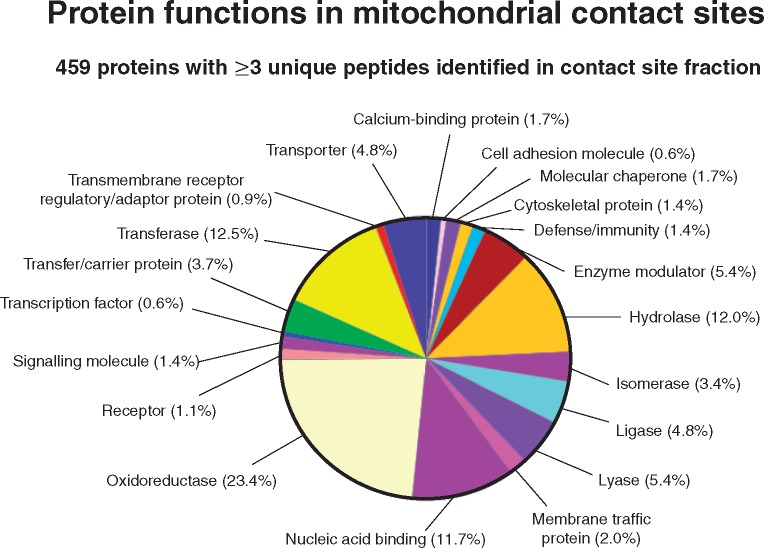
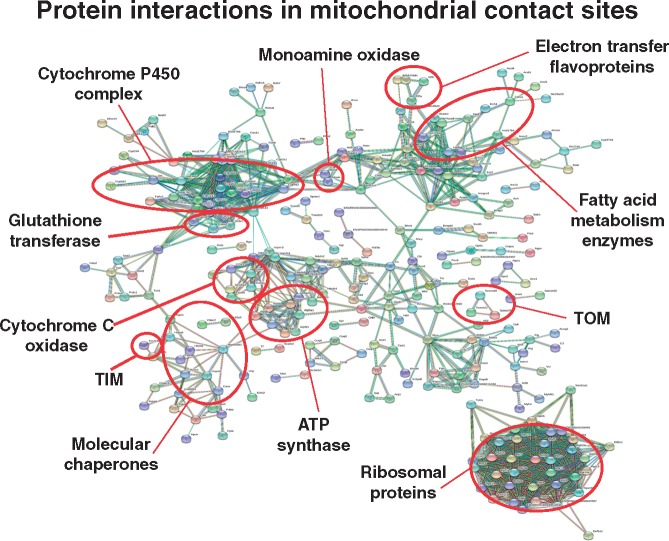
Following subcellular fractionation, the complexity of proteins derived from a particular cellular compartment is often evaluated by gel electrophoretic analysis. For the proteomic cataloguing of these distinct protein populations and their biochemical characterization, gel electrophoretic protein separation can be conveniently combined with liquid chromatography mass spectrometry. Here we describe a gel-enhanced liquid chromatography mass spectrometry (GeLC-MS)/MS approach with a new bioanalytical focus on the proteomic profiling of mitochondrial contact sites from rat liver using the highly sensitive Orbitrap Fusion Tribrid mass spectrometer for optimum protein identification following extraction from dried and long-term stored gels. Mass spectrometric analysis identified 964 protein species in the mitochondrial contact site fraction, whereby 459 proteins were identified by ≥3 unique peptides. This included mitochondrial components of the supramolecular complexes that form the ATP synthase, the respiratory chain, ribosomal subunits and the cytochrome P450 system, as well as crucial components of the translocase complexes translocase of the inner membrane (TIM) and translocase of the outer membrane (TOM) of the two mitochondrial membranes. Proteomics also identified contact site markers, such as glutathione transferase, monoamine oxidase and the pore protein voltage dependent anion channel (VDAC)-1. Hence, this report demonstrates that the GeLC-MS/MS method can be used to study complex mixtures of proteins that have been embedded and stored in dried polyacrylamide gels for a long period of time. Careful re-swelling and standard in-gel digestion is suitable to produce peptide profiles from old gels that can be used to extract sophisticated proteomic maps and enable the subsequent bioinformatics analysis of the distribution of protein function and the determination of potential protein clustering within the contact site system.
在进行亚细胞分级分离后,通常通过凝胶电泳分析来评估源自特定细胞区室的蛋白质的复杂性。为了对这些不同的蛋白质群体进行蛋白质组编目及其生化特性分析,凝胶电泳蛋白质分离可以方便地与液相色谱质谱联用。在此,我们描述了一种凝胶增强液相色谱质谱(GeLC-MS)/ MS方法,该方法以一种新的生物分析为重点,即使用高灵敏度的Orbitrap Fusion Tribrid质谱仪对大鼠肝脏线粒体接触位点进行蛋白质组分析,以便从干燥且长期保存的凝胶中提取后实现最佳的蛋白质鉴定。质谱分析在该线粒体接触位点级分中鉴定出964种蛋白质,其中459种蛋白质通过≥3条独特肽段得以鉴定。这包括构成ATP合酶、呼吸链、核糖体亚基和细胞色素P450系统的超分子复合物的线粒体组分,以及两个线粒体膜的内膜转位酶(TIM)和外膜转位酶(TOM)转位酶复合物的关键组分。蛋白质组学还鉴定出了接触位点标记物,如谷胱甘肽转移酶、单胺氧化酶和孔蛋白电压依赖性阴离子通道(VDAC)-1。因此,本报告表明GeLC-MS/MS方法可用于研究长时间嵌入并保存在干燥聚丙烯酰胺凝胶中的复杂蛋白质混合物。仔细的复溶和标准的胶内消化适用于从旧凝胶中产生肽谱,这些肽谱可用于提取复杂的蛋白质组图谱,并能够随后对蛋白质功能分布进行生物信息学分析以及确定接触位点系统内潜在的蛋白质聚集情况。