Koens Rei, Tabata Yugo, Serrano Jean C, Aratake Satoshi, Yoshino Daisuke, Kamm Roger D, Funamoto Kenichi
Graduate School of Biomedical Engineering, Tohoku University, 6-6-12 Aramaki-aza Aoba, Aoba-ku, Sendai, Miyagi 980-8579, Japan.
Department of Mechanical Engineering, Massachusetts Institute of Technology, 77 Massachusetts Ave., Cambridge, Massachusetts 02139, USA.
APL Bioeng. 2020 Mar 6;4(1):016106. doi: 10.1063/1.5127069. eCollection 2020 Mar.
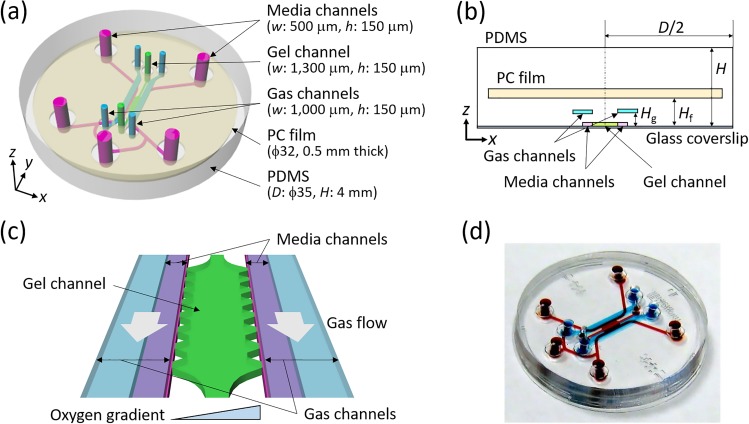
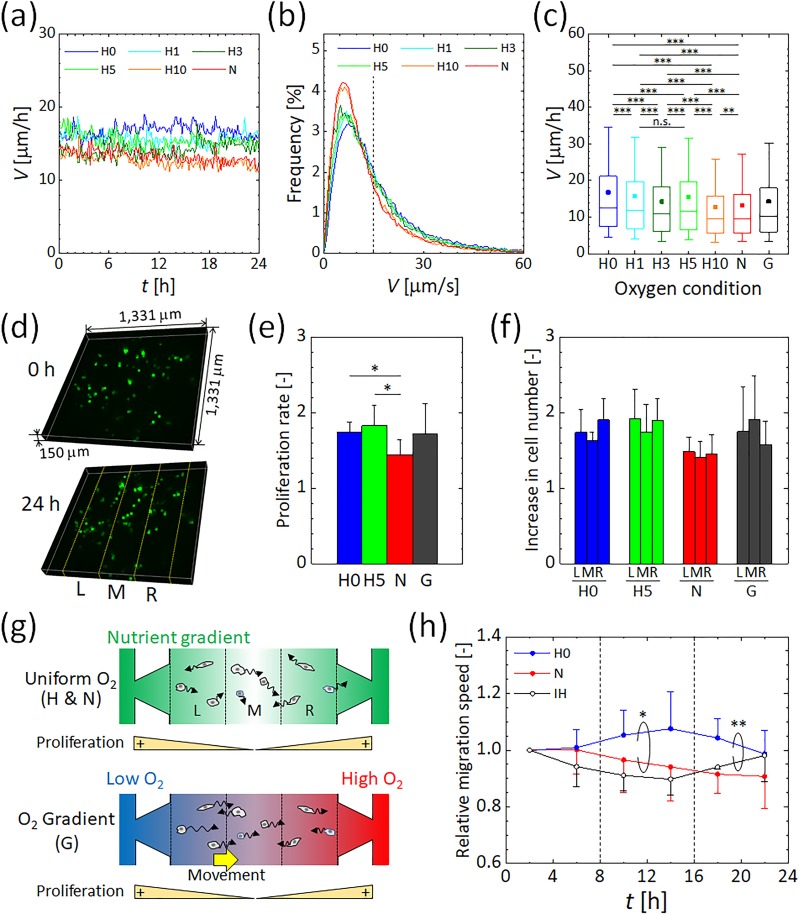
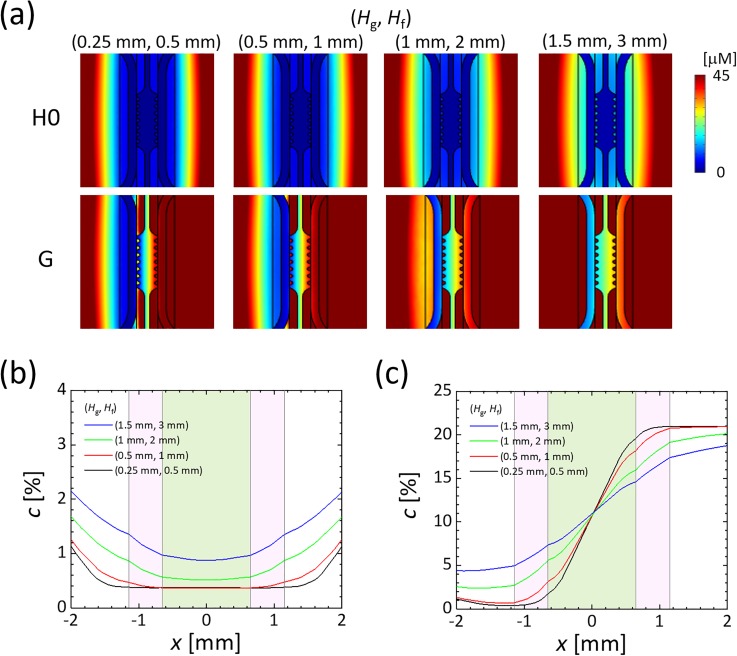
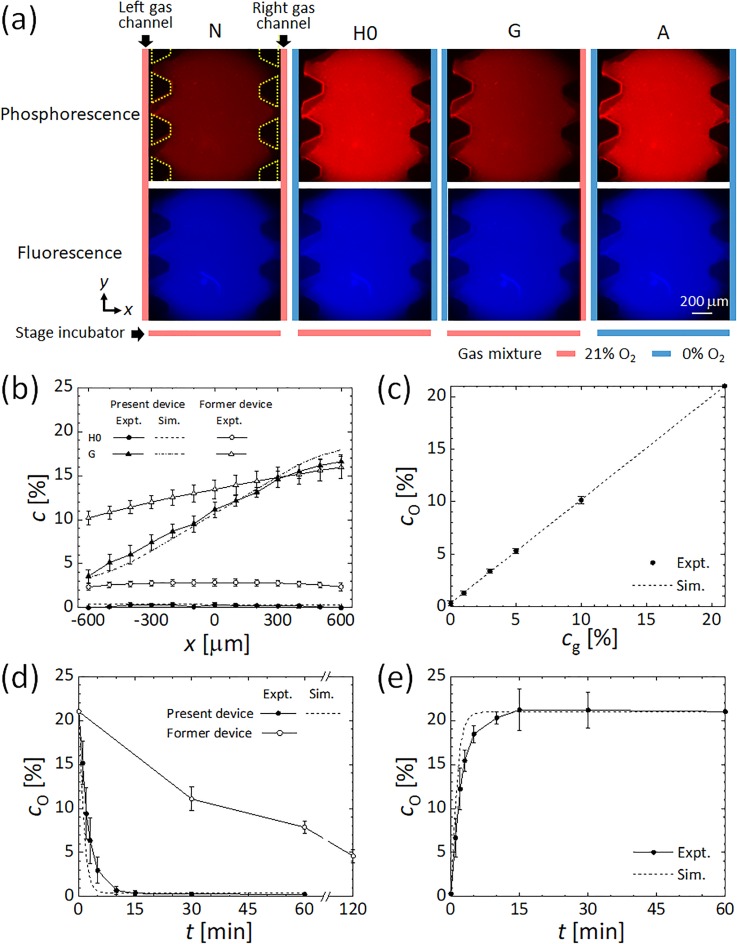
Cells in a tumor microenvironment are exposed to spatial and temporal variations in oxygen tension due to hyperproliferation and immature vascularization. Such spatiotemporal oxygen heterogeneity affects the behavior of cancer cells, leading to cancer growth and metastasis, and thus, it is essential to clarify the cellular responses of cancer cells to oxygen tension. Herein, we describe a new double-layer microfluidic device allowing the control of oxygen tension and the behavior of cancer cells under spatiotemporal oxygen heterogeneity. Two parallel gas channels were located above the media and gel channels to enhance gas exchange, and a gas-impermeable polycarbonate film was embedded in the device to prevent the diffusion of atmospheric oxygen. Variations in oxygen tension in the device with the experimental parameters and design variables were investigated computationally and validated by using oxygen-sensitive nanoparticles. The present device can generate a uniform hypoxic condition at oxygen levels down to 0.3% O, as well as a linear oxygen gradient from 3% O to 17% O across the gel channel within 15 min. Moreover, human breast cancer cells suspended in type I collagen gel were introduced in the gel channel to observe their response under controlled oxygen tension. Hypoxic exposure activated the proliferation and motility of the cells, which showed a local maximum increase at 5% O. Under the oxygen gradient condition, the increase in the cell number was relatively high in the central mild hypoxia region. These findings demonstrate the utility of the present device to study cellular responses in an oxygen-controlled microenvironment.
由于肿瘤细胞的过度增殖和血管生成不成熟,肿瘤微环境中的细胞会暴露于氧张力的时空变化中。这种时空氧异质性会影响癌细胞的行为,导致癌症生长和转移,因此,阐明癌细胞对氧张力的细胞反应至关重要。在此,我们描述了一种新型双层微流控装置,该装置能够在时空氧异质性条件下控制氧张力和癌细胞行为。两个平行的气体通道位于培养基和凝胶通道上方,以增强气体交换,并且在装置中嵌入了一层不透气的聚碳酸酯薄膜,以防止大气中的氧气扩散。通过计算研究了该装置中氧张力随实验参数和设计变量的变化,并使用氧敏感纳米颗粒进行了验证。该装置能够在低至0.3% O₂的氧水平下产生均匀的低氧条件,并且在15分钟内能够在凝胶通道中产生从3% O₂到17% O₂的线性氧梯度。此外,将悬浮在I型胶原凝胶中的人乳腺癌细胞引入凝胶通道,以观察它们在受控氧张力下的反应。低氧暴露激活了细胞的增殖和运动能力,在5% O₂时显示出局部最大增加。在氧梯度条件下,中央轻度低氧区域的细胞数量增加相对较高。这些发现证明了该装置在研究氧控制微环境中细胞反应方面的实用性。