Centro de Estudios Avanzados en Fruticultura (CEAF), Rengo, Chile.
Instituto de Investigaciones Agrobiotecnológicas (INIAB-CONICET), Consejo Nacional de Investigaciones Científicas y Técnicas (CONICET), Universidad Nacional de Río Cuarto, Río Cuarto, Córdoba, Argentina.
PLoS One. 2020 Mar 12;15(3):e0230110. doi: 10.1371/journal.pone.0230110. eCollection 2020.
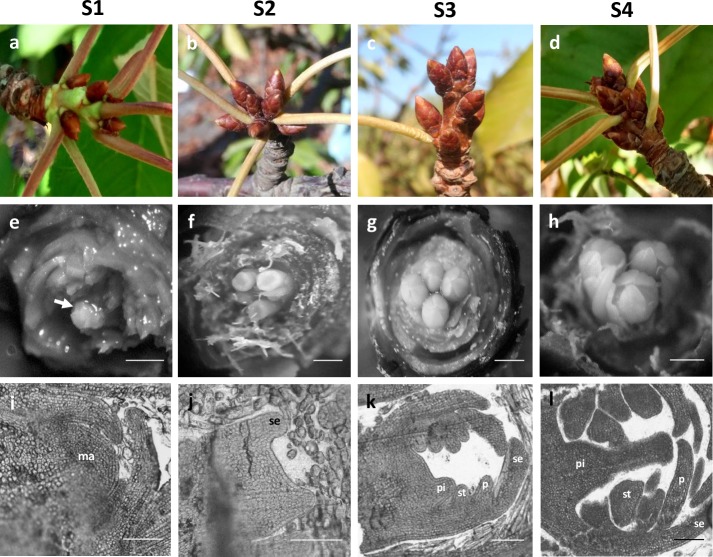
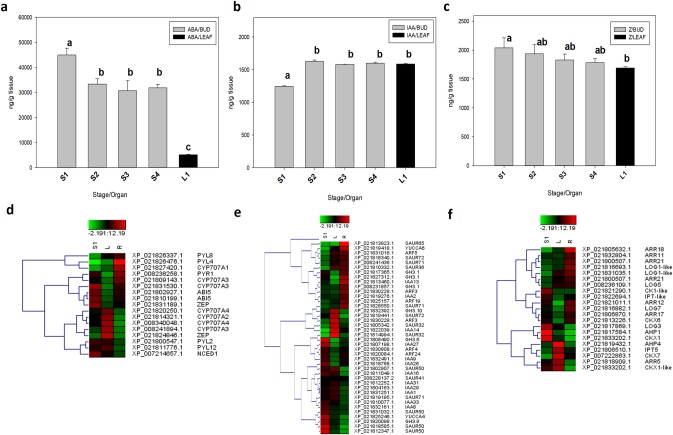
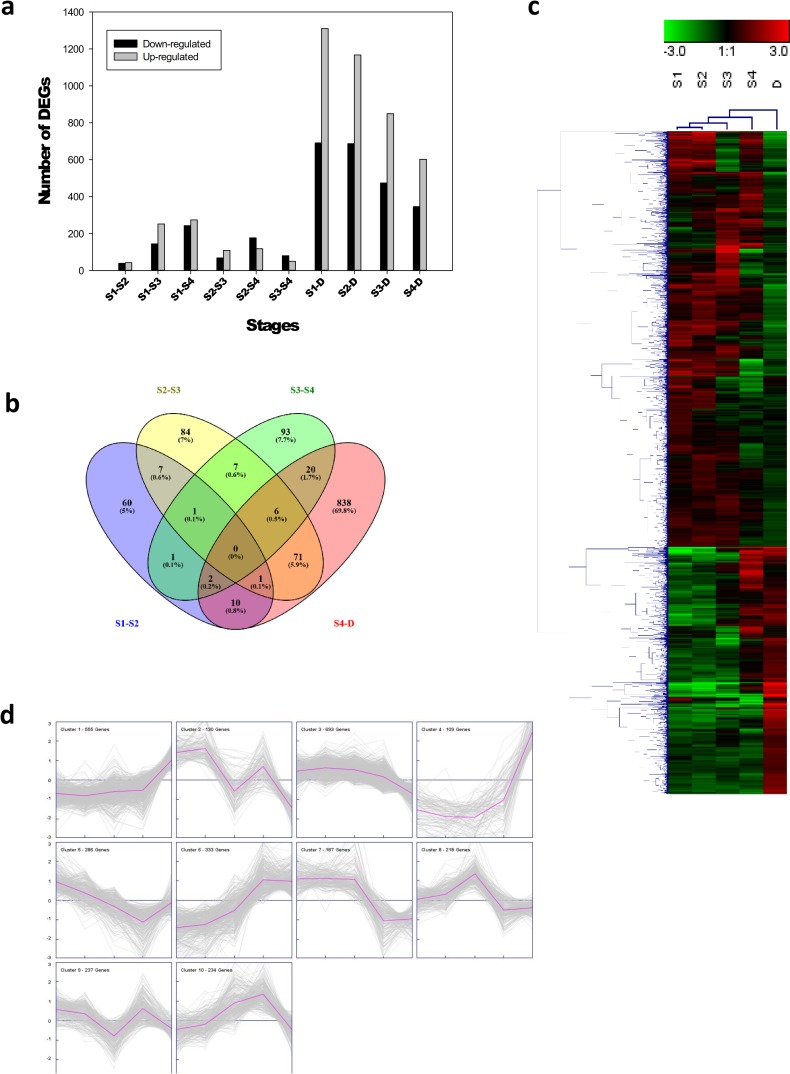
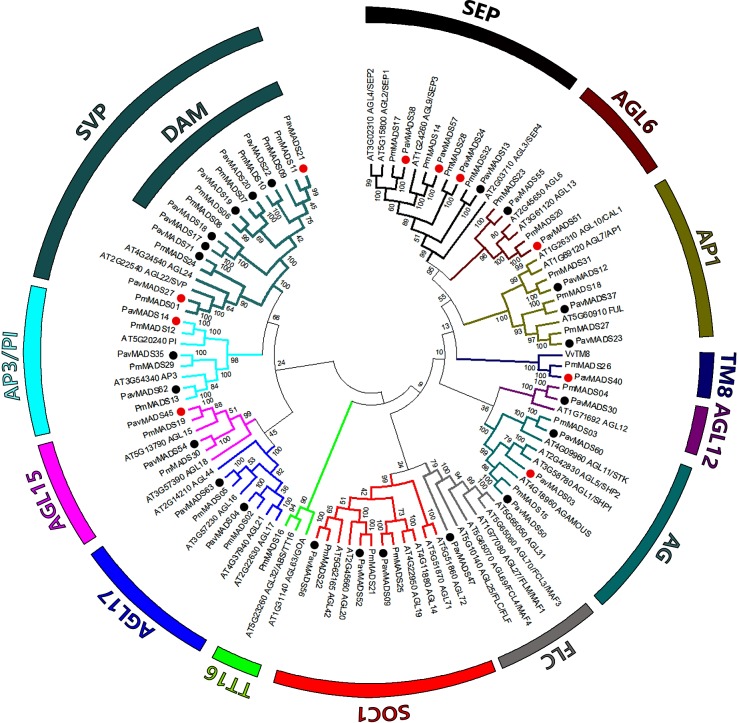
In sweet cherry trees, flowering is commercially important because the flowers, after fertilization, will generate the fruits. In P. avium, the flowering induction and flower organogensis are the first developmental steps towards flower formation and they occur within specialized organs known as floral buds during the summer, nine months before blooming. During this period the number of floral buds per tree and the bud fruitfulness (number of flowers per bud) are stablished affecting the potential yield of orchards and the plant architecture. The floral bud development is sensitive to any type of stress and the hotter and drier summers will interfere with this process and are calling for new adapted cultivars. A better understanding of the underlying molecular and hormonal mechanisms would be of help, but unlike the model plant Arabidopsis, very little is known about floral induction in sweet cherry. To explore the molecular mechanism of floral bud differentiation, high-throughput RNA sequencing was used to detect differences in the gene expression of P. avium floral buds at five differentiation stages. We found 2,982 differentially expressed genes during floral bud development. We identified genes associated with floral initiation or floral organ identity that appear to be useful biomarkers of floral development and several transcription factor families (ERF, MYB, bHLH, MADS-box and NAC gene family) with novel potential roles during floral transition in this species. We analyzed in deep the MADS-box gene family and we shed light about their key role during floral bud and organs development in P. avium. Furthermore, the hormonal-related signatures in the gene regulatory networks and the dynamic changes of absicic acid, zeatin and indolacetic acid contents in buds suggest an important role for these hormones during floral bud differentiation in sweet cherry. These data provide a rich source of novel informacion for functional and evolutionary studies about floral bud development in sweet cherry and new tools for biotechnology and breeding.
在甜樱桃树中,开花是商业上重要的,因为花受精后会产生果实。在欧洲甜樱桃中,开花诱导和花器官发生是形成花的第一个发育步骤,它们发生在夏季的专门器官——称为花芽中,在开花前九个月。在此期间,每棵树的花芽数量和芽结实率(每个芽的花数)确定,影响果园的潜在产量和植株结构。花芽发育对任何类型的胁迫都很敏感,更热和更干燥的夏季会干扰这个过程,因此需要新的适应品种。更好地了解潜在的分子和激素机制将有所帮助,但与模式植物拟南芥不同,人们对甜樱桃的花诱导知之甚少。为了探索花芽分化的分子机制,我们使用高通量 RNA 测序来检测甜樱桃五个分化阶段的花芽基因表达差异。我们发现 2982 个基因在花芽发育过程中差异表达。我们鉴定了与花起始或花器官身份相关的基因,这些基因似乎是花发育的有用生物标志物,并且在该物种的花转变过程中发现了几个转录因子家族(ERF、MYB、bHLH、MADS 框和 NAC 基因家族)具有新的潜在作用。我们深入分析了 MADS 框基因家族,并阐明了它们在甜樱桃花芽和器官发育中的关键作用。此外,基因调控网络中的激素相关特征以及芽中脱落酸、玉米素和吲哚乙酸含量的动态变化表明,这些激素在甜樱桃花芽分化过程中起着重要作用。这些数据为甜樱桃花芽发育的功能和进化研究提供了丰富的新信息,并为生物技术和育种提供了新的工具。