Department of Natural and Applied Sciences, Faculty of Community College, Majmaah University, Majmaah 11952, Saudi Arabia.
Department of Biomedical Engineering, Higher Technological Institute, 10th Ramadan City 44629, Egypt.
Sensors (Basel). 2020 Mar 10;20(5):1516. doi: 10.3390/s20051516.
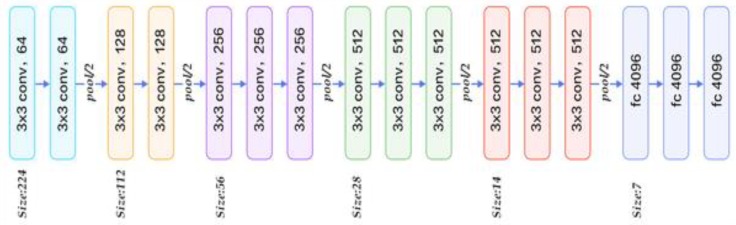
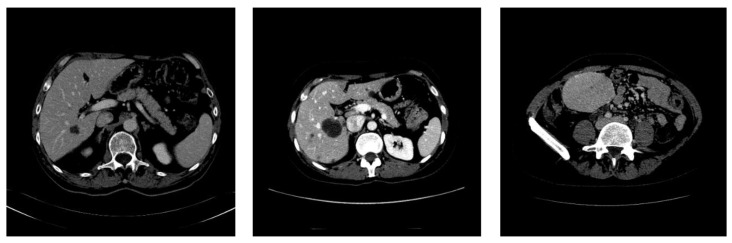
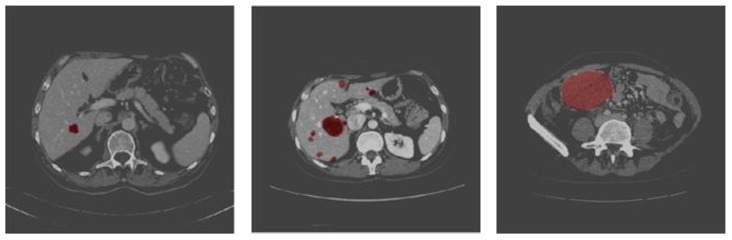
The main cause of death related to cancer worldwide is from hepatic cancer. Detection of hepatic cancer early using computed tomography (CT) could prevent millions of patients' death every year. However, reading hundreds or even tens of those CT scans is an enormous burden for radiologists. Therefore, there is an immediate need is to read, detect, and evaluate CT scans automatically, quickly, and accurately. However, liver segmentation and extraction from the CT scans is a bottleneck for any system, and is still a challenging problem. In this work, a deep learning-based technique that was proposed for semantic pixel-wise classification of road scenes is adopted and modified to fit liver CT segmentation and classification. The architecture of the deep convolutional encoder-decoder is named SegNet, and consists of a hierarchical correspondence of encode-decoder layers. The proposed architecture was tested on a standard dataset for liver CT scans and achieved tumor accuracy of up to 99.9% in the training phase.
全球与癌症相关的主要死亡原因是肝癌。早期使用计算机断层扫描 (CT) 检测肝癌每年可预防数百甚至数十万人死亡。然而,阅读数百甚至数十张 CT 扫描是放射科医生的巨大负担。因此,迫切需要自动、快速、准确地阅读、检测和评估 CT 扫描。然而,肝脏从 CT 扫描中的分割和提取是任何系统的瓶颈,仍然是一个具有挑战性的问题。在这项工作中,采用了一种基于深度学习的技术,用于道路场景的语义像素分类,并对其进行了修改以适应肝脏 CT 分割和分类。深度卷积编码器-解码器的架构名为 SegNet,由编码-解码层的层次对应关系组成。所提出的架构在肝脏 CT 扫描的标准数据集上进行了测试,在训练阶段达到了高达 99.9%的肿瘤准确性。