Labor Berlin Charité Vivantes GmbH, Mikrobiologie & Hygiene, Berlin, Germany.
Charité - Universitätsmedizin Berlin, Medizinische Klinik für Gastroenterologie, Infektiologie und Rheumatologie, Campus Benjamin Franklin, Berlin, Germany.
BMC Gastroenterol. 2020 Mar 12;20(1):65. doi: 10.1186/s12876-020-01201-6.
Ineffective antibiotic therapy increases mortality of acute cholangitis. The choice of antibiotics should reflect local resistance patterns and avoid the overuse of broad-spectrum agents. In this study, we analysed how results of bile and blood cultures and patient data can be used for selection of empirical antibiotic therapy in acute cholangits.
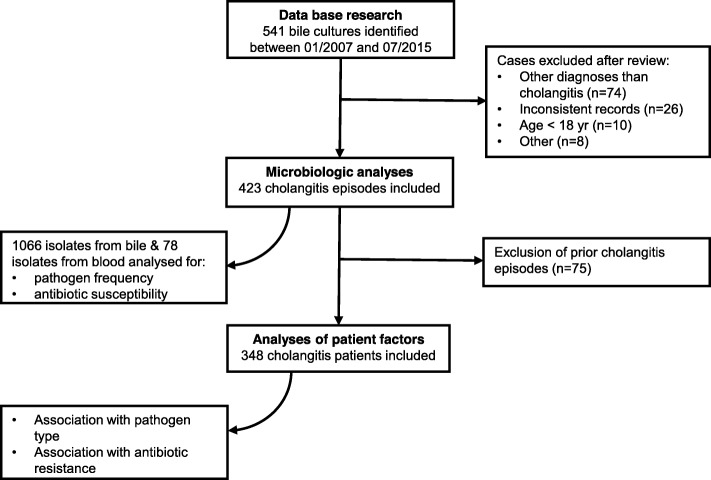
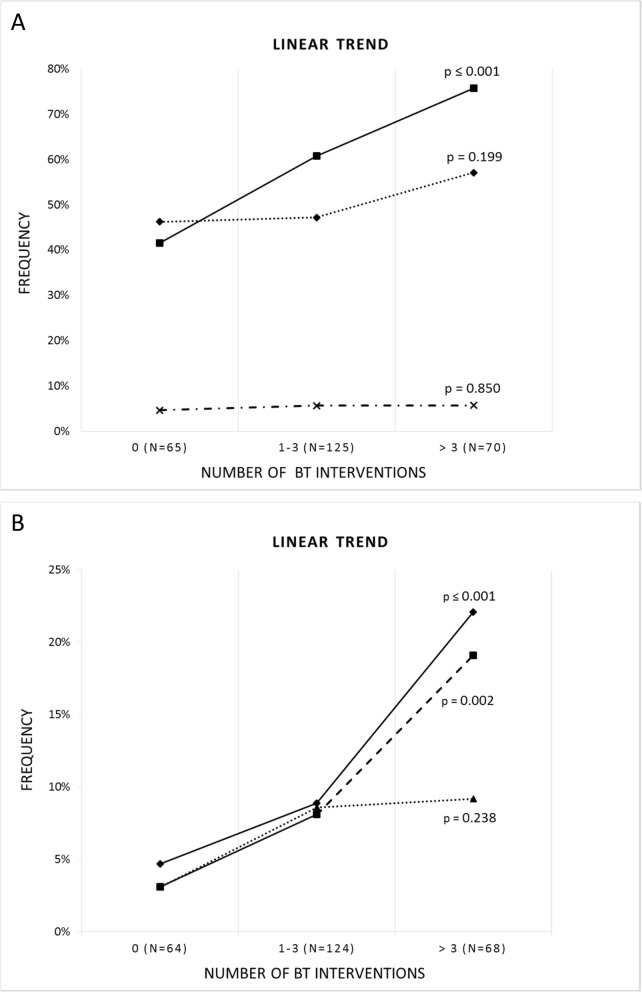
Pathogen frequencies and susceptibility rates were determined in 423 positive bile duct cultures and 197 corresponding blood cultures obtained from 348 consecutive patients with acute cholangitis. Patient data were retrieved from the medical records. Associations of patient and microbiological data were assessed using the Chi-2 test and multivariate binary logistic regression.
In bile cultures, enterobacterales and enterococci were isolated with equal frequencies of approximately 30% whereas in blood cultures, enterobacterales predominated (56% compared to 21% enterococci). Antibiotic resistance rates of enterobacterales were > 20% for fluorochinolones, cephalosporines and acylureidopenicillins but not for carbapenems (< 2%). The efficacy of empirical therapy was poor with a coverage of bacterial bile and blood culture isolates in 51 and 69%, respectively. By multivariate analysis, predictors for pathogen species, antibiotic susceptibility and expected antibiotic coverage were identified.
In unselected patients treated for acute cholangitis in a large tertiary refferential center, use of carbapenems seems necessary to achieve a high antibiotic coverage. However, by analysis of patient and microbiological data, subgroups for highly effective carbapenem-sparing therapy can be defined. For patients with community-acquired cholangitis without biliary prosthesis who do not need intensive care, piperacillin/tazobactam represents a regimen with an expected excellent antibiotic coverage.
无效的抗生素治疗会增加急性胆管炎的死亡率。抗生素的选择应反映当地的耐药模式,并避免过度使用广谱药物。在这项研究中,我们分析了如何利用胆汁和血液培养结果以及患者数据来选择急性胆管炎的经验性抗生素治疗。
从 348 例连续急性胆管炎患者的 423 份胆管阳性培养物和 197 份相应的血培养物中确定了病原体的频率和药敏率。从病历中检索患者数据。使用卡方检验和多变量二项逻辑回归评估患者和微生物数据之间的关联。
在胆汁培养物中,肠杆菌科和肠球菌的分离率相同,约为 30%,而在血液培养物中,肠杆菌科占优势(56%比肠球菌占 21%)。肠杆菌科对氟喹诺酮类、头孢菌素类和酰脲青霉素类的抗生素耐药率>20%,但对碳青霉烯类的耐药率<2%。经验性治疗的疗效较差,对细菌胆汁和血液培养分离株的覆盖度分别为 51%和 69%。通过多变量分析,确定了病原体种类、抗生素敏感性和预期抗生素覆盖度的预测因素。
在未选择的患者中,在大型三级转诊中心治疗急性胆管炎时,使用碳青霉烯类似乎是实现高抗生素覆盖度的必要条件。然而,通过分析患者和微生物数据,可以为需要高度有效的碳青霉烯类药物节约治疗的亚组定义。对于不需要重症监护的社区获得性胆管炎且无胆道支架的患者,哌拉西林/他唑巴坦代表了一种预期具有良好抗生素覆盖度的方案。