Cambridge Institute for Medical Research, University of Cambridge, Hills Road, Cambridge, CB2 0XY, UK.
Sci Rep. 2020 Mar 12;10(1):4560. doi: 10.1038/s41598-020-61356-w.
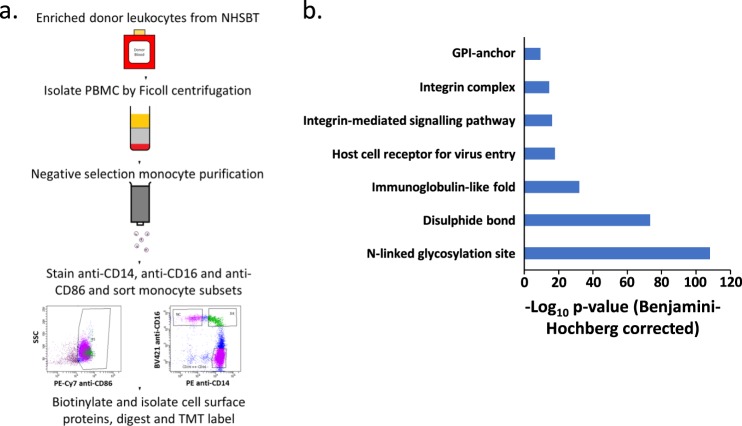
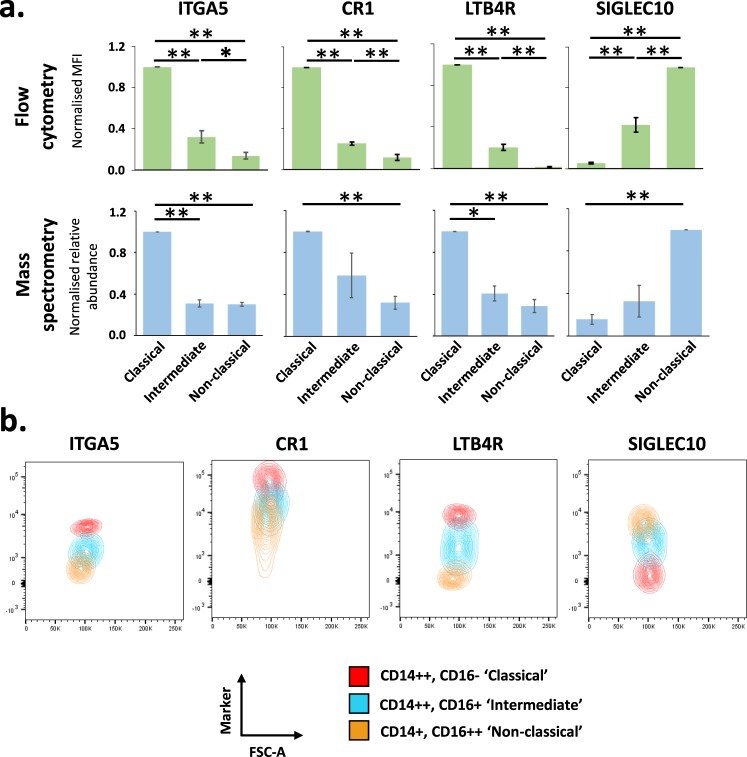
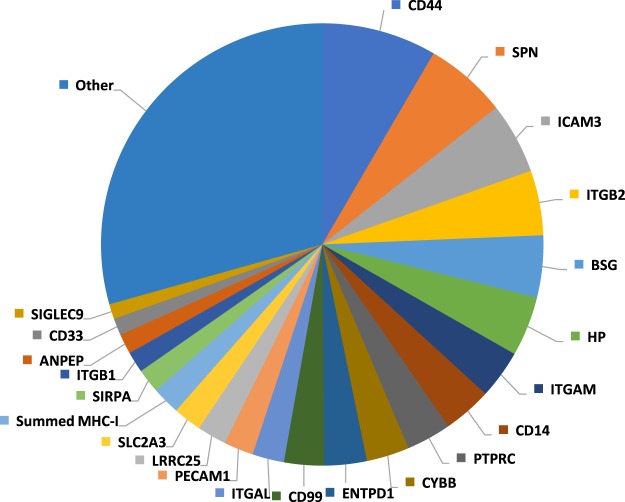
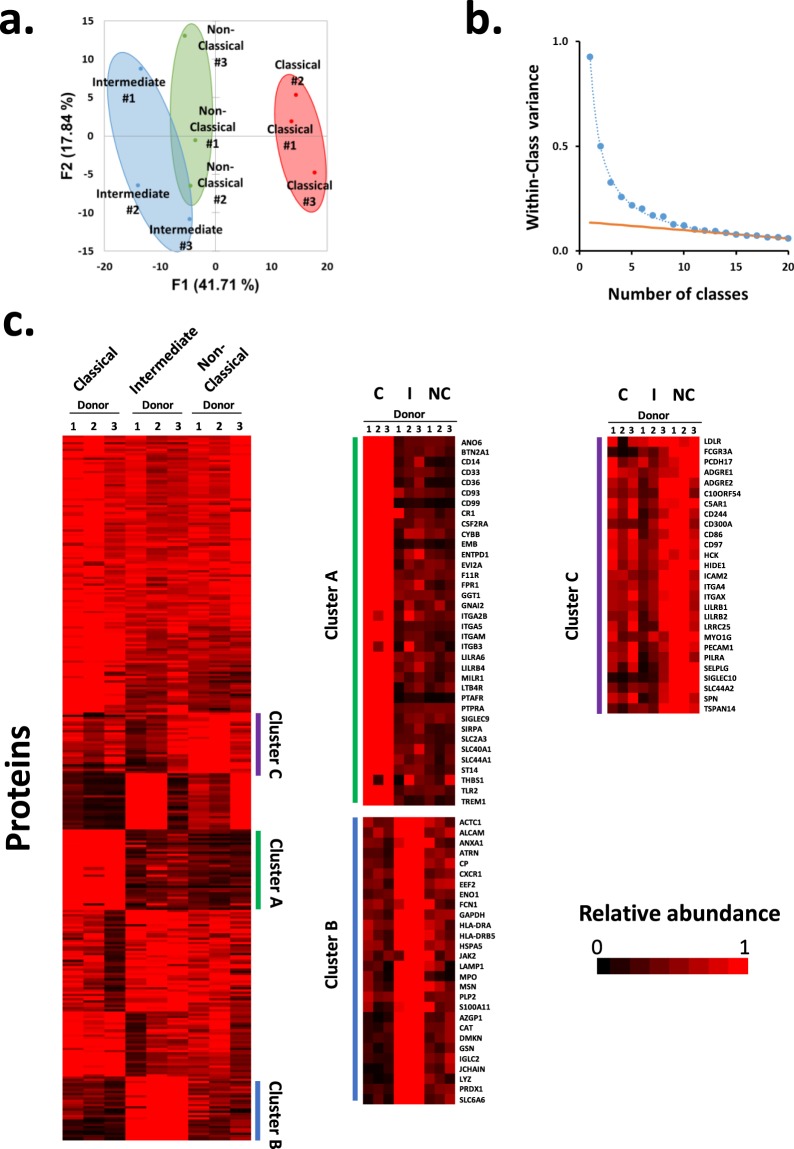
Monocytes are a critical component of the cellular innate immune system, and can be subdivided into classical, intermediate and non-classical subsets on the basis of surface CD14 and CD16 expression. Classical monocytes play the canonical role of phagocytosis, and account for the majority of circulating cells. Intermediate and non-classical cells are known to exhibit varying levels of phagocytosis and cytokine secretion, and are differentially expanded in certain pathological states. Characterisation of cell surface proteins expressed by each subset is informative not only to improve understanding of phenotype, but may also provide biological insights into function. Here we use highly multiplexed Tandem-Mass-Tag (TMT)-based mass spectrometry with selective cell surface biotinylation to characterise the classical monocyte surface proteome, then interrogate the phenotypic differences between each monocyte subset to identify novel protein markers.
单核细胞是细胞固有免疫系统的关键组成部分,根据表面 CD14 和 CD16 的表达,可进一步分为经典型、中间型和非经典型亚群。经典单核细胞发挥吞噬作用的典型作用,占循环细胞的大多数。已知中间型和非经典型细胞具有不同程度的吞噬作用和细胞因子分泌能力,并在某些病理状态下呈不同程度的扩增。对每个亚群表达的细胞表面蛋白进行特征描述不仅有助于提高对表型的理解,而且还可能为功能提供生物学见解。在这里,我们使用高度多重化的串联质量标签(TMT)基于质谱法与选择性细胞表面生物素化相结合来描述经典单核细胞表面蛋白质组,然后探究每个单核细胞亚群之间的表型差异,以确定新的蛋白标记物。