Lim Sun Ha, Lee Jongwon, Han Mee-Jung
1Department of Biochemistry, School of Medicine, Catholic University of Daegu, 33, 17-gil, Duryugongwon-ro, Nam-gu, Daegu, 42472 Republic of Korea.
2Department of Biomolecular and Chemical Engineering, Dongyang University, 145 Dongyang-daero, Punggi-eup, Yeongju, Gyeongbuk 36040 Republic of Korea.
Proteome Sci. 2020 Mar 6;18:2. doi: 10.1186/s12953-020-00158-4. eCollection 2020.
Traditional studies of the cardiac proteome have mainly investigated in an animal model by two-dimensional gel electrophoresis (2-DE). However, the results have not been of satisfactory quality for an understanding of the underlying mechanism. Recent quantitative proteomic methods have been improved to overcome these limitations. To comprehensively study the cardiac proteome in a rat model of ischemia-reperfusion (IR), we developed a tandem mass tag (TMT)-based quantitative proteomic strategy. Furthermore, using this strategy, we examined the molecular mechanisms underlying the prevention of myocardial infarction by the intake of L. extract (TALE), a representative dietary fiber grain.
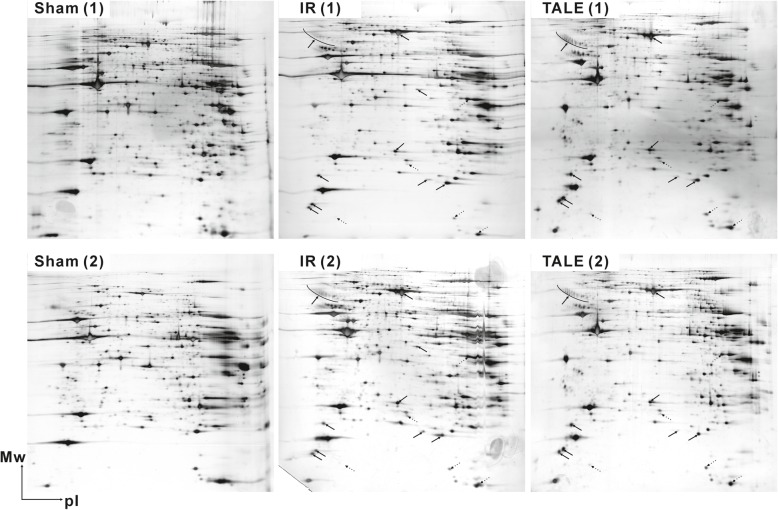
Cardiac proteomes were analyzed by 2-DE as a gel-based approach, and TMT labeling coupled with two-dimensional liquid chromatography (2D-LC) and tandem mass spectrometry (MS/MS) as a non-gel-based quantitative approach. Additionally, gene ontology annotation was conducted by PANTHER database. Several proteins of interest were verified by a Western blot analysis.
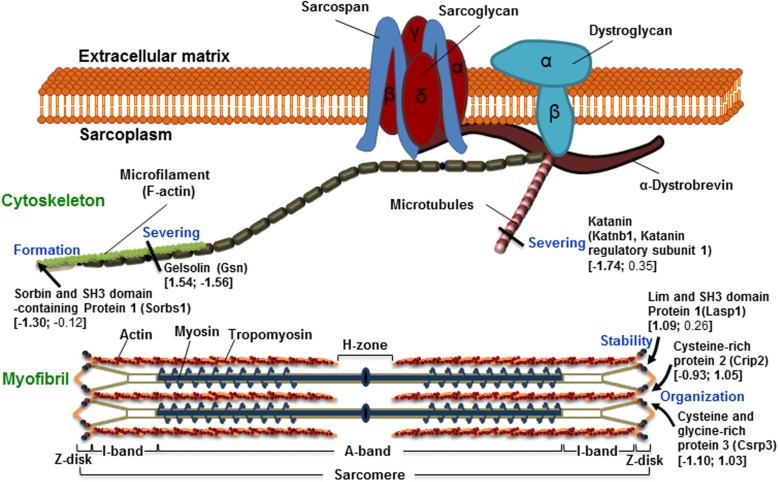
Total 641 proteins were identified commonly from two independent MS datasets using 2D-LC MS/MS. Among these, we identified 151 IR-related proteins that were differentially expressed between the sham-operation group and IR group, comprising 62 up-regulated proteins and 89 down-regulated proteins. Most of the reduced proteins were involved in metabolic processes. In addition, 57 of the IR-related proteins were affected by TALE intake, representing 25 up-regulated proteins and 32 down-regulated proteins. In particular, TALE intake leads to a switch in metabolism to reduce the loss of high-energy phosphates and the accumulation of harmful catabolites (especially reactive oxygen species (ROS)) and to maintain cytoskeleton balance, leading to a reduction in cardiac IR injury.
Our study provides a comprehensive proteome map of IR-related proteins and potential target proteins and identifies mechanisms implicated in the prevention of myocardial infarction by TALE intake in a rat IR model.
传统的心脏蛋白质组学研究主要通过二维凝胶电泳(2-DE)在动物模型中进行。然而,这些结果对于理解潜在机制而言质量并不令人满意。最近,定量蛋白质组学方法已得到改进以克服这些局限性。为了在缺血再灌注(IR)大鼠模型中全面研究心脏蛋白质组,我们开发了一种基于串联质量标签(TMT)的定量蛋白质组学策略。此外,使用该策略,我们研究了摄入代表性膳食纤维谷物L.提取物(TALE)预防心肌梗死的分子机制。
通过基于凝胶的方法二维凝胶电泳(2-DE)分析心脏蛋白质组,并通过基于非凝胶的定量方法TMT标记结合二维液相色谱(2D-LC)和串联质谱(MS/MS)进行分析。此外,通过PANTHER数据库进行基因本体注释。通过蛋白质免疫印迹分析验证了几种感兴趣的蛋白质。
使用二维液相色谱串联质谱(2D-LC MS/MS)从两个独立的质谱数据集共鉴定出641种蛋白质。其中,我们鉴定出151种与IR相关的蛋白质,它们在假手术组和IR组之间差异表达,包括62种上调蛋白质和89种下调蛋白质。大多数减少的蛋白质参与代谢过程。此外,57种与IR相关的蛋白质受TALE摄入影响,包括25种上调蛋白质和32种下调蛋白质。特别是,TALE摄入导致代谢转换,以减少高能磷酸盐的损失和有害分解代谢产物(特别是活性氧(ROS))的积累,并维持细胞骨架平衡,从而减少心脏IR损伤。
我们的研究提供了与IR相关蛋白质和潜在靶蛋白的全面蛋白质组图谱,并确定了在大鼠IR模型中TALE摄入预防心肌梗死的相关机制。