Billing Anja M, Knudsen Kristina B, Chetwynd Andrew J, Ellis Laura-Jayne A, Tang Selina V Y, Berthing Trine, Wallin Håkan, Lynch Iseult, Vogel Ulla, Kjeldsen Frank
Department of Biochemistry and Molecular Biology, University of Southern Denmark, Odense 5230, Denmark.
National Research Centre for the Working Environment, Copenhagen 2100, Denmark.
ACS Nano. 2020 Apr 28;14(4):4096-4110. doi: 10.1021/acsnano.9b08818. Epub 2020 Mar 19.
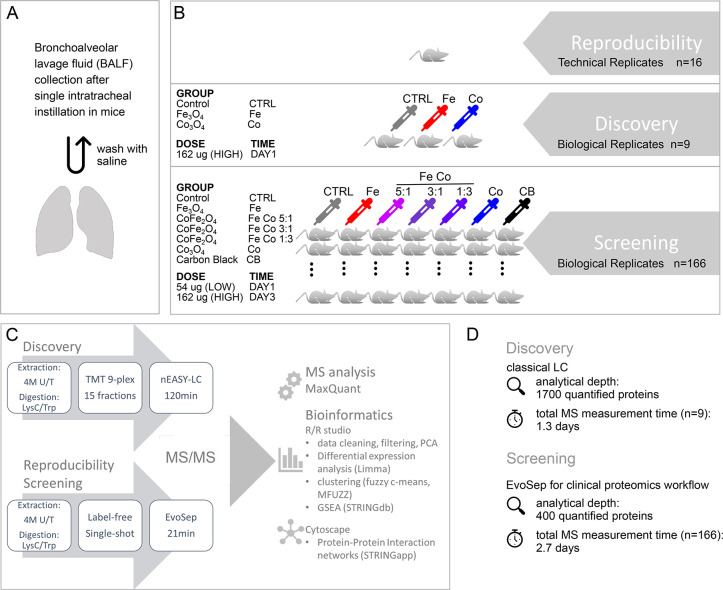
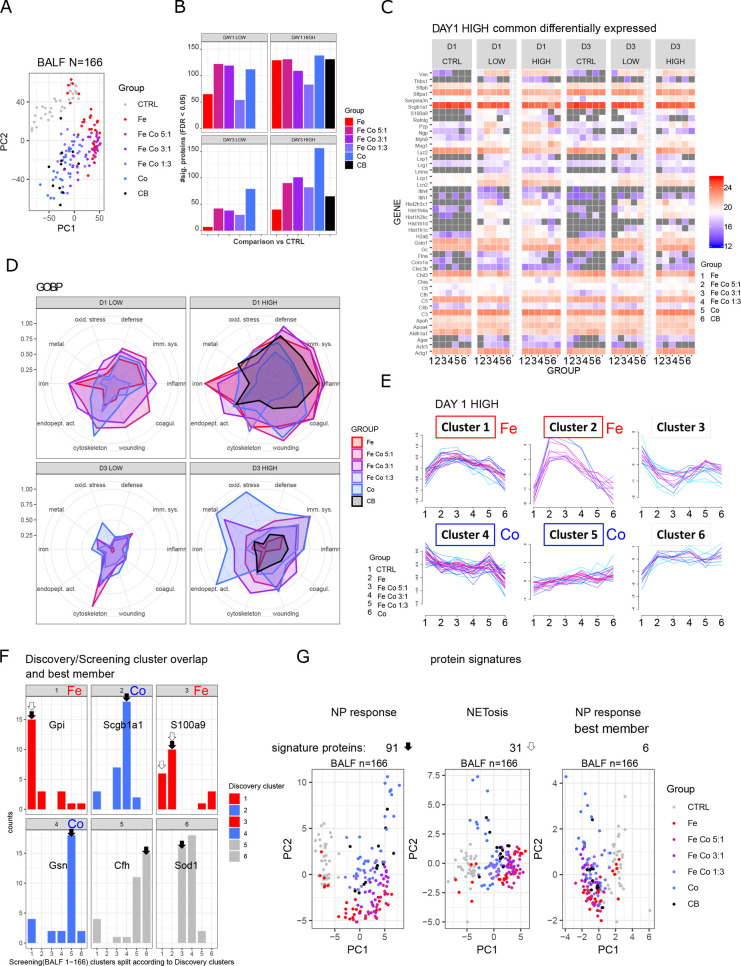
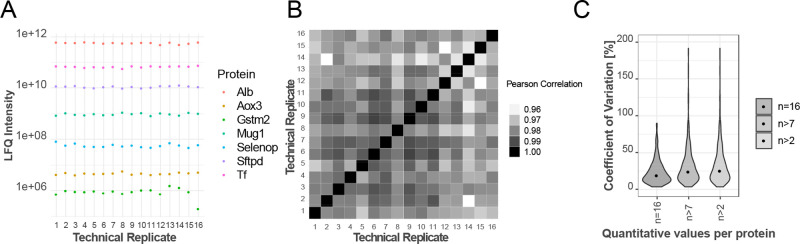
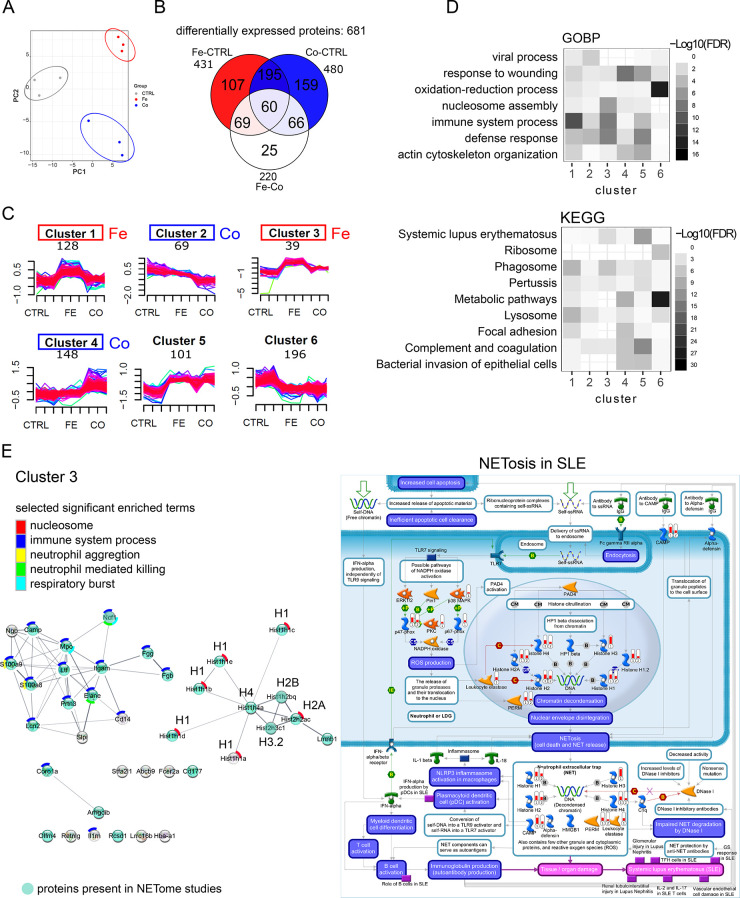
Despite broad application of magnetic nanoparticles in biomedicine and electronics, only a few studies on biocompatibility are available. In this study, toxicity of magnetic metal oxide nanoparticles on the respiratory system was examined by single intratracheal instillation in mice. Bronchoalveolar lavage fluid (BALF) samples were collected for proteome analyses by LC-MS/MS, testing FeO nanoparticles doped with increasing amounts of cobalt (FeO, CoFeO with an iron to cobalt ratio 5:1, 3:1, 1:3, CoO) at two doses (54 μg, 162 μg per animal) and two time points (day 1 and 3 days postinstillation). In discovery phase, in-depth proteome profiling of a few representative samples allowed for comprehensive pathway analyses. Clustering of the 681 differentially expressed proteins (FDR < 0.05) revealed general as well as metal oxide specific responses with an overall strong induction of innate immunity and activation of the complement system. The highest expression increase could be found for a cluster of 39 proteins, which displayed strong dose-dependency to iron oxide and can be attributed to neutrophil extracellular trap (NET) formation. In-depth proteome analysis expanded the knowledge of NET formation. During screening, all BALF samples of the study ( = 166) were measured label-free as single-injections after a short gradient (21 min) LC separation using the Evosep One system, validating the findings from the discovery and defining protein signatures which enable discrimination of lung inflammation. We demonstrate a proteomics-based toxicity screening with high sample throughput easily transferrable to other nanoparticle types. Data are available ProteomeXchange with identifier PXD016148.
尽管磁性纳米颗粒在生物医学和电子学领域有广泛应用,但关于生物相容性的研究却很少。在本研究中,通过对小鼠进行单次气管内滴注,检测了磁性金属氧化物纳米颗粒对呼吸系统的毒性。收集支气管肺泡灌洗液(BALF)样本,通过液相色谱-串联质谱(LC-MS/MS)进行蛋白质组分析,测试两种剂量(每只动物54μg、162μg)和两个时间点(滴注后第1天和第3天)下掺杂不同钴含量的FeO纳米颗粒(FeO、铁钴比为5:1、3:1、1:3的CoFeO、CoO)。在发现阶段,对一些代表性样本进行深入的蛋白质组分析,以进行全面的通路分析。对681个差异表达蛋白(FDR<0.05)进行聚类分析,揭示了一般以及金属氧化物特异性反应,总体上强烈诱导先天免疫并激活补体系统。在一组39种蛋白质中发现了最高的表达增加,这些蛋白质对氧化铁表现出强烈的剂量依赖性,可归因于中性粒细胞胞外陷阱(NET)的形成。深入的蛋白质组分析扩展了对NET形成的认识。在筛选过程中,使用Evosep One系统在短梯度(21分钟)液相色谱分离后,对研究中的所有BALF样本(n = 166)进行无标记单注射测量,验证了发现阶段的结果并确定了能够区分肺部炎症的蛋白质特征。我们展示了一种基于蛋白质组学的毒性筛选方法,具有高样本通量,可轻松转移到其他纳米颗粒类型。数据可在ProteomeXchange上获取,标识符为PXD016148。