The Xinjiang Technical Institute of Physics and Chemistry, Chinese Academy of Sciences, 830011, Urumqi, China.
University of Chinese Academy of Sciences, 100049, Beijing, China.
Commun Biol. 2020 Mar 13;3(1):118. doi: 10.1038/s42003-020-0858-8.
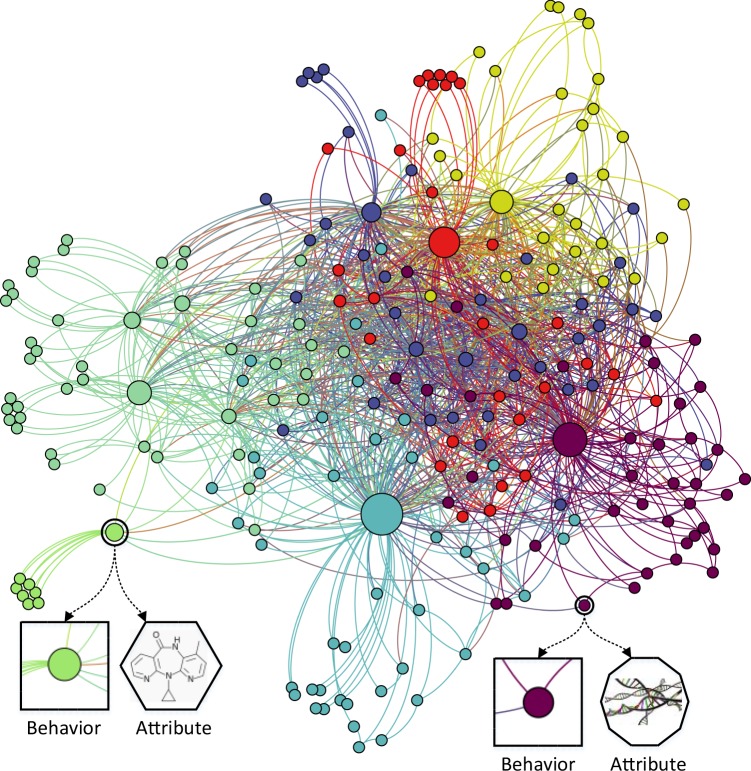
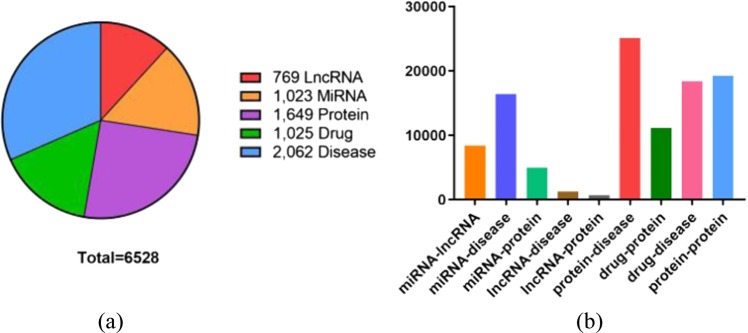
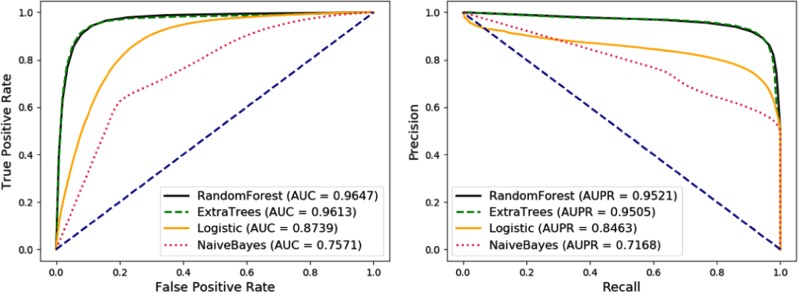
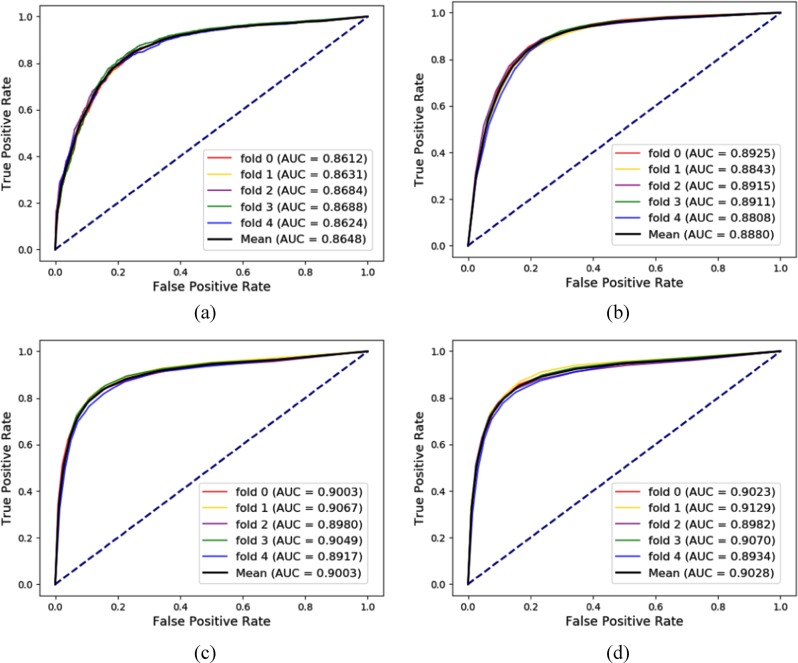
Abundant life activities are maintained by various biomolecule relationships in human cells. However, many previous computational models only focus on isolated objects, without considering that cell is a complete entity with ample functions. Inspired by holism, we constructed a Molecular Associations Network (MAN) including 9 kinds of relationships among 5 types of biomolecules, and a prediction model called MAN-GF. More specifically, biomolecules can be represented as vectors by the algorithm called biomarker2vec which combines 2 kinds of information involved the attribute learned by k-mer, etc and the behavior learned by Graph Factorization (GF). Then, Random Forest classifier is applied for training, validation and test. MAN-GF obtained a substantial performance with AUC of 0.9647 and AUPR of 0.9521 under 5-fold Cross-validation. The results imply that MAN-GF with an overall perspective can act as ancillary for practice. Besides, it holds great hope to provide a new insight to elucidate the regulatory mechanisms.
生命活动是由人体细胞中的各种生物分子关系维持的。然而,许多以前的计算模型只关注孤立的对象,而没有考虑到细胞是一个具有丰富功能的完整实体。受整体论的启发,我们构建了一个分子关联网络(MAN),其中包括 5 种生物分子之间的 9 种关系,以及一个名为 MAN-GF 的预测模型。更具体地说,生物分子可以通过 biomarker2vec 算法表示为向量,该算法结合了 k-mer 等属性学习和图因子分解(GF)学习所涉及的两种信息。然后,随机森林分类器用于训练、验证和测试。在 5 折交叉验证下,MAN-GF 获得了 AUC 为 0.9647 和 AUPR 为 0.9521 的优异性能。结果表明,从整体角度来看,MAN-GF 可以作为实践的辅助手段。此外,它有望为阐明调控机制提供新的见解。