Department of Pathology, The University of Hong Kong, Hong Kong, China.
State Key Laboratory of Liver Research, The University of Hong Kong, Hong Kong, China.
Hepatology. 2021 Jan;73(1):23-40. doi: 10.1002/hep.31231. Epub 2020 Nov 26.
Hepatitis B virus (HBV) integrations are common in hepatocellular carcinoma (HCC). In particular, alterations of the telomerase reverse transcriptase (TERT) gene by HBV integrations are frequent; however, the molecular mechanism and functional consequence underlying TERT HBV integration are unclear.
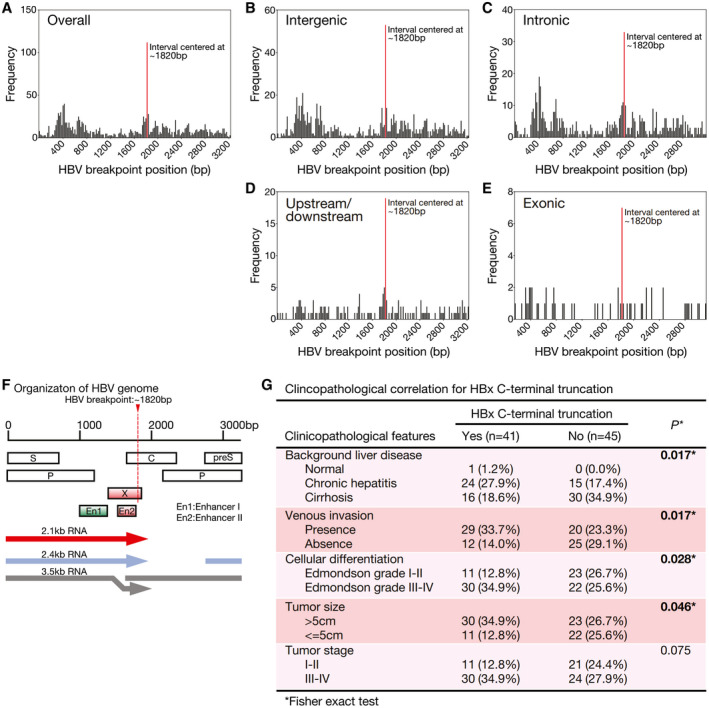
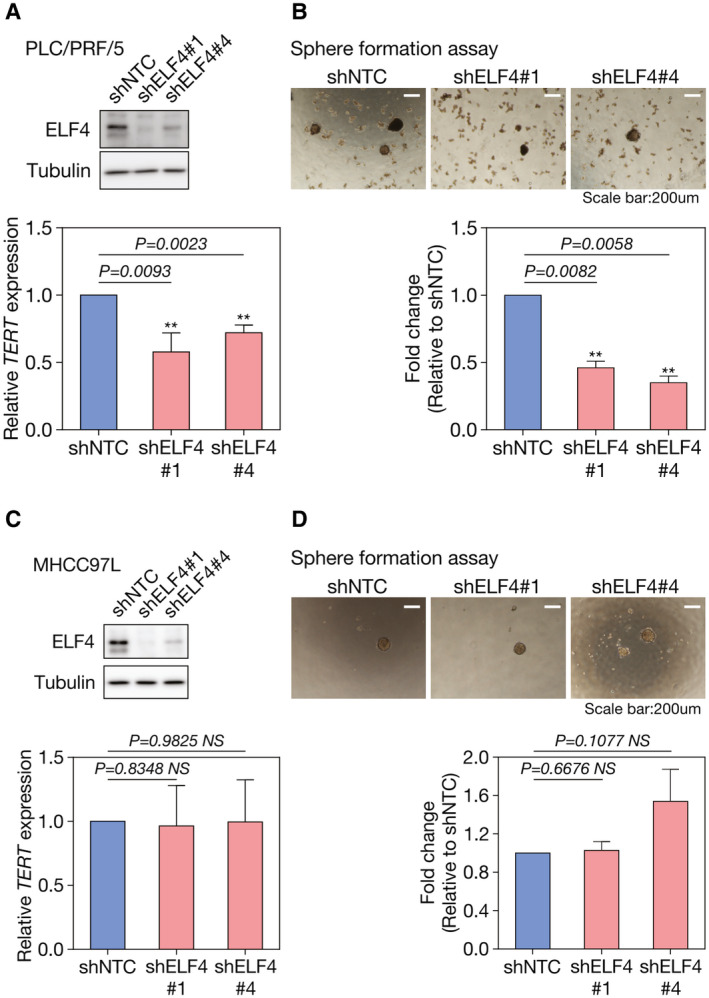
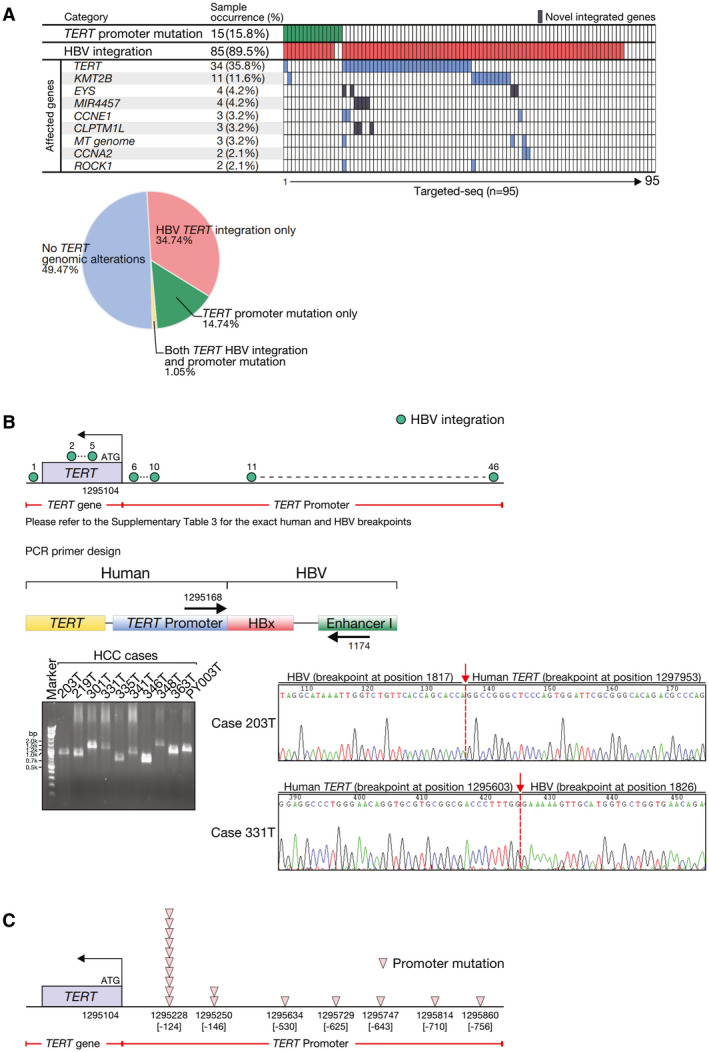
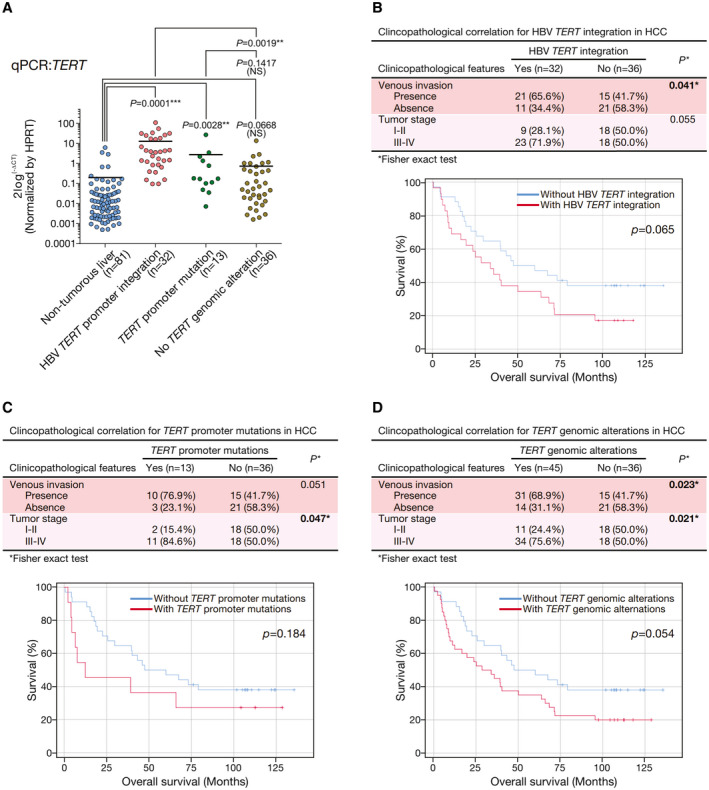
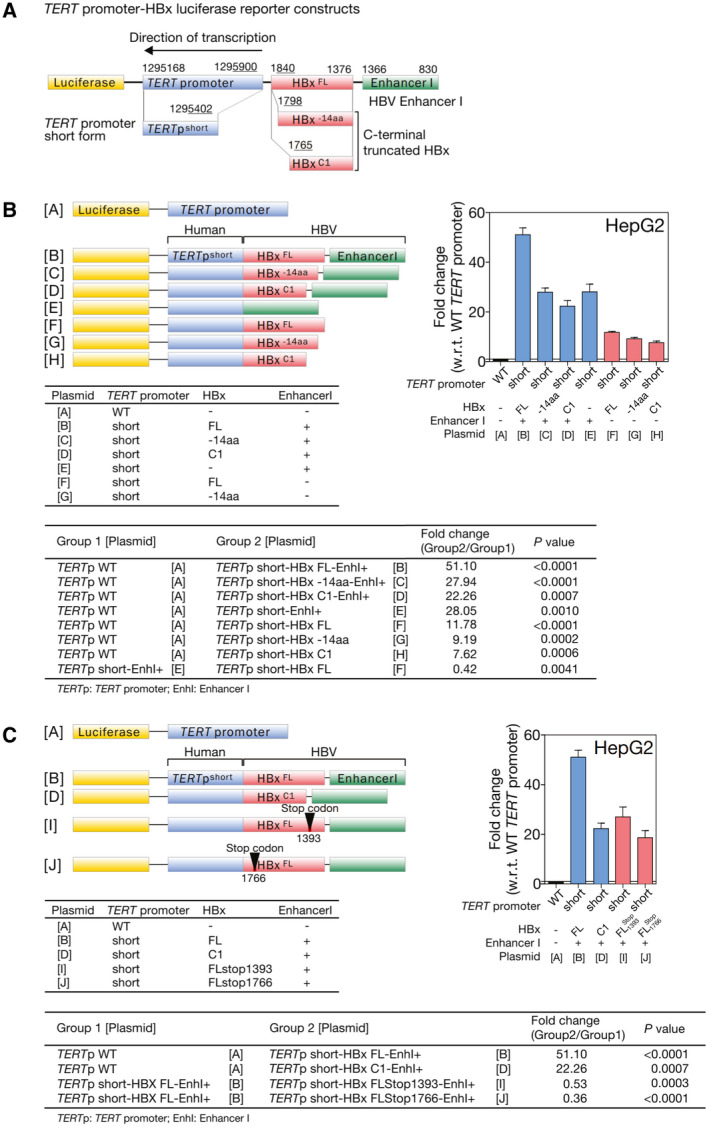
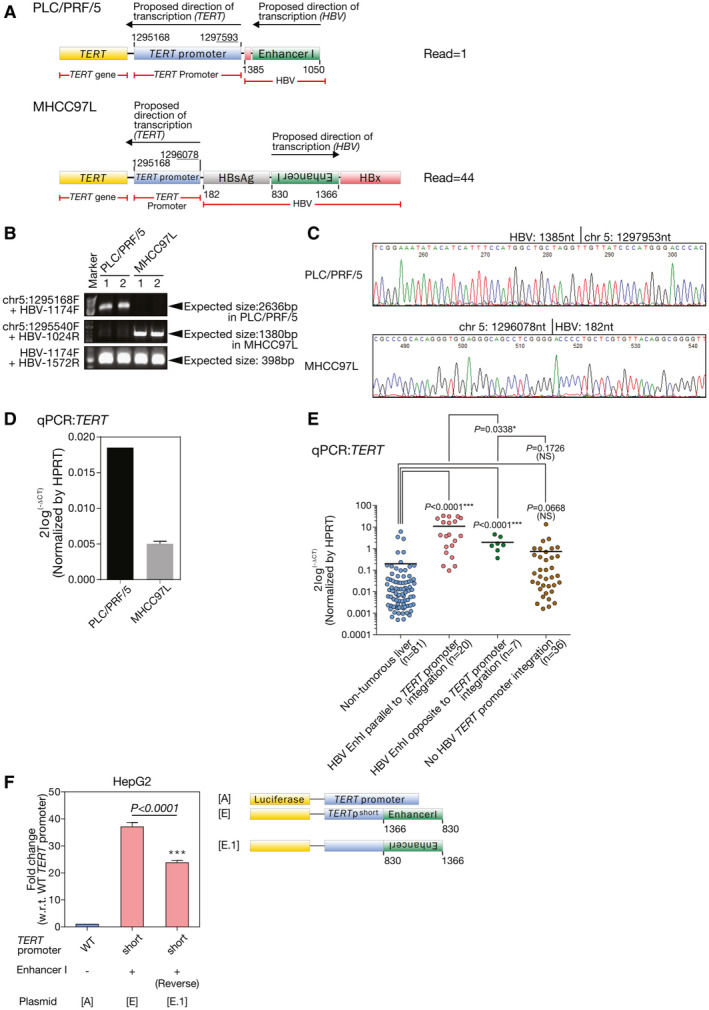
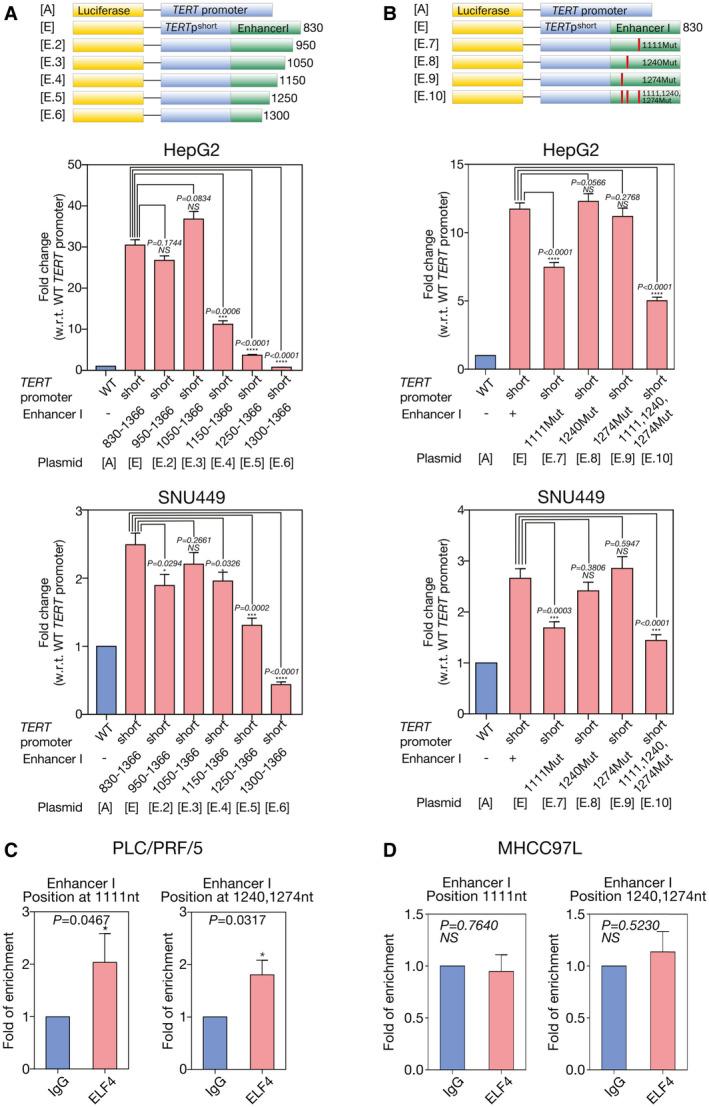
We adopted a targeted sequencing strategy to survey HBV integrations in human HBV-associated HCCs (n = 95). HBV integration at the TERT promoter was frequent (35.8%, n = 34/95) in HCC tumors and was associated with increased TERT mRNA expression and more aggressive tumor behavior. To investigate the functional importance of various integrated HBV components, we employed different luciferase reporter constructs and found that HBV enhancer I (EnhI) was the key viral component leading to TERT activation on integration at the TERT promoter. In addition, the orientation of the HBV integration at the TERT promoter further modulated the degree of TERT transcription activation in HCC cell lines and patients' HCCs. Furthermore, we performed array-based small interfering RNA library functional screening to interrogate the potential major transcription factors that physically interacted with HBV and investigated the cis-activation of host TERT gene transcription on viral integration. We identified a molecular mechanism of TERT activation through the E74 like ETS transcription factor 4 (ELF4), which normally could drive HBV gene transcription. ELF4 bound to the chimeric HBV EnhI at the TERT promoter, resulting in telomerase activation. Stable knockdown of ELF4 significantly reduced the TERT expression and sphere-forming ability in HCC cells.
Our results reveal a cis-activating mechanism harnessing host ELF4 and HBV integrated at the TERT promoter and uncover how TERT HBV-integrated HCCs may achieve TERT activation in hepatocarcinogenesis.
乙型肝炎病毒(HBV)整合在肝细胞癌(HCC)中很常见。特别是,HBV 整合对端粒酶逆转录酶(TERT)基因的改变很常见;然而,HBV 整合导致 TERT 改变的分子机制和功能后果尚不清楚。
我们采用靶向测序策略检测了 95 例人 HBV 相关 HCC 中的 HBV 整合。HBV 整合到 TERT 启动子中在 HCC 肿瘤中很常见(35.8%,n=34/95),与 TERT mRNA 表达增加和更具侵袭性的肿瘤行为有关。为了研究各种整合 HBV 成分的功能重要性,我们采用了不同的荧光素酶报告基因构建体,并发现 HBV 增强子 I(EnhI)是导致 TERT 启动子整合后 TERT 激活的关键病毒成分。此外,TERT 启动子上 HBV 整合的方向进一步调节了 HCC 细胞系和患者 HCC 中 TERT 转录激活的程度。此外,我们进行了基于阵列的小干扰 RNA 文库功能筛选,以探究与 HBV 物理相互作用的潜在主要转录因子,并研究了病毒整合对宿主 TERT 基因转录的顺式激活。我们确定了 TERT 激活的分子机制,通过 E74 样 ETS 转录因子 4(ELF4),它通常可以驱动 HBV 基因转录。ELF4 与 TERT 启动子上的嵌合 HBV EnhI 结合,导致端粒酶激活。ELF4 的稳定敲低显著降低了 HCC 细胞中的 TERT 表达和球体形成能力。
我们的结果揭示了一种利用宿主 ELF4 和整合到 TERT 启动子上的 HBV 的顺式激活机制,并揭示了 TERT 整合的 HCC 如何在肝癌发生中实现 TERT 激活。