Zhang Jia-Min, Zou Lee
Massachusetts General Hospital Cancer Center, Harvard Medical School, Charlestown, MA 02129 USA.
2Department of Pathology, Massachusetts General Hospital, Harvard Medical School, Boston, MA 02114 USA.
Cell Biosci. 2020 Mar 10;10:30. doi: 10.1186/s13578-020-00391-6. eCollection 2020.
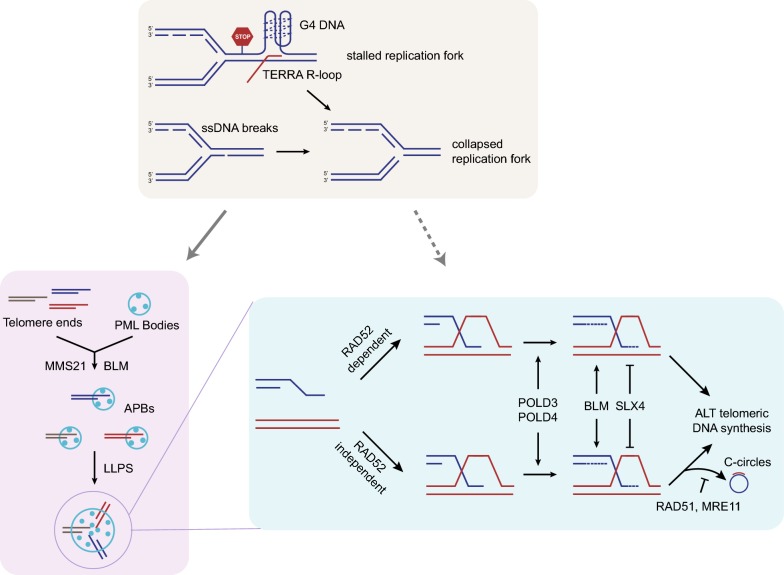
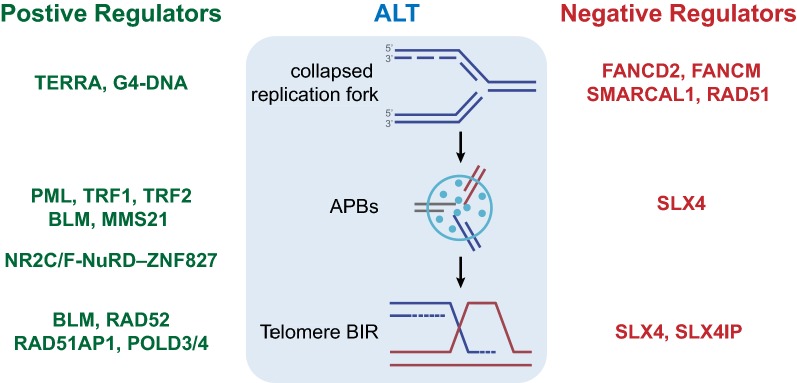
To escape replicative senescence, cancer cells have to overcome telomere attrition during DNA replication. Most of cancers rely on telomerase to extend and maintain telomeres, but 4-11% of cancers use a homologous recombination-based pathway called alternative lengthening of telomeres (ALT). ALT is prevalent in cancers from the mesenchymal origin and usually associates with poor clinical outcome. Given its critical role in protecting telomeres and genomic integrity in tumor cells, ALT is an Achilles heel of tumors and an attractive target for cancer therapy. Here, we review the recent progress in the mechanistic studies of ALT, and discuss the emerging therapeutic strategies to target ALT-positive cancers.
为了逃避复制性衰老,癌细胞必须在DNA复制过程中克服端粒磨损。大多数癌症依赖端粒酶来延长和维持端粒,但4%-11%的癌症使用一种基于同源重组的途径,称为端粒替代延长(ALT)。ALT在间充质起源的癌症中很普遍,通常与不良临床结果相关。鉴于其在保护肿瘤细胞中端粒和基因组完整性方面的关键作用,ALT是肿瘤的致命弱点,也是癌症治疗的一个有吸引力的靶点。在这里,我们综述了ALT机制研究的最新进展,并讨论了针对ALT阳性癌症的新兴治疗策略。