MOE&NHC&CAMS Key Laboratory of Medical Molecular Virology, Department of Medical Microbiology and Parasitology, Biosafety Level 3 Laboratory, School of Basic Medical Science, Shanghai Medical College, Fudan University, Shanghai, P. R. China.
ShengYushou Center of Cell Biology and Immunology, School of Life Science and Biotechnology, Shanghai Jiao Tong University, Shanghai, P. R. China.
PLoS Pathog. 2020 Mar 16;16(3):e1008447. doi: 10.1371/journal.ppat.1008447. eCollection 2020 Mar.
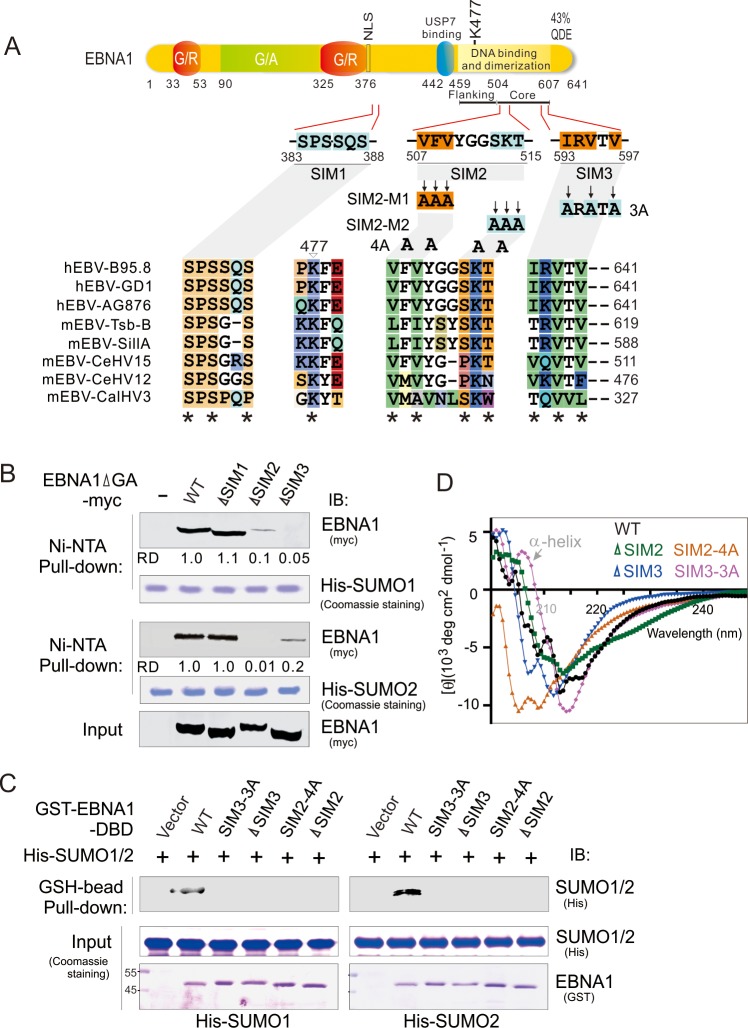
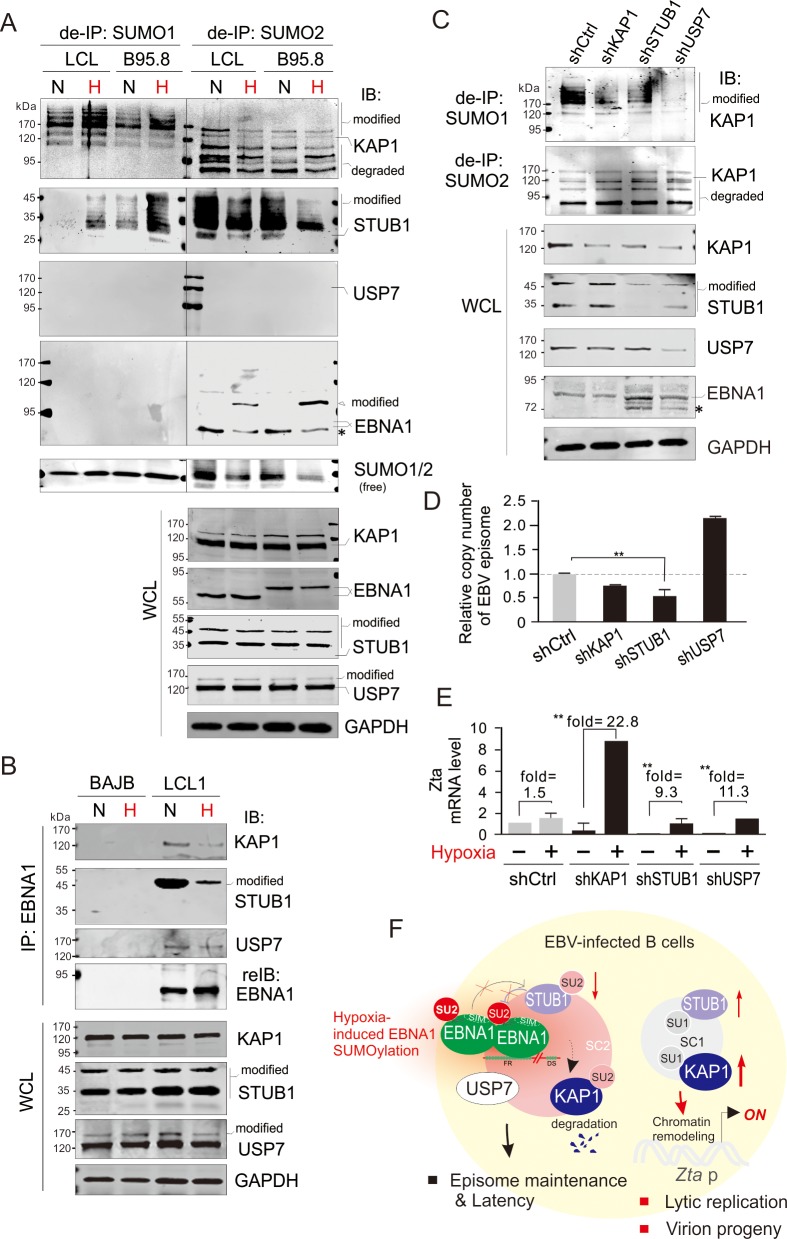
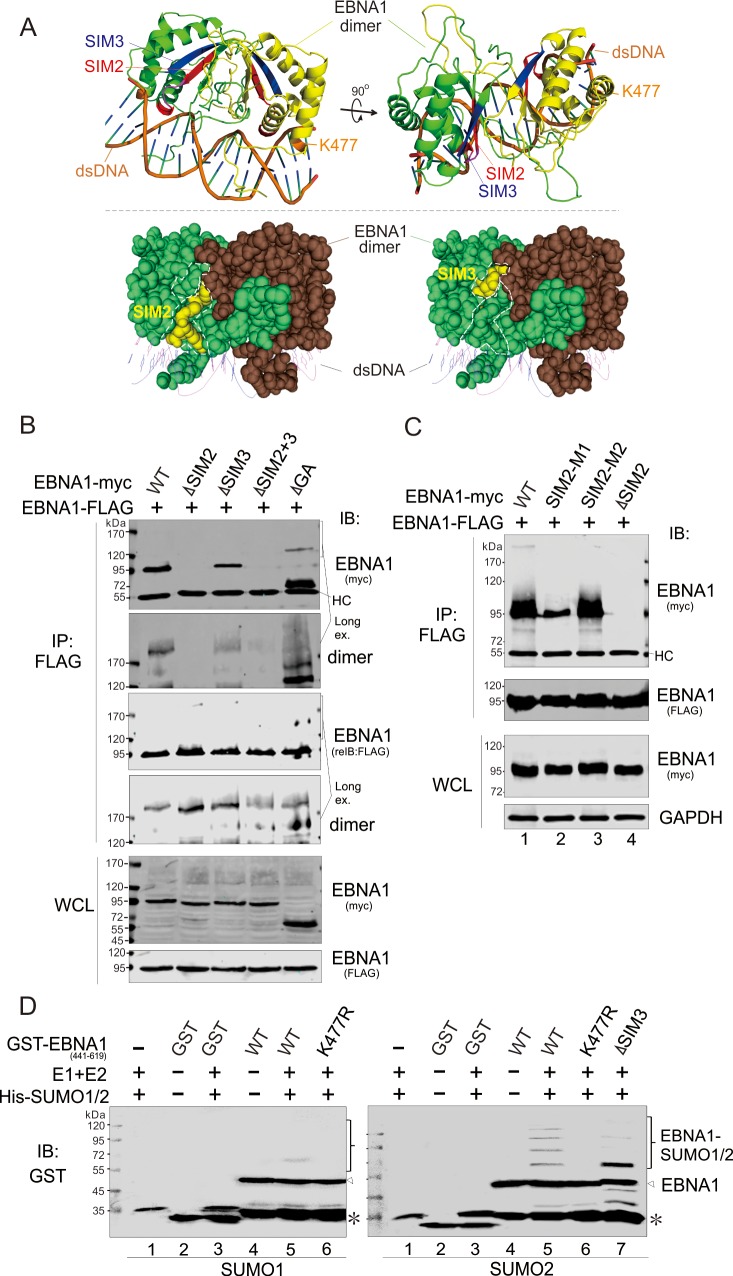
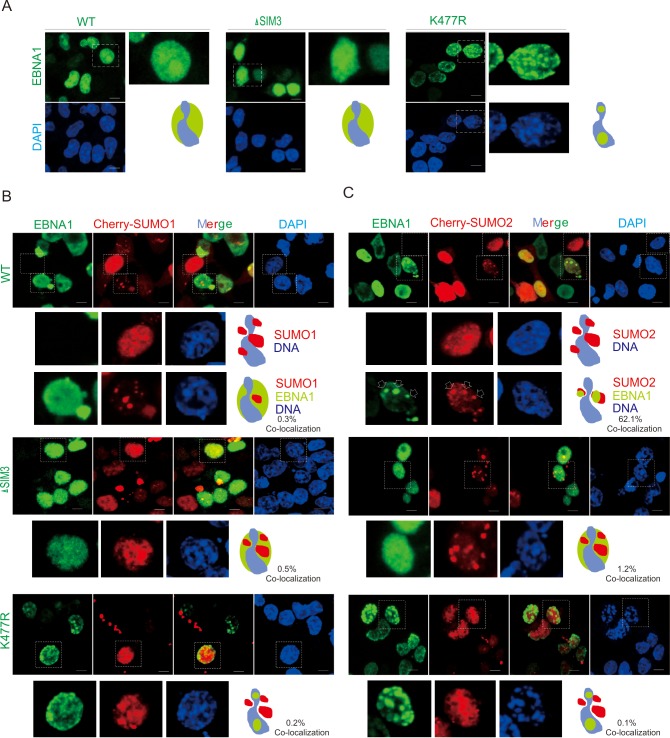
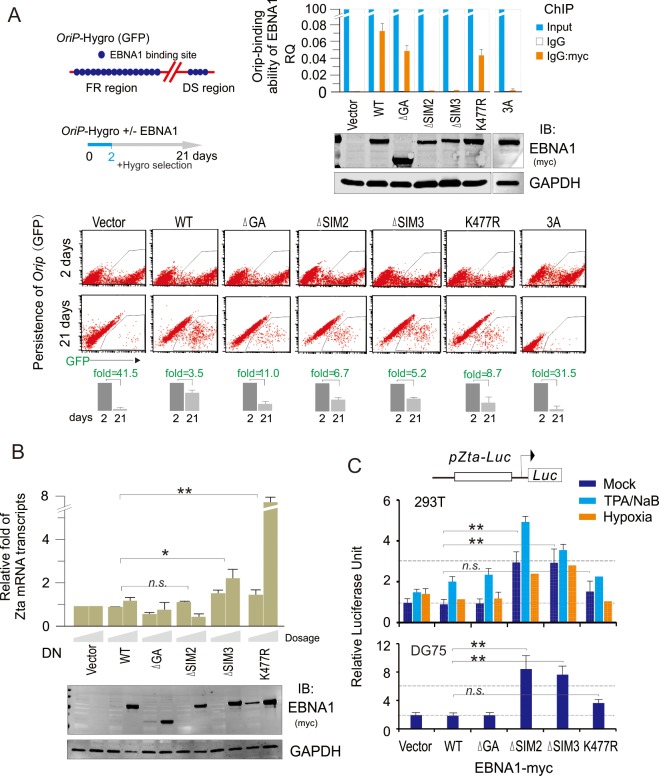
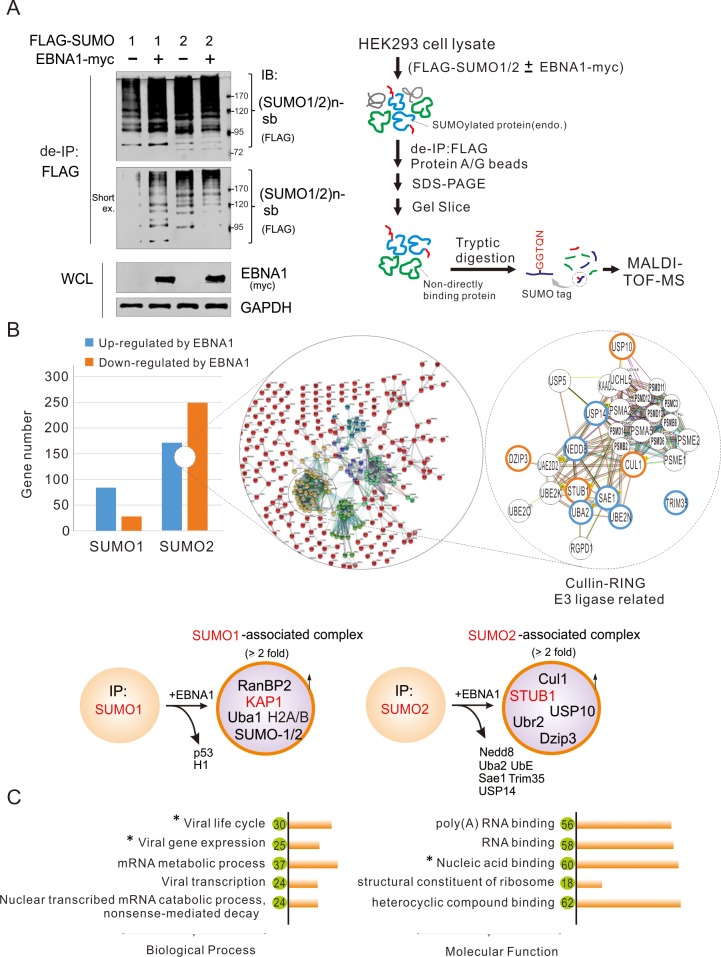
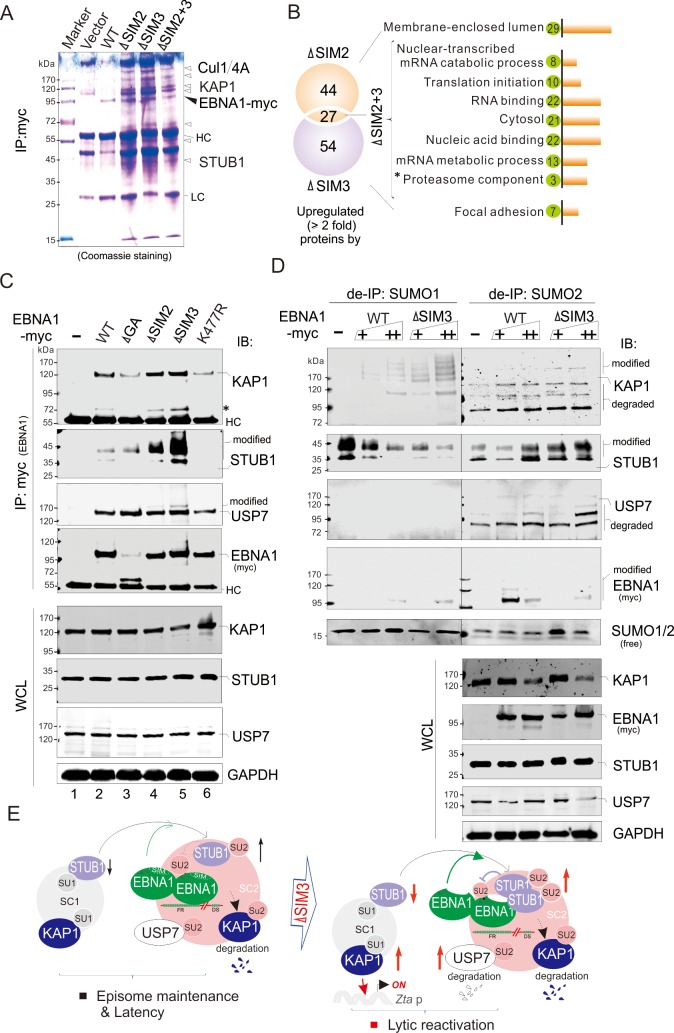
Latent Epstein-Barr virus (EBV) infection is strongly associated with several malignancies, including B-cell lymphomas and epithelial tumors. EBNA1 is a key antigen expressed in all EBV-associated tumors during latency that is required for maintenance of the EBV episome DNA and the regulation of viral gene transcription. However, the mechanism utilized by EBV to maintain latent infection at the levels of posttranslational regulation remains largely unclear. Here, we report that EBNA1 contains two SUMO-interacting motifs (SIM2 and SIM3), and mutation of SIM2, but not SIM3, dramatically disrupts the EBNA1 dimerization, while SIM3 contributes to the polySUMO2 modification of EBNA1 at lysine 477 in vitro. Proteomic and immunoprecipitation analyses further reveal that the SIM3 motif is required for the EBNA1-mediated inhibitory effects on SUMO2-modified STUB1, SUMO2-mediated degradation of USP7, and SUMO1-modified KAP1. Deletion of the EBNASIM motif leads to functional loss of both EBNA1-mediated viral episome maintenance and lytic gene silencing. Importantly, hypoxic stress induces the SUMO2 modification of EBNA1, and in turn the dissociation of EBNA1 with STUB1, KAP1 and USP7 to increase the SUMO1 modification of both STUB1 and KAP1 for reactivation of lytic replication. Therefore, the EBNA1SIM motif plays an essential role in EBV latency and is a potential therapeutic target against EBV-associated cancers.
潜伏性 Epstein-Barr 病毒 (EBV) 感染与多种恶性肿瘤密切相关,包括 B 细胞淋巴瘤和上皮肿瘤。EBNA1 是潜伏感染期间所有 EBV 相关肿瘤中表达的关键抗原,对于 EBV episome DNA 的维持和病毒基因转录的调控是必需的。然而,EBV 用于维持潜伏感染的机制在翻译后调节水平上仍很大程度上不清楚。在这里,我们报告 EBNA1 含有两个 SUMO 相互作用基序 (SIM2 和 SIM3),突变 SIM2,但不是 SIM3,显著破坏了 EBNA1 二聚化,而 SIM3 有助于 EBNA1 在体外赖氨酸 477 上的多 SUMO2 修饰。蛋白质组学和免疫沉淀分析进一步表明,SIM3 基序是 EBNA1 介导的对 SUMO2 修饰的 STUB1、SUMO2 介导的 USP7 降解和 SUMO1 修饰的 KAP1 的抑制作用所必需的。EBNASIM 基序的缺失导致 EBNA1 介导的病毒 episome 维持和裂解基因沉默的功能丧失。重要的是,缺氧应激诱导 EBNA1 的 SUMO2 修饰,进而导致 EBNA1 与 STUB1、KAP1 和 USP7 的解离,以增加 STUB1 和 KAP1 的 SUMO1 修饰,从而重新激活裂解复制。因此,EBNA1SIM 基序在 EBV 潜伏期中起着至关重要的作用,是针对 EBV 相关癌症的潜在治疗靶点。