Wrage Jasmin, Kleyner Oxana, Rohn Sascha, Kuballa Jürgen
GALAB Laboratories GmbH, Am Schleusengraben 7, 21029 Hamburg, Germany.
Institute of Food Chemistry, Hamburg School of Food Science, University of Hamburg, Grindelallee 117, 20146 Hamburg, Germany.
Foods. 2020 Mar 12;9(3):332. doi: 10.3390/foods9030332.
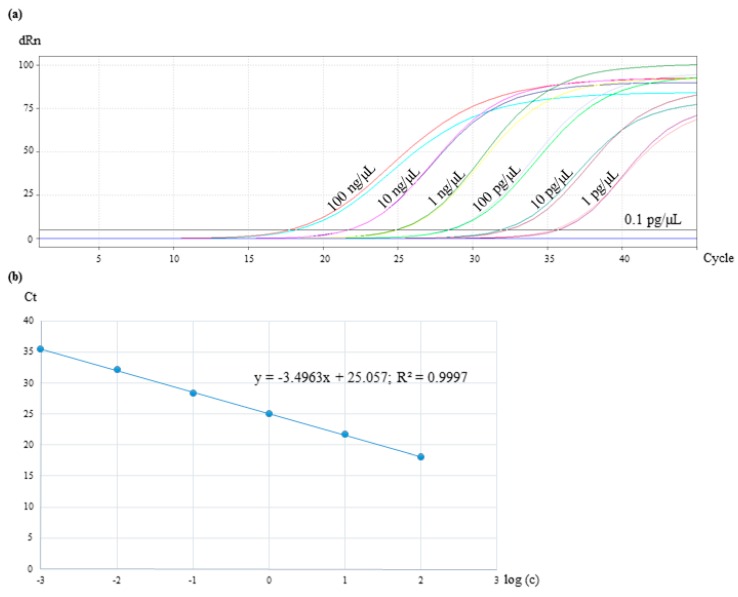
So far, only a few cases of immunoglobulin E (IgE)-mediated coconut allergies have been described in the literature. Due to a growing consumption of coconut-containing foods in occidental countries, the number of coconut allergies may also increase. As there is no causative immunotherapy in clinical routine, appropriate food labelling is particularly important, also with regard to cross-contamination, to prevent serious health consequences. The purpose of this study was to develop a DNA-based detection method for coconut (). Initially, three sets of coconut-specific primers were designed and tested. A TaqMan™ probe was then developed to identify and quantify coconut by real-time PCR assay. With 27 other plant and animal species, the specificity of the primer/probe system was tested and cross reactivity was excluded. In a dilution series, a limit of detection of 1 pg/µL was determined. Thus, the developed real-time PCR assay is a suitable method to detect coconut in food.
到目前为止,文献中仅描述了少数几例免疫球蛋白E(IgE)介导的椰子过敏病例。由于西方国家含椰子食品的消费量不断增加,椰子过敏的病例数可能也会上升。由于临床常规中没有病因性免疫疗法,因此适当的食品标签,尤其是关于交叉污染的标签,对于预防严重的健康后果尤为重要。本研究的目的是开发一种基于DNA的椰子检测方法()。最初,设计并测试了三组椰子特异性引物。然后开发了一种TaqMan™探针,通过实时PCR测定法来鉴定和定量椰子。使用其他27种动植物物种,测试了引物/探针系统的特异性并排除了交叉反应性。在一个稀释系列中,确定检测限为1 pg/µL。因此,所开发的实时PCR测定法是检测食品中椰子的合适方法。