Rathod Ramji, Gajera Bharat, Nazir Kenneth, Wallenius Janne, Velagapudi Vidya
Metabolomics Unit, Institute for Molecular Medicine Finland (FIMM), HiLIFE, University of Helsinki, Tukholmankatu 8, Biomedicum 2U, 00290 Helsinki, Finland.
Fungal Genetics and Biotechnology, Department of Microbiology, University of Helsinki, Biocenter 1, Viikinkaari 9, 00790 Helsinki, Finland.
Metabolites. 2020 Mar 12;10(3):103. doi: 10.3390/metabo10030103.
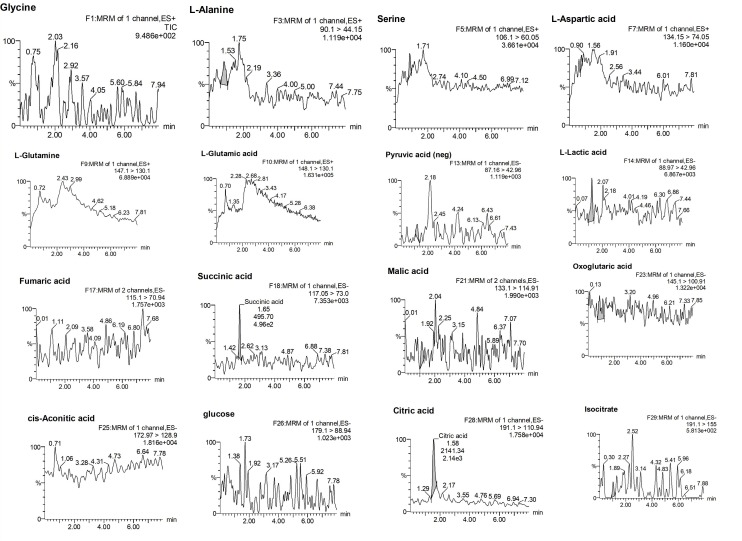
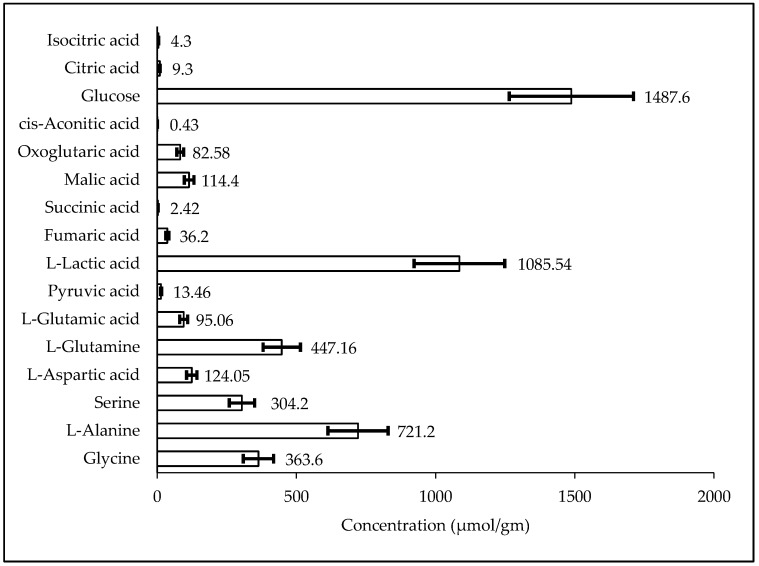
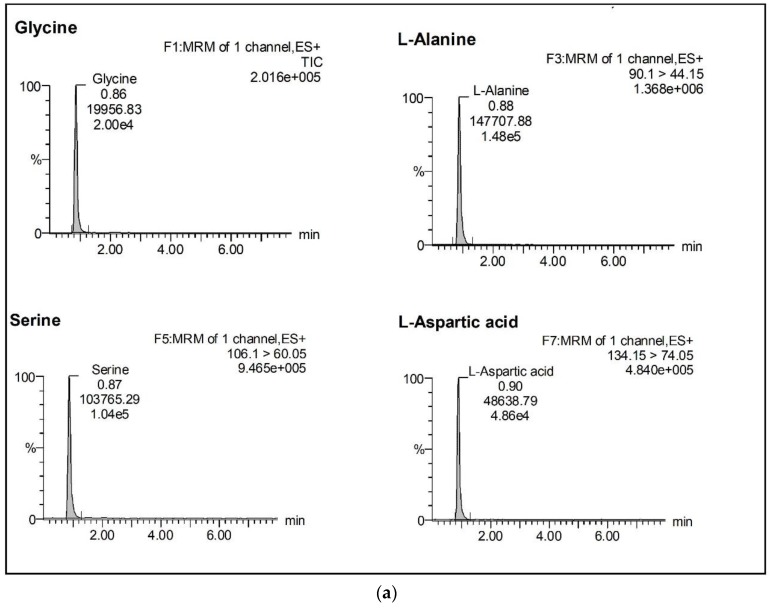
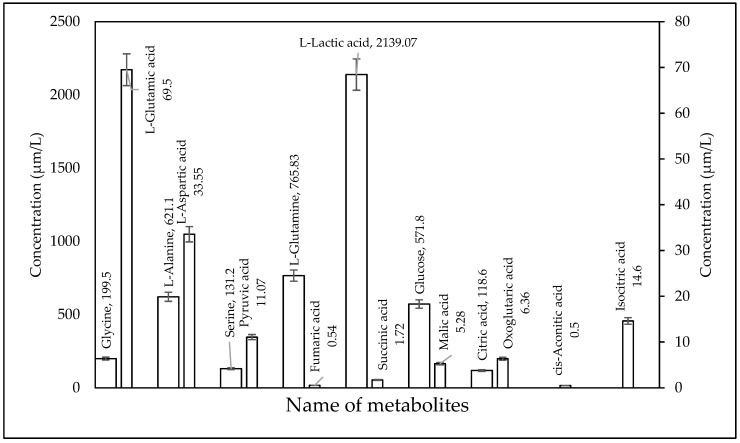
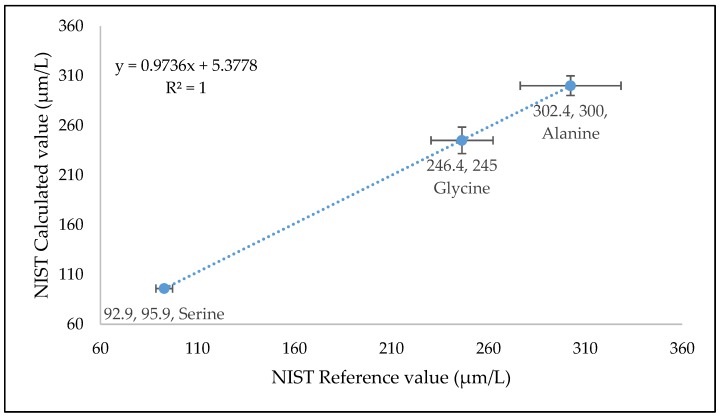
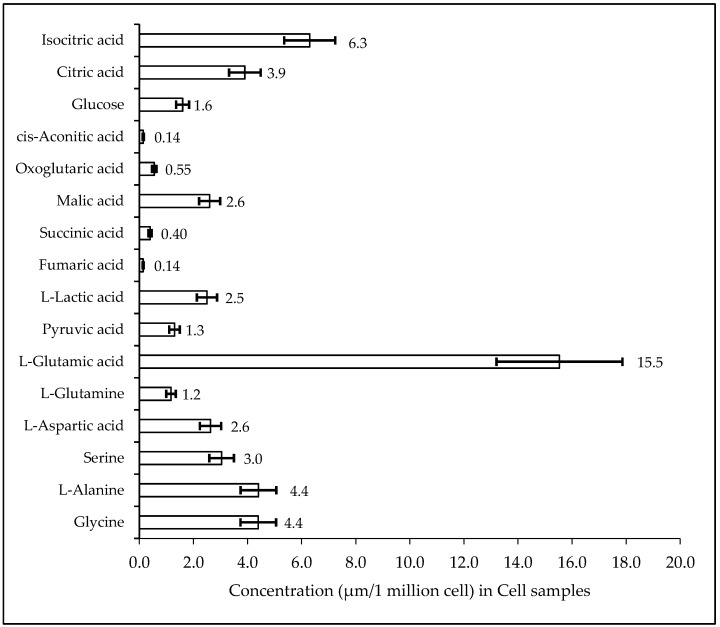
The tricarboxylic acid (TCA) cycle is a central part of carbon and energy metabolism, also connecting to glycolysis, amino acid, and lipid metabolism. The quantitation of the TCA cycle intermediate within one method is lucrative due to the interest in central carbon metabolism profiling in cells and tissues. In addition, TCA cycle intermediates in serum have been discovered to correspond as biomarkers to various underlying pathological conditions. In this work, an Liquid Chromatography-Mass Spectrometry/Mass Spectrometry-based quantification method is developed and validated, which takes advantage of fast, specific, sensitive, and cost-efficient precipitation extraction. Chromatographic separation is achieved while using Atlantis dC18 2.1 mm × 100 mm, particle size 3-μm of Waters column with a gradient elution mobile phase while using formic acid in water (0.1% /) and acetonitrile. Linearity was clearly seen over a calibration range of: 6.25 to 6400 ng/mL (r > 0.980) for malic acid; 11.72 to 12,000 ng/mL (r > 0.980) for cis-aconitic acid and L-aspartic acid; 29.30 to 30,000 ng/mL (r > 0.980) for isocitric acid, l-serine, and l-glutamic acid; 122.07 to 125,000 ng/mL (r > 0.980) for citric acid, glycine, -glutaric acid, l-alanine, and l-glutamine; 527.34 to 540,000 ng/mL (r > 0.980) for l-lactic acid; 976.56 to 1,000,000 ng/mL (r > 0.980) for d-glucose; 23.44 to 24,000 ng/mL (r > 0.980) for fumaric acid and succinic acid; and, 244.14 to 250,000 ng/mL (r > 0.980) for pyruvic acid. Validation was carried out, as per European Medicines Agency (EMA) "guidelines on bioanalytical method validation", for linearity, precision, accuracy, limit of detection (LOD), limit of quantification (LLOQ), recovery, matrix effect, and stability. The recoveries from serum and tissue were 79-119% and 77-223%, respectively. Using this method, we measured TCA intermediates in serum, plasma (NIST 1950 SRM), and in mouse liver samples. The concentration found in NIST SRM 1950 ( = 6) of glycine (246.4 µmol/L), l-alanine (302.4 µmol/L), and serine (92.9 µmol/L).
三羧酸(TCA)循环是碳和能量代谢的核心部分,还与糖酵解、氨基酸和脂质代谢相关。由于对细胞和组织中中心碳代谢谱的关注,采用一种方法对TCA循环中间体进行定量分析很有意义。此外,已发现血清中的TCA循环中间体可作为各种潜在病理状况的生物标志物。在这项工作中,开发并验证了一种基于液相色谱 - 质谱/质谱的定量方法,该方法利用了快速、特异、灵敏且经济高效的沉淀萃取技术。使用沃特世公司粒径为3 - μm的Atlantis dC18 2.1 mm×100 mm色谱柱,以水(含0.1%甲酸)和乙腈为流动相进行梯度洗脱,实现色谱分离。在以下校准范围内呈现出明显的线性关系:苹果酸为6.25至6400 ng/mL(r > 0.980);顺乌头酸和L - 天冬氨酸为11.72至12,000 ng/mL(r > 0.980);异柠檬酸、L - 丝氨酸和L - 谷氨酸为29.30至30,000 ng/mL(r > 0.980);柠檬酸、甘氨酸、α - 戊二酸、L - 丙氨酸和L - 谷氨酰胺为122.07至125,000 ng/mL(r > 0.980);L - 乳酸为527.34至540,000 ng/mL(r > 0.980);D - 葡萄糖为976.56至1,000,000 ng/mL(r > 0.980);富马酸和琥珀酸为23.44至24,000 ng/mL(r > 0.980);丙酮酸为244.14至250,000 ng/mL(r > 0.980)。按照欧洲药品管理局(EMA)“生物分析方法验证指南”进行了线性、精密度、准确度、检测限(LOD)、定量限(LLOQ)、回收率、基质效应和稳定性的验证。血清和组织的回收率分别为79 - 119%和77 - 223%。使用该方法,我们测定了血清、血浆(NIST 1950 SRM)和小鼠肝脏样本中的TCA中间体。在NIST SRM 1950(n = 6)中测得甘氨酸浓度为(246.4 μmol/L)、L - 丙氨酸浓度为(302.4 μmol/L)、丝氨酸浓度为(92.9 μmol/L)。