Research Center for Odontology, School of Life Dentistry at Tokyo, The Nippon Dental University, 1-9-20 Fujimi, Chiyoda-ku, Tokyo, 102-8159, Japan.
Department of Periodontology, Graduate School of Medical and Dental Sciences, Tokyo Medical and Dental University (TMDU), 1-5-45 Yushima, Bunkyo-ku, Tokyo, 113-8510, Japan.
Hum Cell. 2020 Jul;33(3):490-501. doi: 10.1007/s13577-020-00327-9. Epub 2020 Mar 16.
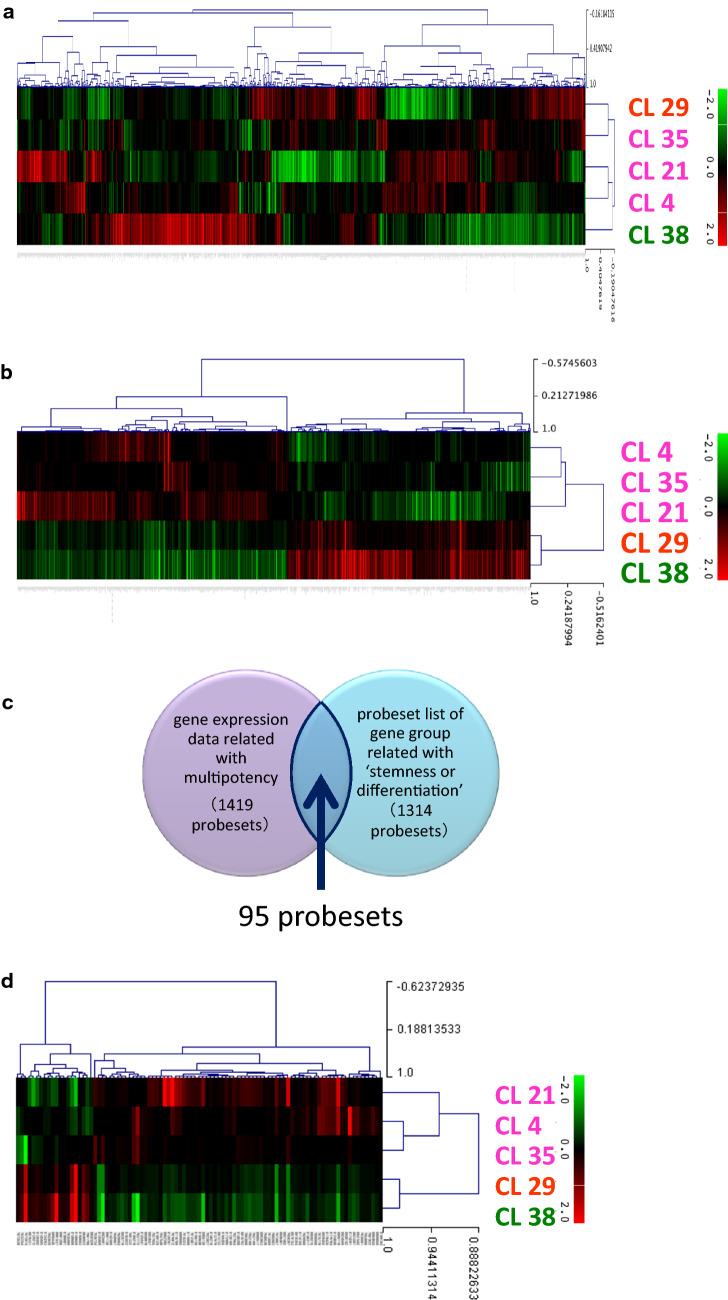
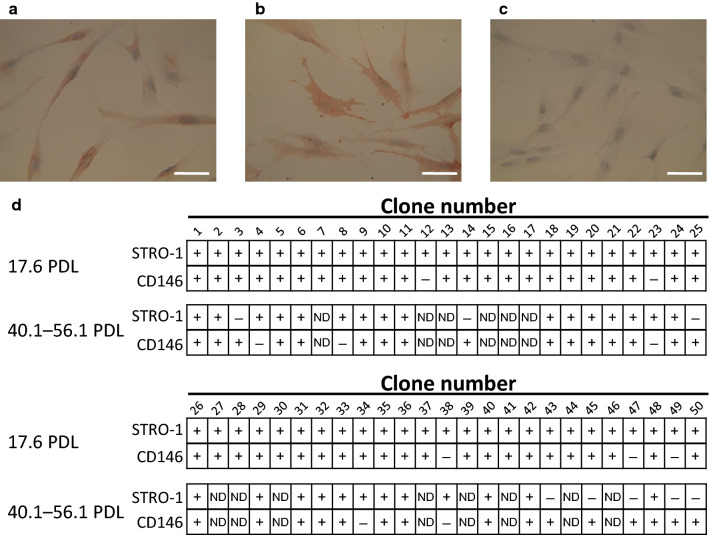
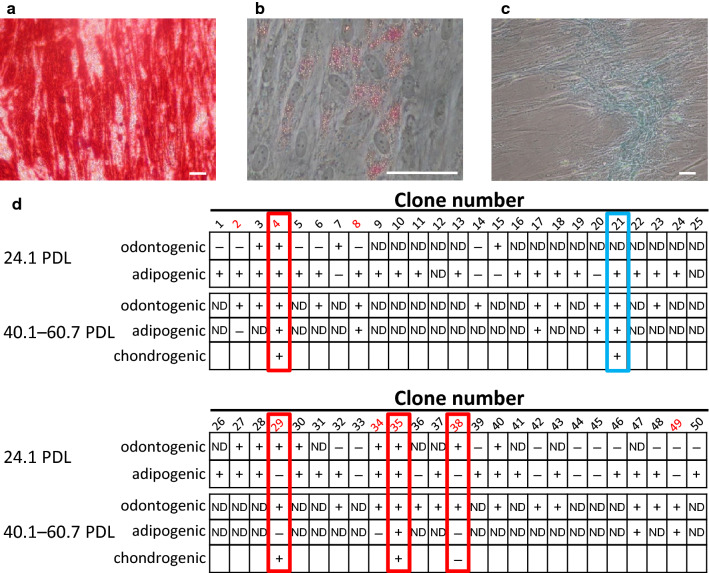
Mesenchymal stem cells are a highly promising source of cells for regeneration therapy because of their multilineage differentiation potential. However, distinct markers for mesenchymal stem cells are not well-established. To identify new candidate marker genes for multipotent human dental pulp stem cells, we analyzed the characteristics and gene expression profiles of cell clones obtained from a single dental pulp specimen derived from an 11-year-old female patient. Fifty colony-forming single cell-derived clones were separately cultured until the cessation of growth. These clones varied in their proliferation abilities and surface marker (STRO-1 and CD146) expression patterns, as well as their odontogenic, adipogenic, and chondrogenic differentiation potentials. Four clones maintained their original differentiation potentials during long-term culture. Gene expression profile by DNA microarray analysis of five representative clones identified 1227 genes that were related to multipotency. Ninety of these 1227 genes overlapped with genes reportedly involved in 'stemness or differentiation'. Based on the predicted locations of expressed protein products and large changes in expression levels, 14 of the 90 genes were selected as candidate dental pulp stem cell markers, particularly in relation to their multipotency characteristics. This characterization of cell clones obtained from a single specimen of human dental pulp provided information regarding new candidate marker genes for multipotent dental pulp stem cells, which could facilitate efficient analysis or enrichment of multipotent stem cells.
间充质干细胞因其多向分化潜能而成为再生治疗极具前景的细胞来源。然而,间充质干细胞的明确标志物尚未得到很好的建立。为了鉴定多能人牙髓干细胞的新候选标记基因,我们分析了从一位 11 岁女性患者的单个牙髓标本中获得的细胞克隆的特征和基因表达谱。将 50 个集落形成的单细胞衍生克隆分别培养至生长停止。这些克隆在增殖能力和表面标志物(STRO-1 和 CD146)表达模式以及成牙本质、成脂肪和成软骨分化潜能方面存在差异。四个克隆在长期培养过程中保持了原始的分化潜能。对五个代表性克隆的 DNA 微阵列分析进行的基因表达谱分析确定了 1227 个与多能性相关的基因。其中 90 个基因与报道中与“干性或分化”相关的基因重叠。基于表达蛋白产物的预测位置和表达水平的大幅变化,从 90 个基因中选择了 14 个作为候选牙髓干细胞标记基因,特别是与它们的多能性特征相关的基因。从单个人类牙髓标本中获得的细胞克隆的这种特征提供了有关多能牙髓干细胞新候选标记基因的信息,这有助于对多能干细胞进行有效的分析或富集。