Pai Jih-Tung, Hsu Chia-Yun, Hsieh Yei-San, Tsai Tsung-Yu, Hua Kuo-Tai, Weng Meng-Shih
Division of Hematology and Oncology Tao-Yuan General Hospital Ministry of Health and Welfare Taoyuan City Taiwan.
Department of Nutritional Science Fu Jen Catholic University New Taipei city Taiwan.
Food Sci Nutr. 2020 Feb 6;8(3):1534-1545. doi: 10.1002/fsn3.1439. eCollection 2020 Mar.
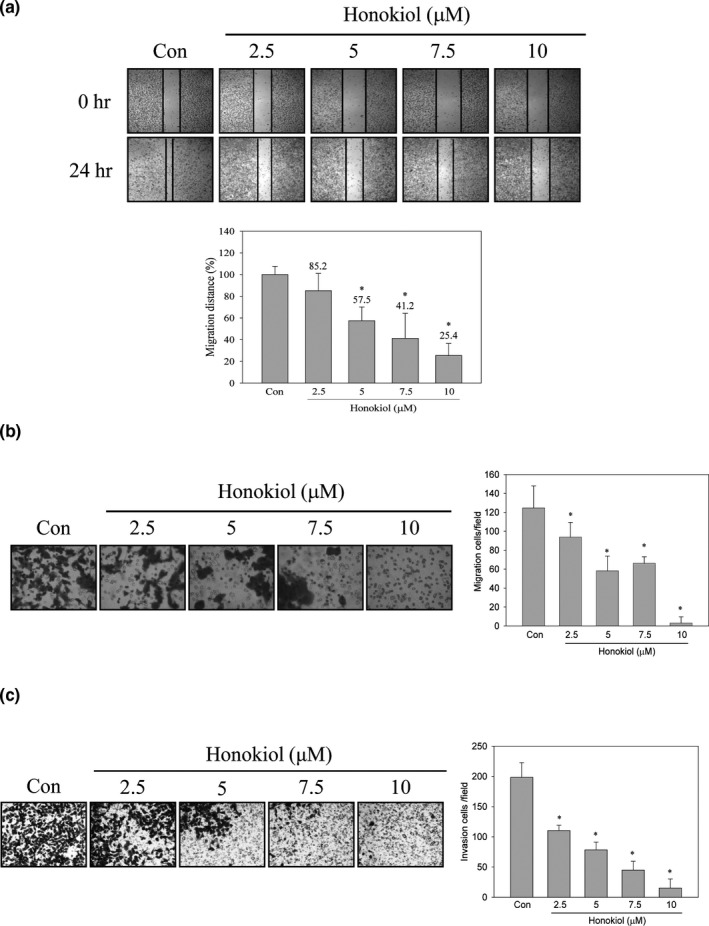
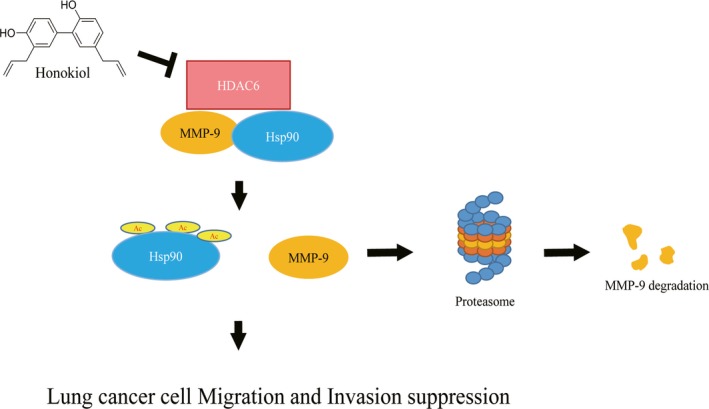
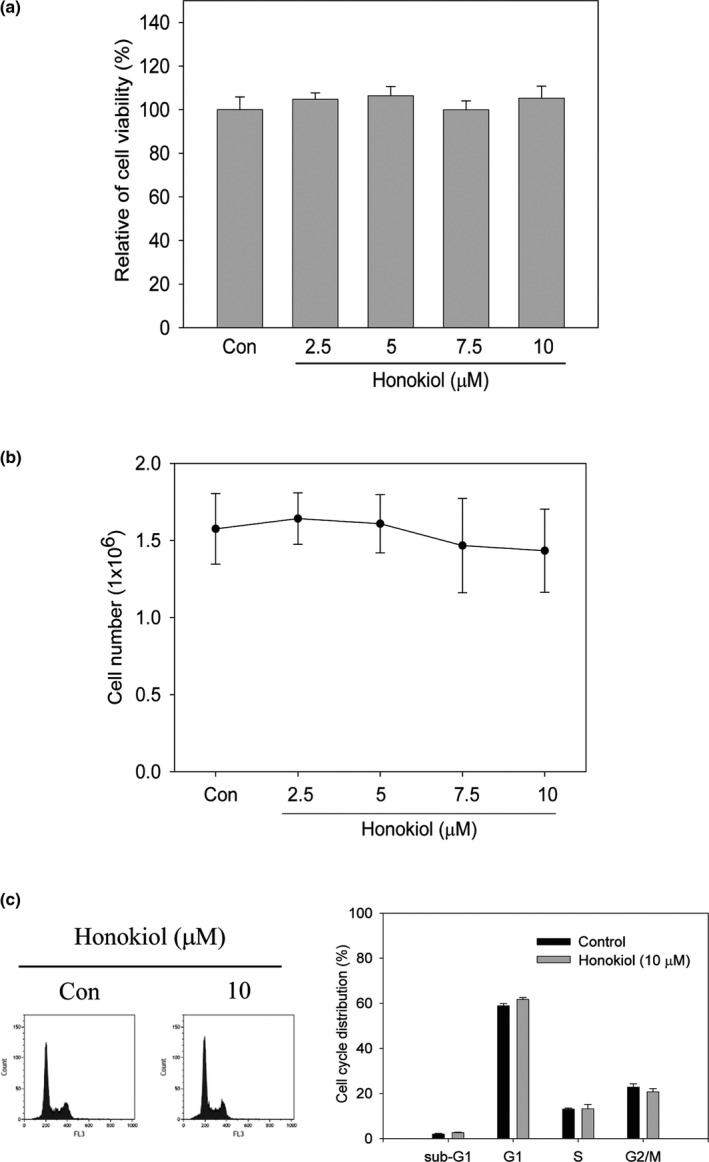
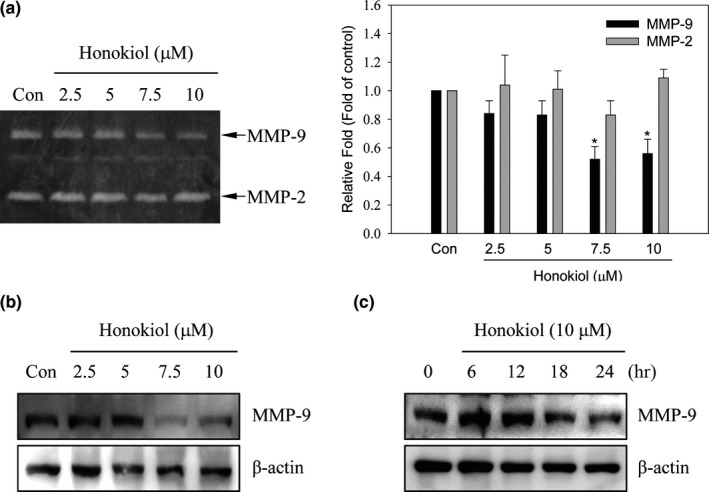
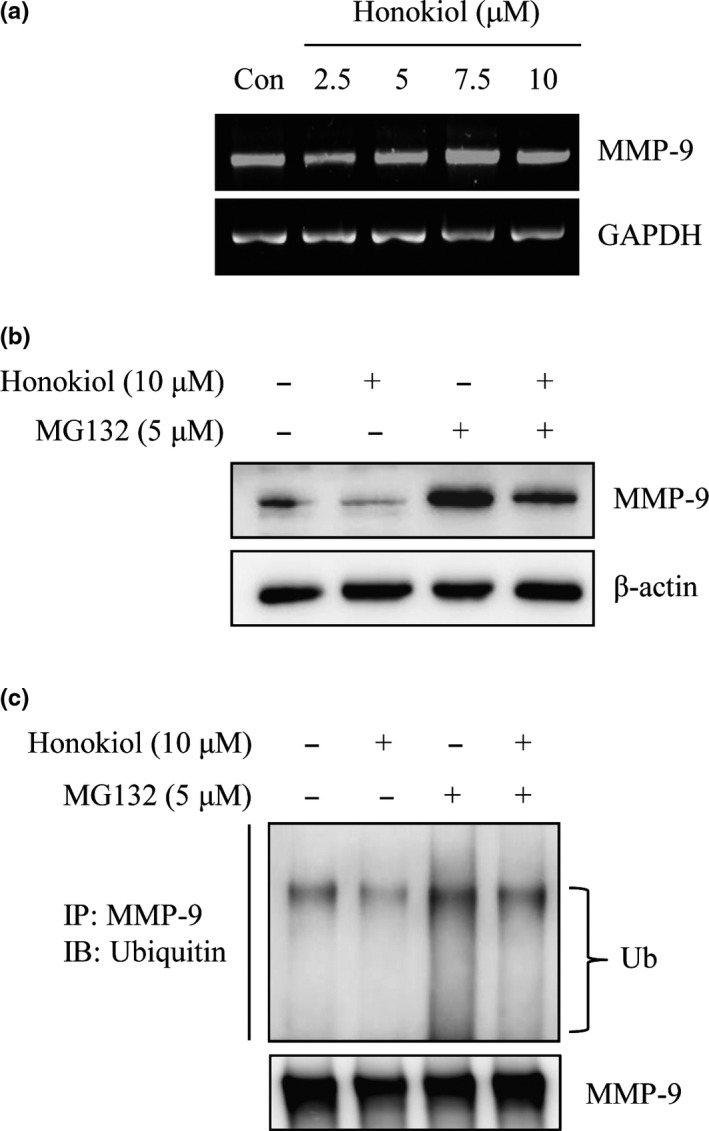
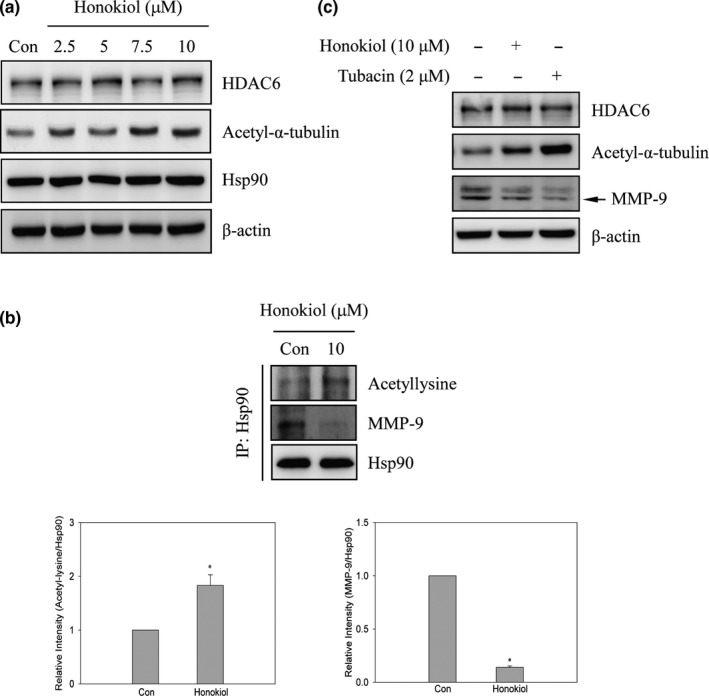
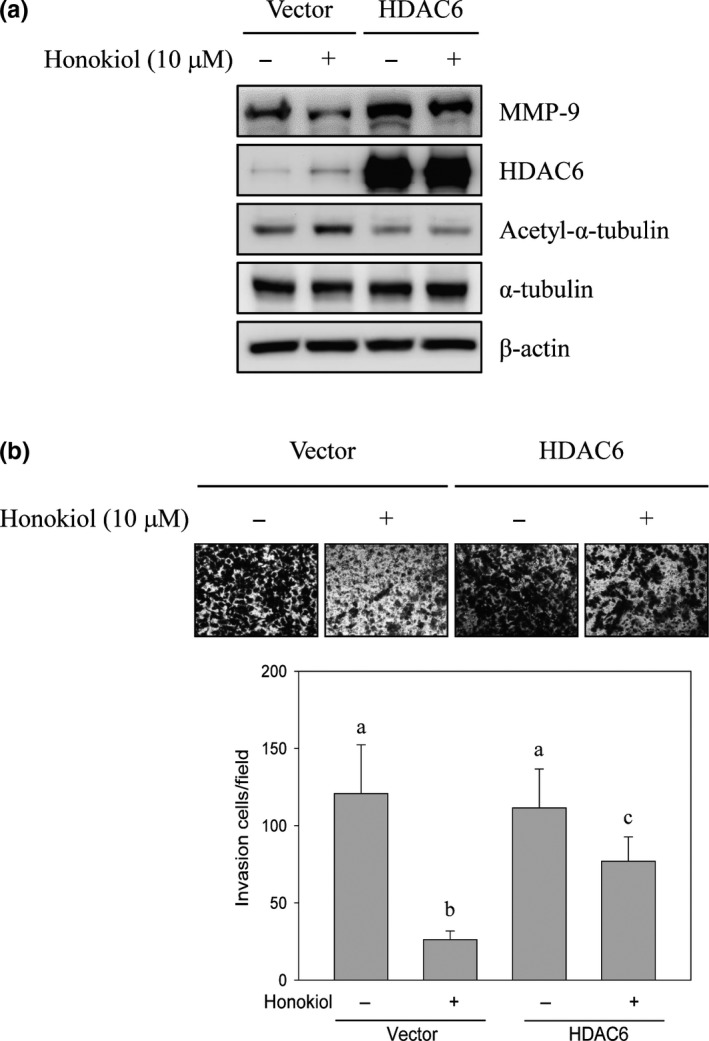
Metastasis is the crucial mechanism to cause high mortality in lung cancer. Degradation of extracellular matrix (ECM) by proteolytic enzymes, especially matrix metalloproteinases (MMPs), is a key process for promoting cancer cell migration and invasion. Therefore, targeting MMPs might be a strategy for lung cancer metastasis suppression. Honokiol, a biological active component of , has been indicated to suppress lung cancer tumorigenesis through epigenetic regulation. However, the regulation of MMPs-mediated migration and invasion by honokiol through epigenetic regulation in lung cancer is still a mystery. In the present study, the migration and invasion ability of H1299 lung cancer was suppressed by noncytotoxic concentrations of honokiol treatment. The proteolytic activity of MMP-9, rather than MMP-2, was inhibited in honokiol-treated H1299 cells. Honokiol-inhibited MMP-9 expression was through promoting MMP-9 protein degradation rather than suppressing transcription mechanism. Furthermore, the expression of specific histone deacetylases 6 (HDAC6) substrate, acetyl-α-tubulin, was accumulated after honokiol incubation. The disassociation of MMP-9 with hyper-acetylated heat shock protein 90 (Hsp90) was observed resulting in MMP-9 degradation after honokiol treatment. Meanwhile, honokiol-suppressed MMP-9 expression and invasion ability of H1299 lung cancer cells was rescued by HDAC6 overexpression. Accordingly, the results suggested that the suppression of migration and invasion activities by honokiol was through inhibiting HDAC6-mediated Hsp90/MMP-9 interaction and followed by MMP-9 degradation in lung cancer.
转移是导致肺癌高死亡率的关键机制。蛋白水解酶,尤其是基质金属蛋白酶(MMPs)对细胞外基质(ECM)的降解是促进癌细胞迁移和侵袭的关键过程。因此,靶向MMPs可能是抑制肺癌转移的一种策略。厚朴酚是[某种植物]的一种生物活性成分,已被证明可通过表观遗传调控抑制肺癌的发生。然而,厚朴酚通过表观遗传调控对肺癌中MMPs介导的迁移和侵袭的调节仍是一个谜。在本研究中,非细胞毒性浓度的厚朴酚处理可抑制H1299肺癌细胞的迁移和侵袭能力。在厚朴酚处理的H1299细胞中,MMP-9的蛋白水解活性受到抑制,而MMP-2不受影响。厚朴酚抑制MMP-9的表达是通过促进MMP-9蛋白降解而非抑制转录机制。此外,厚朴酚孵育后,特异性组蛋白去乙酰化酶6(HDAC6)底物乙酰化α-微管蛋白的表达积累。厚朴酚处理后观察到MMP-9与高乙酰化热休克蛋白90(Hsp90)解离,导致MMP-9降解。同时,HDAC6过表达可挽救厚朴酚抑制的H1299肺癌细胞的MMP-9表达和侵袭能力。因此,结果表明厚朴酚对迁移和侵袭活性的抑制是通过抑制HDAC6介导的Hsp90/MMP-9相互作用,随后导致肺癌中MMP-9降解实现的。