Giorgakis Emmanouil, Chong Brian, Oklu Rahmi, Jaroszewski Dawn E, Knuttinen Grace, Mathur Amit K
Division of Transplantation and Hepatopancreatobiliary Surgery, Department of Surgery, Mayo Clinic, Phoenix, AZ, USA.
Department of Solid Organ Transplantation, University of Arkansas for Medical Sciences, Little Rock, AR, USA.
Ann Hepatobiliary Pancreat Surg. 2020 Feb;24(1):114-118. doi: 10.14701/ahbps.2020.24.1.114. Epub 2020 Feb 27.
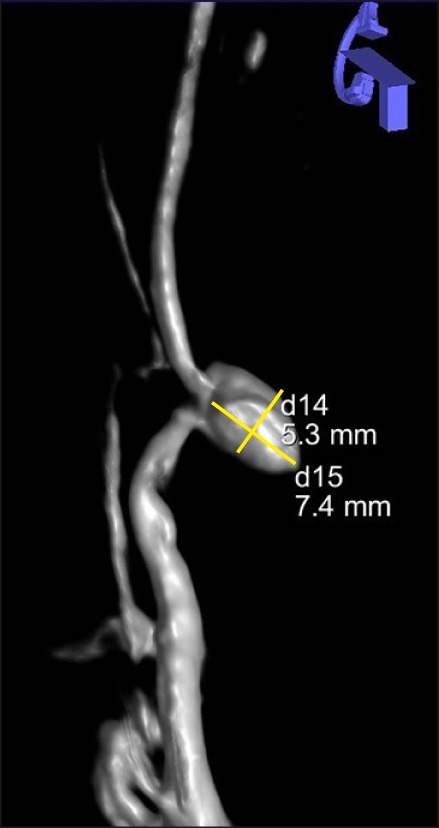
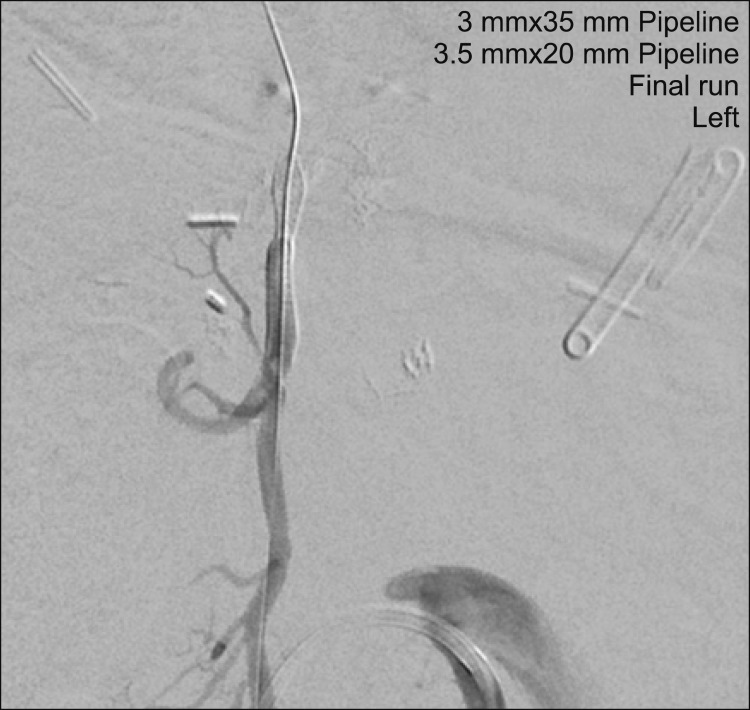
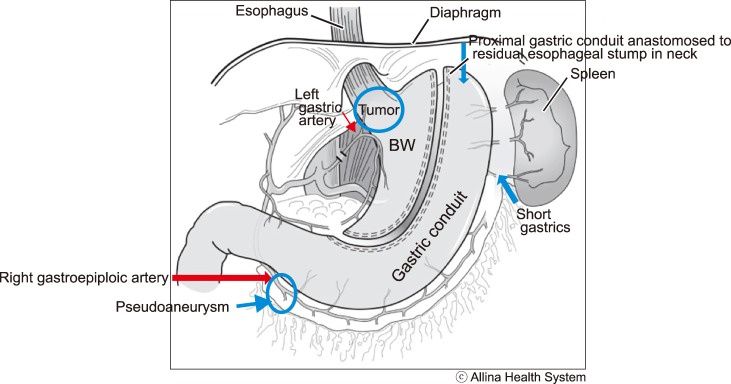
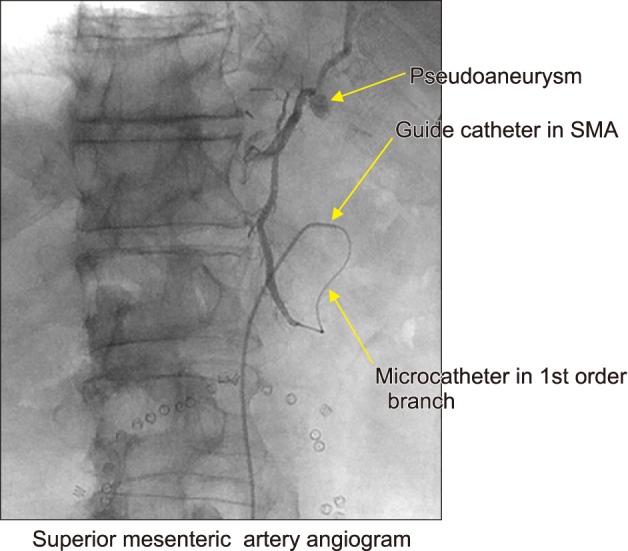
Aim of the study is the description of the successful management of gastroepiploic artery pseudoaneurysm with preservation of parent vessels using flow-diversion technology. The present report describes the application of a flow-diversion Pipeline™ Flex device for occlusion of a sidewall bleeding pseudoaneurysm on a patient who was status-post sub-total pancreatectomy and remote esophagectomy with a gastric conduit. The pseudoaneurysm was on the solitary vessel supplying the patient's conduit. Use of flow diversion technology excluded the sidewall pseudoaneurysm while maintaining gastric conduit perfusion. In our case, the application of flow diversion technology allowed the preservation of patency of the main arterial supply to the gastric conduit on a post-esophagectomy patient; loss of the right gastroepiploic artery in that case would had been otherwise catastrophic. Flow-diversion technology can be considered for the treatment of pseudoaneurysms post-pancreatic resections, especially when there is no other surgical or endovascular treatment option.
本研究的目的是描述采用血流导向技术成功治疗胃网膜动脉假性动脉瘤并保留供血血管的情况。本报告描述了在一名接受次全胰切除术和远端食管切除术并使用胃导管重建的患者中,应用血流导向Pipeline™ Flex装置封堵侧壁出血性假性动脉瘤的情况。该假性动脉瘤位于为患者导管供血的唯一血管上。使用血流导向技术在维持胃导管灌注的同时封闭了侧壁假性动脉瘤。在我们的病例中,血流导向技术的应用使得食管切除术后患者胃导管的主要动脉供血保持通畅;否则,该病例中胃网膜右动脉的缺失将是灾难性的。对于胰腺切除术后假性动脉瘤的治疗,尤其是在没有其他手术或血管内治疗选择的情况下,可以考虑采用血流导向技术。