Alliance Development Group, Open Innovation Department R&D Division, Kyowa Kirin Co., Ltd., Tokyo, Japan.
Division of Pharmaceutical Cell Biology, Graduate School of Pharmaceutical Sciences, Kyushu University, Maidashi, Fukuoka, Japan.
PLoS One. 2020 Mar 17;15(3):e0229027. doi: 10.1371/journal.pone.0229027. eCollection 2020.
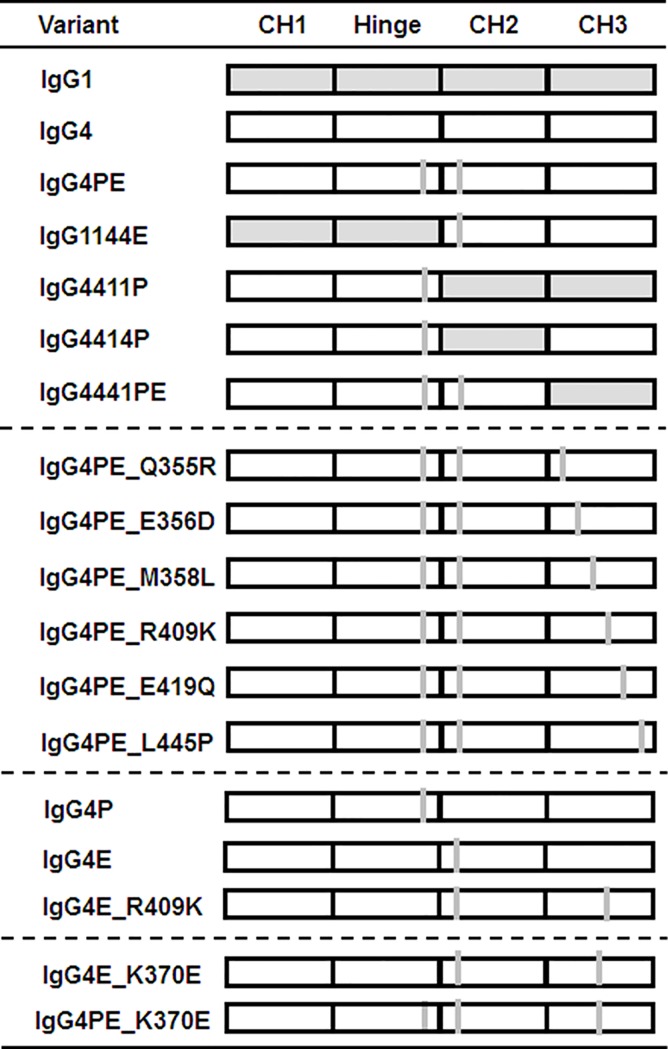
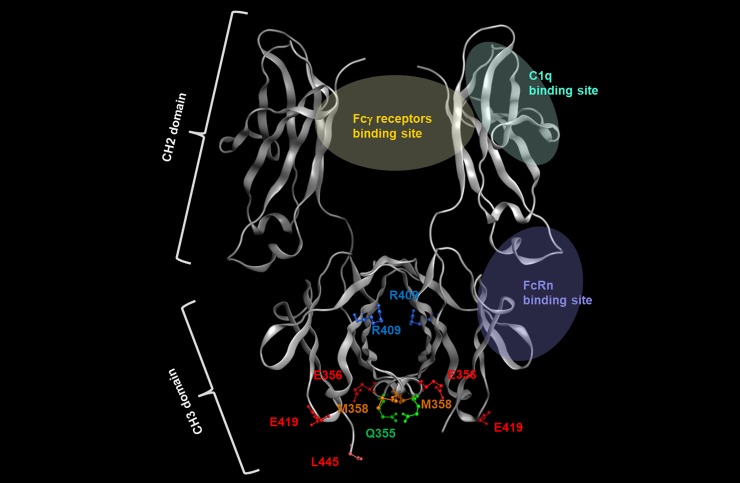
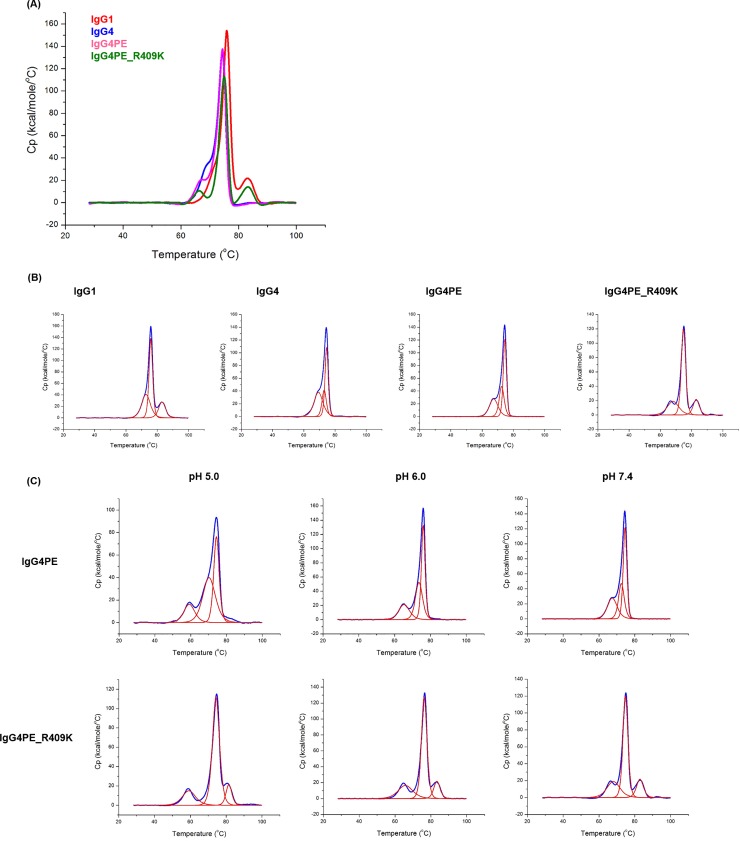
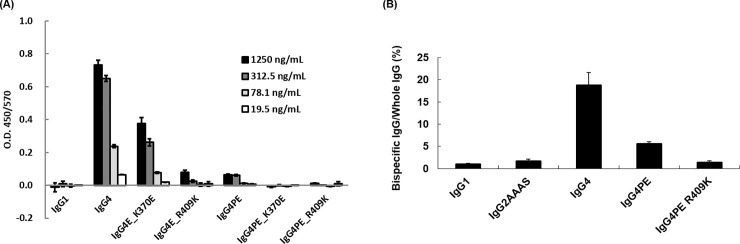
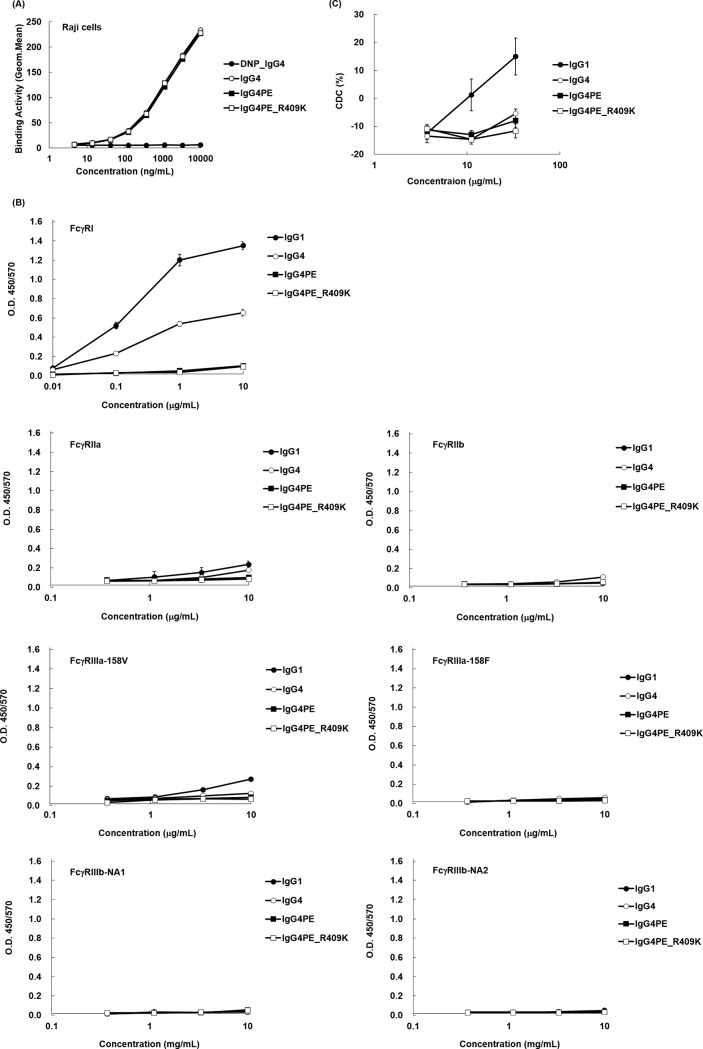
Human immunoglobulin G isotype 4 (IgG4) antibodies are suitable for use in either the antagonist or agonist format because their low effector functions prevent target cytotoxicity or unwanted cytokine secretion. However, while manufacturing therapeutic antibodies, they are exposed to low pH during purification, and IgG4 is more susceptible to low-pH-induced aggregation than IgG1. Therefore, we investigated the underlying mechanisms of IgG4 aggregation at low pH and engineered an IgG4 with enhanced stability. By swapping the constant regions of IgG1 and IgG4, we determined that the constant heavy chain (CH3) domain is critical for aggregate formation, but a core-hinge-stabilizing S228P mutation in IgG4 is insufficient for preventing aggregation. To identify the aggregation-prone amino acid, we substituted the CH3 domain of IgG4 with that of IgG1, changing IgG4 Arg409 to a Lys, thereby preventing the aggregation of the IgG4 variant as effectively as in IgG1. A stabilizing effect was also recorded with other variable-region variants. Analysis of thermal stability using differential scanning calorimetry revealed that the R409K substitution increased the Tm value of CH3, suggesting that the R409K mutation contributed to the structural strengthening of the CH3-CH3 interaction. The R409K mutation did not influence the binding to antigens/human Fcγ receptors; whereas, the concurrent S228P and R409K mutations in IgG4 suppressed Fab-arm exchange drastically and as effectively as in IgG1, in both in vitro and in vivo in mice models. Our findings suggest that the IgG4 R409K variant represents a potential therapeutic IgG for use in low-effector-activity format that exhibits increased stability.
人免疫球蛋白 G 同种型 4(IgG4)抗体适合以拮抗剂或激动剂的形式使用,因为其低效应功能可防止靶细胞毒性或不需要的细胞因子分泌。然而,在制造治疗性抗体时,它们在纯化过程中会暴露于低 pH 值环境中,并且 IgG4 比 IgG1 更容易受到低 pH 值诱导的聚集。因此,我们研究了 IgG4 在低 pH 值下聚集的潜在机制,并设计了一种具有增强稳定性的 IgG4。通过交换 IgG1 和 IgG4 的恒定区,我们确定恒定重链(CH3)结构域对于聚集形成至关重要,但 IgG4 中的核心铰链稳定 S228P 突变不足以防止聚集。为了确定易聚集的氨基酸,我们用 IgG1 的 CH3 结构域替换了 IgG4 的 CH3 结构域,将 IgG4 的 Arg409 突变为 Lys,从而有效地阻止了 IgG4 变体的聚集,与 IgG1 一样有效。其他可变区变体也记录了稳定作用。使用差示扫描量热法进行热稳定性分析表明,R409K 取代增加了 CH3 的 Tm 值,表明 R409K 突变有助于 CH3-CH3 相互作用的结构强化。R409K 突变不影响与抗原/人 Fcγ 受体的结合;然而,在 IgG4 中同时发生 S228P 和 R409K 突变,无论是在体外还是在体内的小鼠模型中,均能极大地抑制 Fab 臂交换,效果与 IgG1 一样。我们的研究结果表明,IgG4 R409K 变体代表了一种潜在的治疗性 IgG,可用于低效应活性形式,表现出增强的稳定性。