Genentech, Antibody Engineering, South San Francisco, CA, 94080, USA.
Protein Cell. 2018 Jan;9(1):63-73. doi: 10.1007/s13238-017-0473-8. Epub 2017 Oct 6.
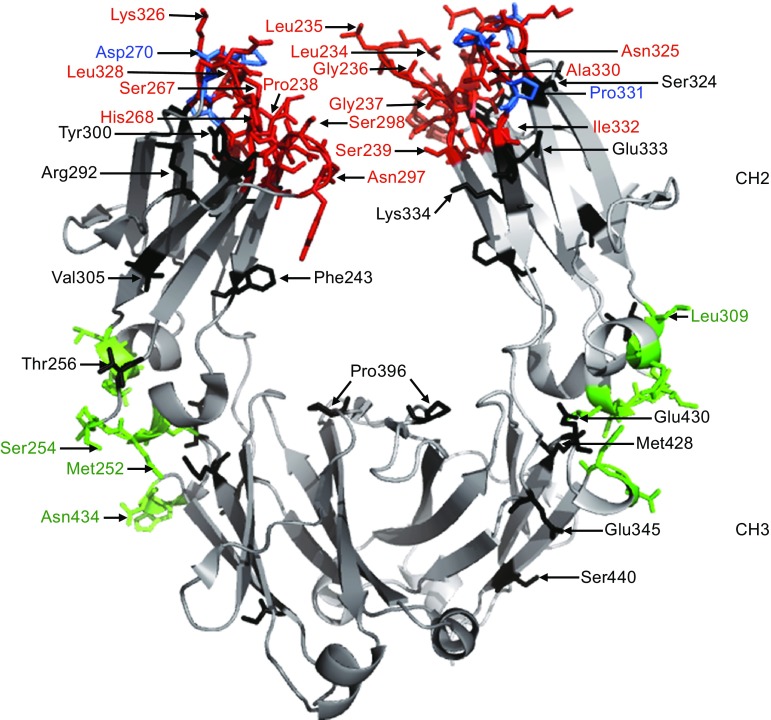
Therapeutic monoclonal antibodies are among the most effective biotherapeutics to date. An important aspect of antibodies is their ability to bind antigen while at the same time recruit immune effector functions. The majority of approved recombinant monoclonal antibody therapies are of the human IgG1 subclass, which can engage both humoral and cellular components of the immune system. The wealth of information generated about antibodies has afforded investigators the ability to molecularly engineer antibodies to modulate effector functions. Here, we review various antibody engineering efforts intended to improve efficacy and safety relative to the human IgG isotype. Further, we will discuss proposed mechanisms by which engineering approaches led to modified interactions with immune components and provide examples of clinical studies using next generation antibodies.
治疗性单克隆抗体是迄今为止最有效的生物疗法之一。抗体的一个重要方面是它们能够结合抗原,同时招募免疫效应功能。大多数已批准的重组单克隆抗体疗法都属于人 IgG1 亚类,它可以与免疫系统的体液和细胞成分都相互作用。关于抗体的大量信息使研究人员能够对抗体进行分子工程改造,以调节效应功能。在这里,我们回顾了各种旨在提高抗体相对于人 IgG 同型的疗效和安全性的抗体工程努力。此外,我们还将讨论工程方法导致与免疫成分的相互作用发生改变的机制,并提供使用下一代抗体的临床研究的例子。