Jerzy Haber Institute of Catalysis and Surface Chemistry, Polish Academy of Sciences, Niezapominajek 8, PL-30239 Krakow, Poland.
Department of Molecular Physiology and Biological Physics, University of Virginia, 1340 Jefferson Park Avenue Pinn Hall, Charlottesville, VA 22908, USA.
Dalton Trans. 2020 Apr 7;49(14):4454-4469. doi: 10.1039/d0dt00302f.
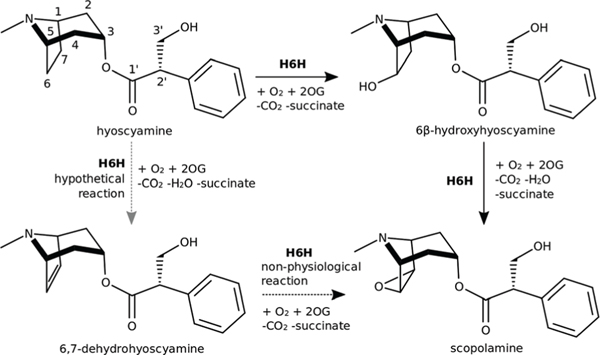
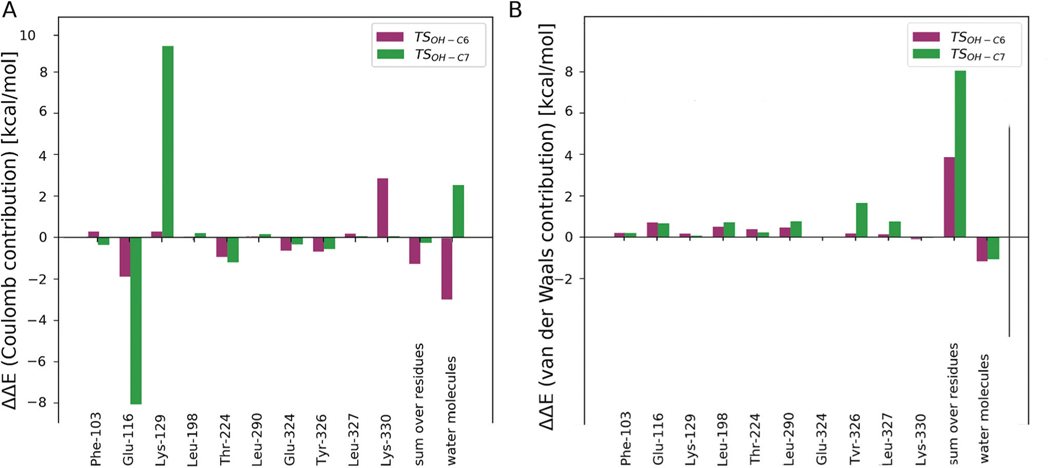
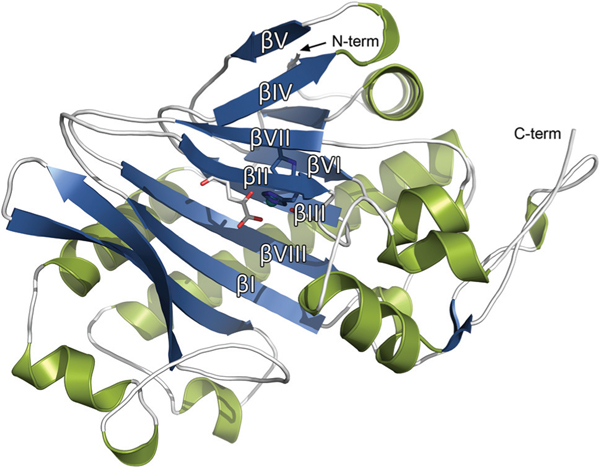
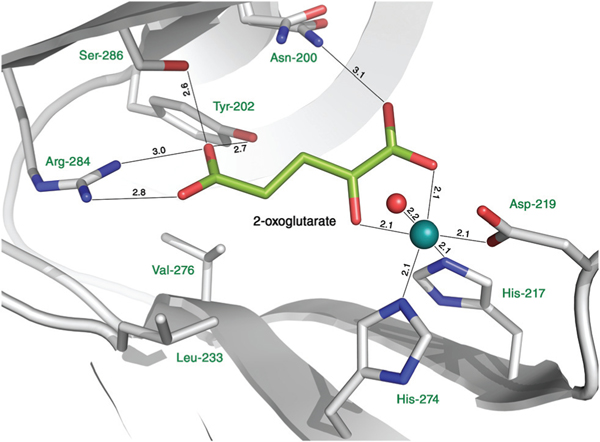
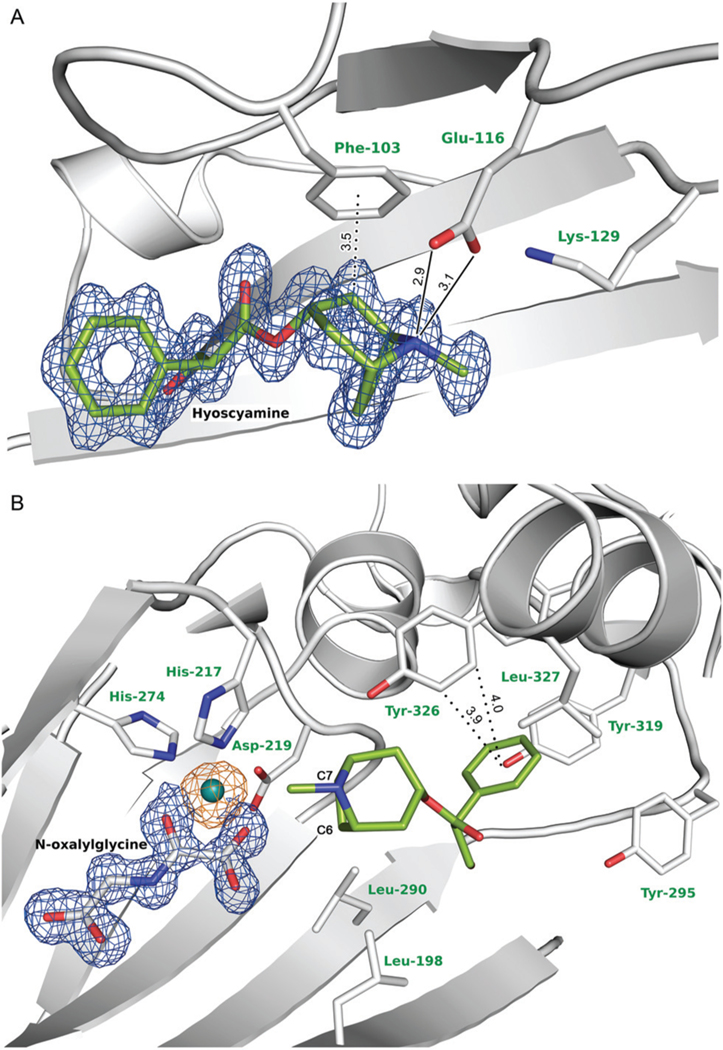
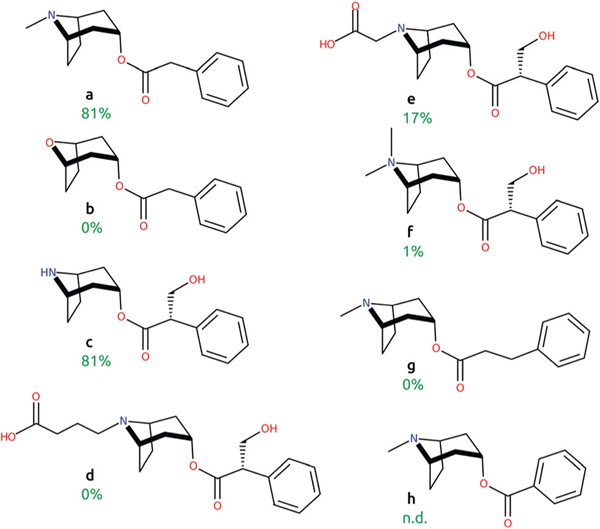
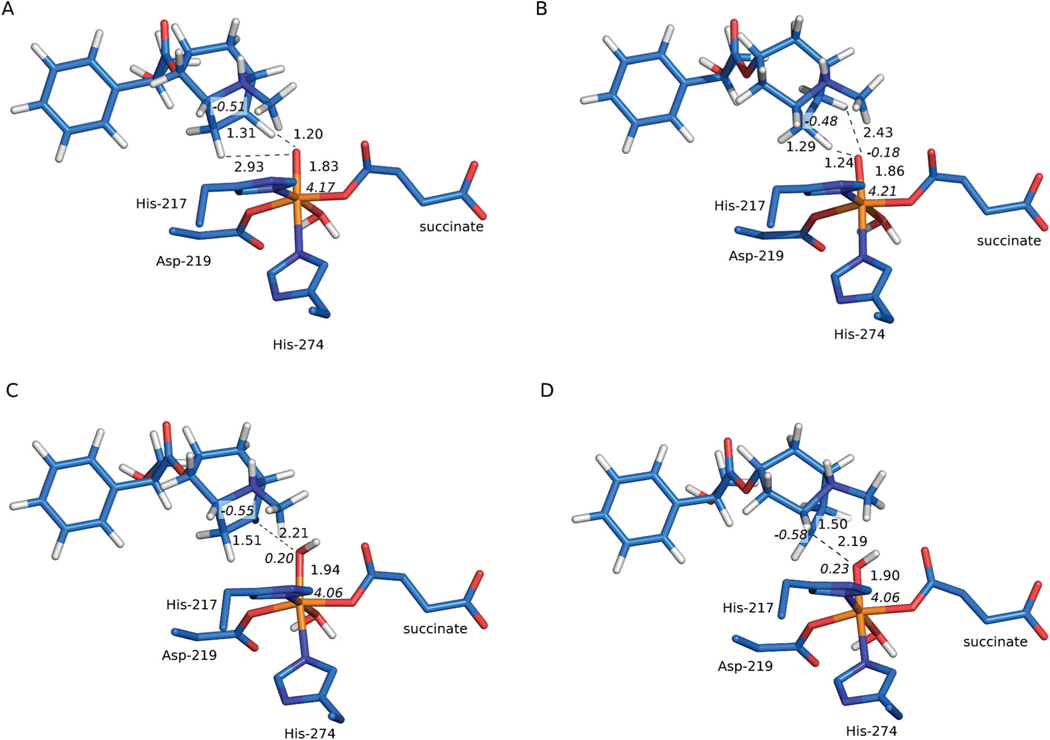
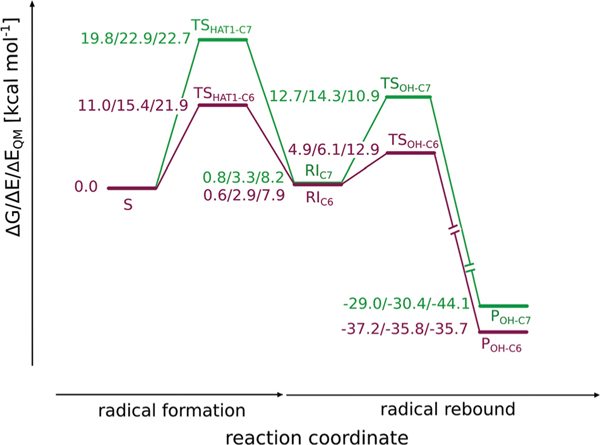
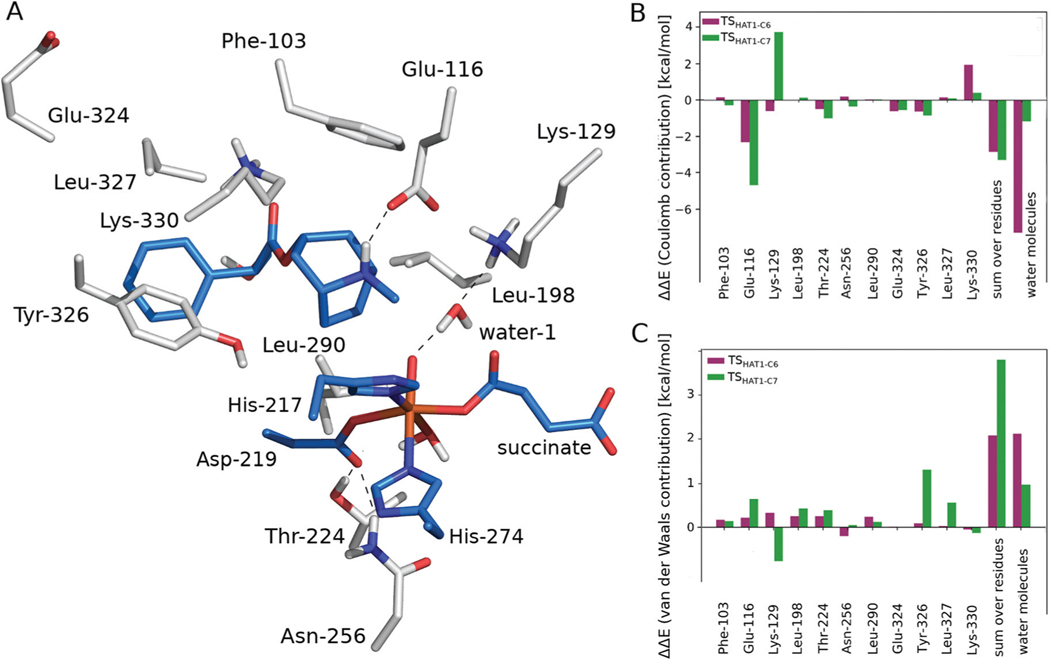
Hyoscyamine 6β-hydroxylase (H6H) is a bifunctional non-heme 2-oxoglutarate/Fe2+-dependent dioxygenase that catalyzes the two final steps in the biosynthesis of scopolamine. Based on high resolution crystal structures of H6H from Datura metel, detailed information on substrate binding was obtained that provided insights into the onset of the enzymatic process. In particular, the role of two prominent residues was revealed - Glu-116 that interacts with the tertiary amine located on the hyoscyamine tropane moiety and Tyr-326 that forms CH-π hydrogen bonds with the hyoscyamine phenyl ring. The structures were used as the basis for QM/MM calculations that provided an explanation for the regioselectivity of the hydroxylation reaction on the hyoscyamine tropane moiety (C6 vs. C7) and quantified contributions of active site residues to respective barrier heights.
莨菪碱 6β-羟化酶(H6H)是一种双功能非血红素 2-酮戊二酸/Fe2+-依赖性双氧酶,可催化莨菪碱生物合成的最后两步。基于来自曼陀罗的 H6H 的高分辨率晶体结构,获得了有关底物结合的详细信息,这些信息深入了解了酶促过程的开始。特别是,揭示了两个突出残基的作用 - 与位于莨菪碱托烷部分上的叔胺相互作用的Glu-116和与莨菪碱苯环形成 CH-π氢键的 Tyr-326。这些结构被用作 QM/MM 计算的基础,该计算为莨菪碱托烷部分上的羟化反应(C6 与 C7)的区域选择性提供了解释,并量化了活性位点残基对各自势垒高度的贡献。