
由聚酸酐衍生物合成的物理化学性质不同的纳米材料使可负载抗生素的种类多样化。
Physico-Chemically Distinct Nanomaterials Synthesized from Derivates of a Poly(Anhydride) Diversify the Spectrum of Loadable Antibiotics.
作者信息
Mira Amalia, Sainz-Urruela Carlos, Codina Helena, Jenkins Stuart I, Rodriguez-Diaz Juan Carlos, Mallavia Ricardo, Falco Alberto
机构信息
Institute of Research, Development and Innovation in Biotechnology of Elche (IDiBE), Miguel Hernández University (UMH), 03202 Elche, Alicante, Spain.
Neural Tissue Engineering group: Keele (NTEK), School of Medicine, Keele University, Keele ST5 5BG, Staffordshire, UK.
出版信息
Nanomaterials (Basel). 2020 Mar 8;10(3):486. doi: 10.3390/nano10030486.
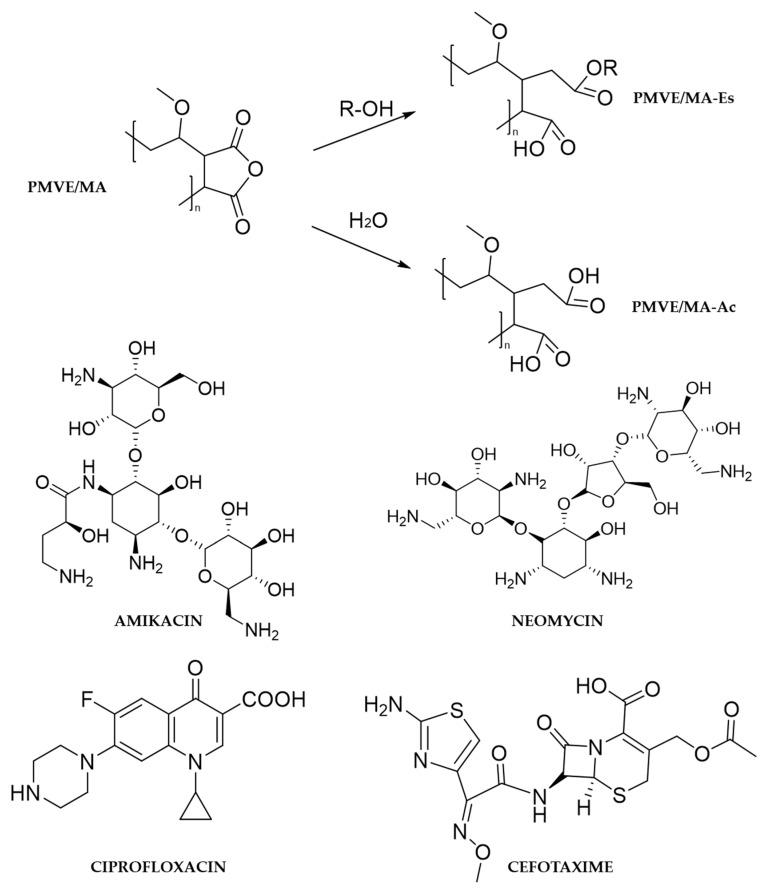
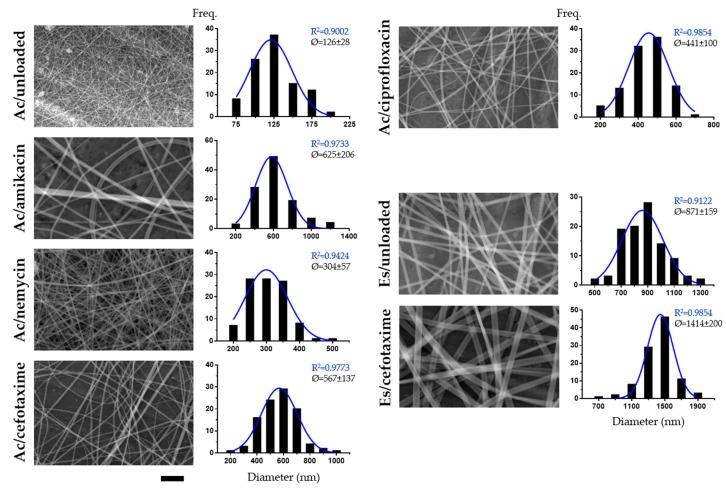
Recent advances in the field of nanotechnology such as nanoencapsulation offer new biomedical applications, potentially increasing the scope and efficacy of therapeutic drug delivery. In addition, the discovery and development of novel biocompatible polymers increases the versatility of these encapsulating nanostructures, enabling chemical properties of the cargo and vehicle to be adapted to specific physiological requirements. Here, we evaluate the capacity of various polymeric nanostructures to encapsulate various antibiotics of different classes, with differing chemical structure. Polymers were sourced from two separate derivatives of poly(methyl vinyl ether--maleic anhydride) (PMVE/MA): an acid (PMVE/MA-Ac) and a monoethyl ester (PMVE/MA-Es). Nanoencapsulation of antibiotics was attempted through electrospinning, and nanoparticle synthesis through solvent displacement, for both polymers. Solvent incompatibilities prevented the nanoencapsulation of amikacin, neomycin and ciprofloxacin in PMVE/MA-Es nanofibers. However, all compounds were successfully loaded into PMVE/MA-Es nanoparticles. Encapsulation efficiencies in nanofibers reached approximately 100% in all compatible systems; however, efficiencies varied substantially in nanoparticles systems, depending on the tested compound (14%-69%). Finally, it was confirmed that both these encapsulation processes did not alter the antimicrobial activity of any tested antibiotic against and , supporting the viability of these approaches for nanoscale delivery of antibiotics.
纳米技术领域的最新进展,如纳米封装,提供了新的生物医学应用,有可能扩大治疗药物递送的范围并提高其功效。此外,新型生物相容性聚合物的发现和开发增加了这些封装纳米结构的多功能性,使所载药物和载体的化学性质能够适应特定的生理需求。在此,我们评估了各种聚合物纳米结构封装不同类别、具有不同化学结构的各种抗生素的能力。聚合物来源于聚(甲基乙烯基醚-马来酸酐)(PMVE/MA)的两种不同衍生物:一种酸(PMVE/MA-Ac)和一种单乙酯(PMVE/MA-Es)。通过静电纺丝尝试对这两种聚合物进行抗生素的纳米封装,并通过溶剂置换法进行纳米颗粒合成。溶剂不相容性阻止了阿米卡星、新霉素和环丙沙星在PMVE/MA-Es纳米纤维中的纳米封装。然而,所有化合物都成功负载到了PMVE/MA-Es纳米颗粒中。在所有兼容体系中,纳米纤维的封装效率均达到约100%;然而,纳米颗粒体系中的效率差异很大,这取决于所测试的化合物(14%-69%)。最后,证实这两种封装过程均未改变任何测试抗生素对[具体菌株1]和[具体菌株2]的抗菌活性,支持了这些抗生素纳米级递送方法的可行性。

 Zotero 插件