Merks Piotr, Świeczkowski Damian, Zerhau Mikołaj, Gawronska Anna, Kowalczuk Anna, Gajewski Klaudiusz, Däinghaus Ralf, Jaguszewski Miłosz, Brindley David
Faculty of Medicine, Collegium Medicum, Cardinal Stefan Wyszyński University, Warsaw 01-938 Poland.
First Department of Cardiology, Medical University of Gdansk, Gdańsk 80-211, Poland.
Pharmacy (Basel). 2020 Mar 9;8(1):34. doi: 10.3390/pharmacy8010034.
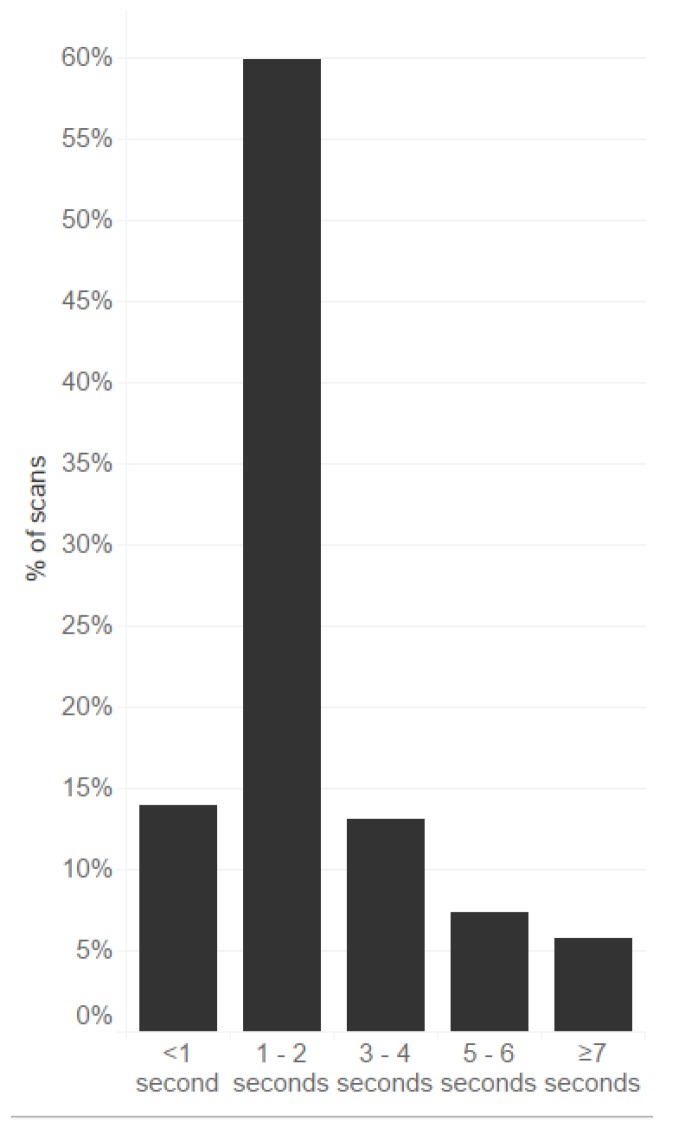
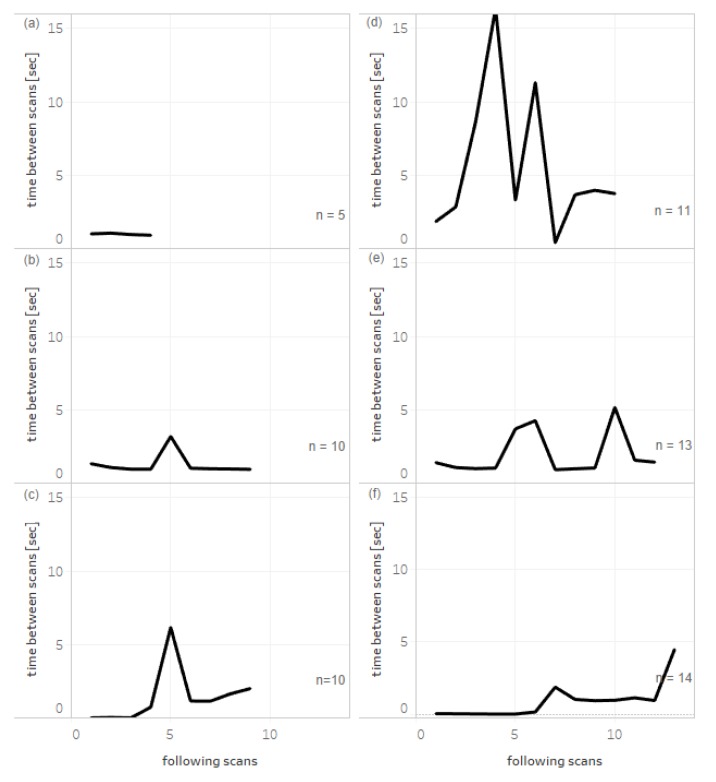
The introduction of a medicines verification and decommissioning system into the hospital pharmacy may result in an increased workload for pharmacy staff. The pilot implementation allows us to understand all the implications of the process, optimize process workflows, and estimate the time and cost of implementation. All the packages received at the hospital pharmacy had a 2D data matrix codes and were scanned. We analyzed the time needed to unpack a variety of products, scan them, and receive the notification. In total, 144 packages were scanned at an average time of 3.05 s, with most (86.9%) under 4 s. Manual decommissioning using handheld scanners was less efficient than the automated solution tested and resulted in an additional 0.4 full-time equivalent hours per million packages per year. The pattern and total time of manual scanning depended not only on the quantity but also the size of the package and type of packing. This evaluation of scanning performance allows optimizing the process at operational, technical, and resource levels for medicine verification and decommissioning.
在医院药房引入药品验证和退役系统可能会增加药房工作人员的工作量。试点实施使我们能够了解该过程的所有影响,优化流程工作流,并估算实施的时间和成本。医院药房收到的所有包裹都有二维数据矩阵码并进行了扫描。我们分析了解开各种产品包装、扫描它们并接收通知所需的时间。总共扫描了144个包裹,平均时间为3.05秒,大多数(86.9%)在4秒以内。使用手持扫描仪进行手动退役的效率低于测试的自动化解决方案,每年每百万包裹会额外增加0.4个全时当量工时。手动扫描的模式和总时间不仅取决于包裹数量,还取决于包裹大小和包装类型。对扫描性能的评估有助于在运营、技术和资源层面优化药品验证和退役流程。