Faculty of Information Technology, Monash University, Melbourne, VIC 3145, Australia.
Department of Chemical Engineering, Monash University, Melbourne, VIC 3800, Australia.
Sensors (Basel). 2020 Mar 9;20(5):1510. doi: 10.3390/s20051510.
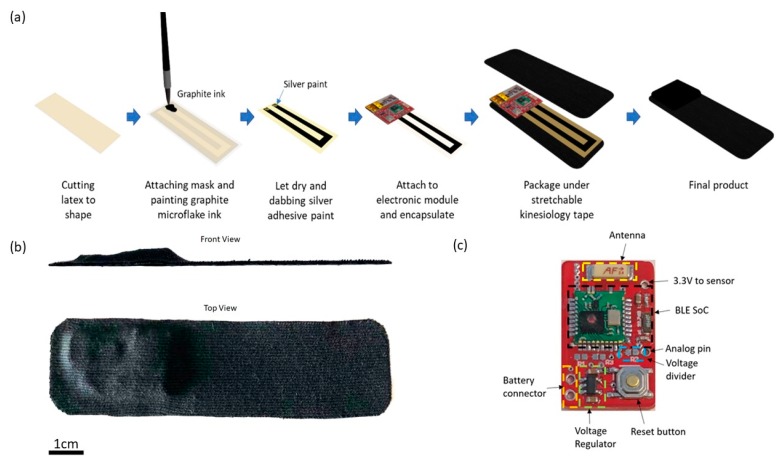
A nanomaterial-based electronic-skin (E-Skin) wearable sensor has been successfully used for detecting and measuring body movements such as finger movement and foot pressure. The ultrathin and highly sensitive characteristics of E-Skin sensor make it a suitable alternative for continuously out-of-hospital lumbar-pelvic movement (LPM) monitoring. Monitoring these movements can help medical experts better understand individuals' low back pain experience. However, there is a lack of prior studies in this research area. Therefore, this paper explores the potential of E-Skin sensors to detect and measure the anatomical angles of lumbar-pelvic movements by building a linear relationship model to compare its performance to clinically validated inertial measurement unit (IMU)-based sensing system (ViMove).
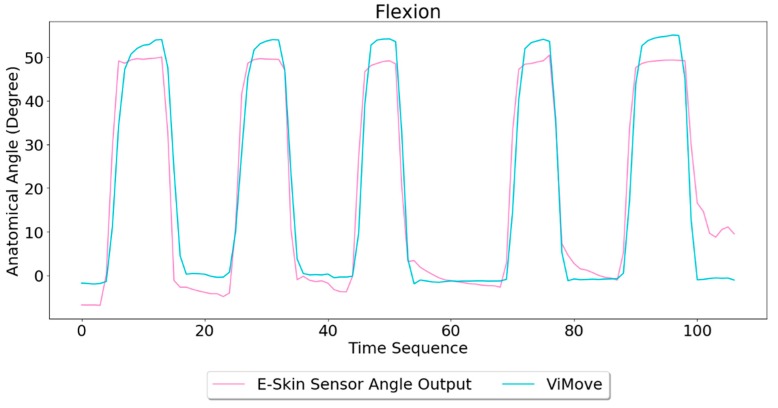
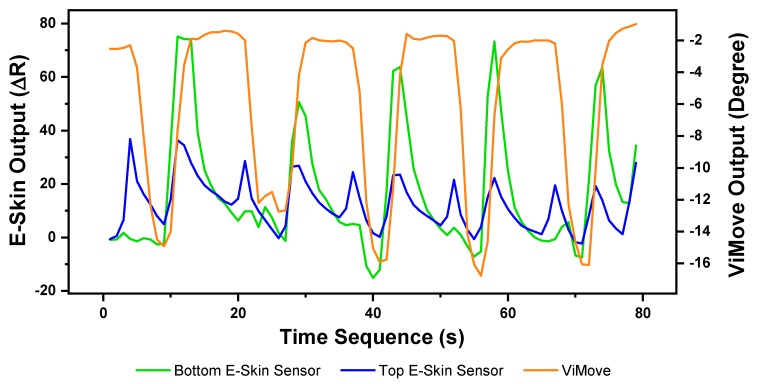
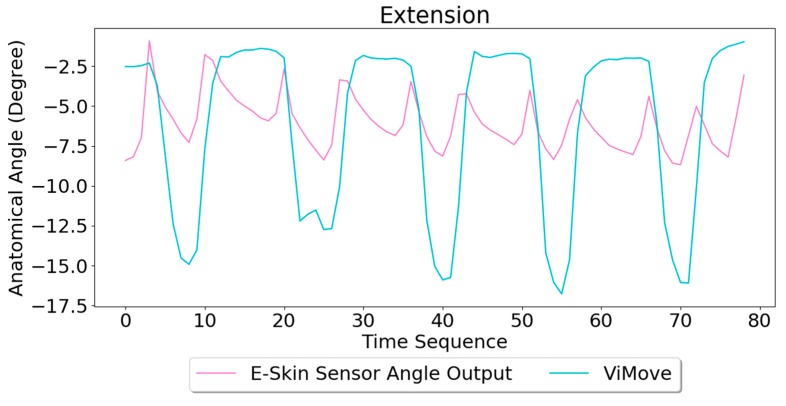
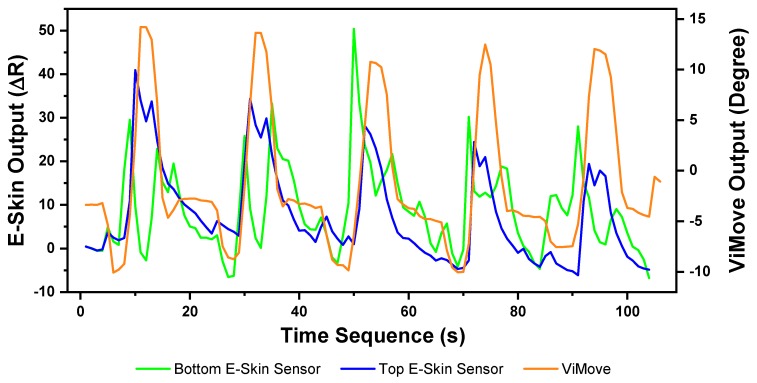
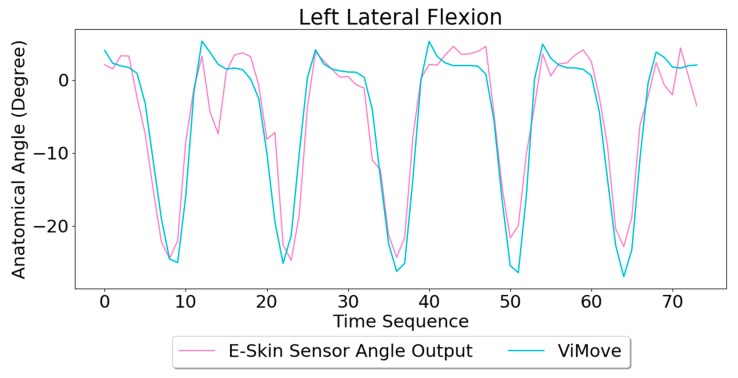
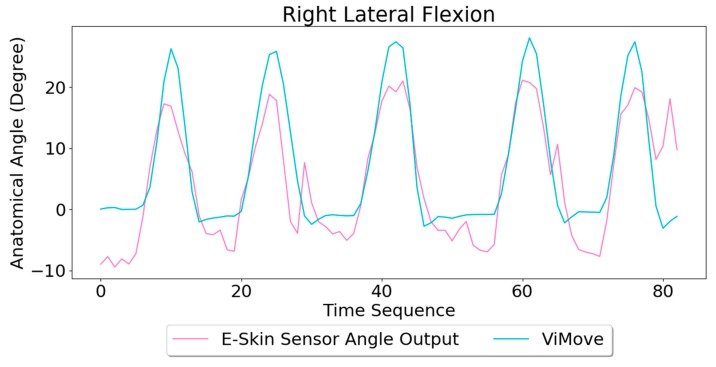
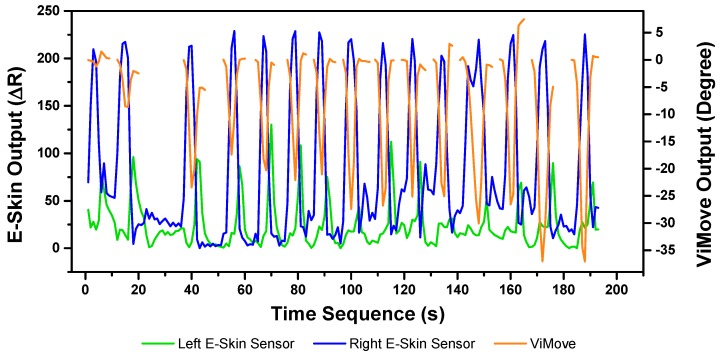
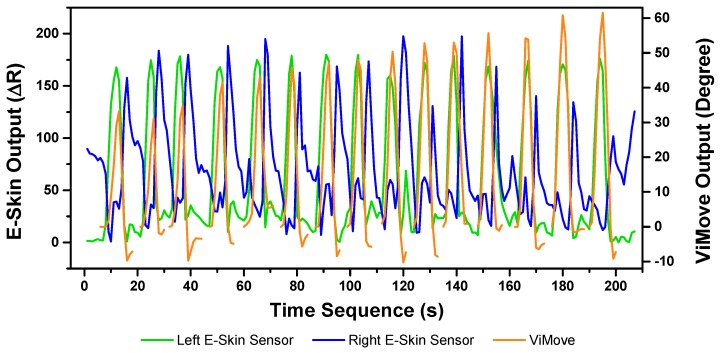
The paper first presents a review and classification of existing wireless sensing technologies for monitoring of body movements, and then it describes a series of experiments performed with E-Skin sensors for detecting five standard LPMs including flexion, extension, pelvic tilt, lateral flexion, and rotation, and measure their anatomical angles. The outputs of both E-Skin and ViMove sensors were recorded during each experiment and further analysed to build the comparative models to evaluate the performance of detecting and measuring LPMs.
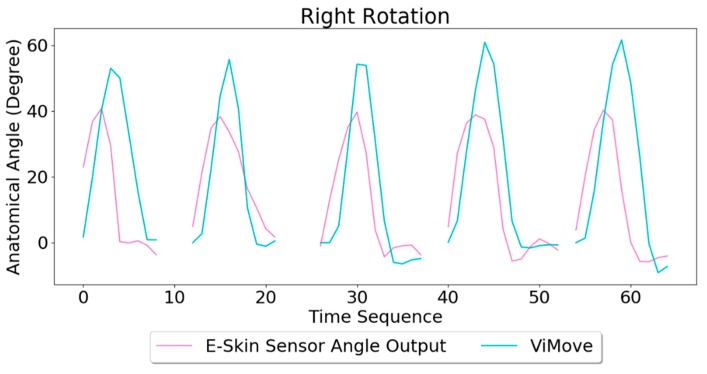
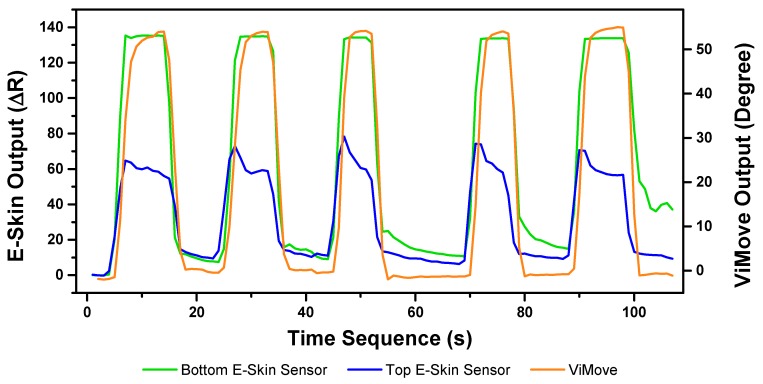
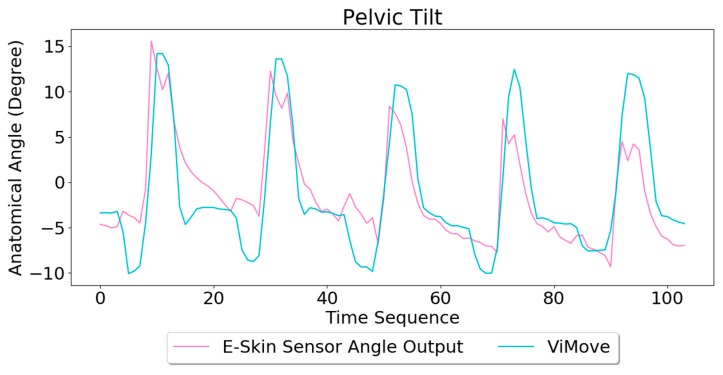
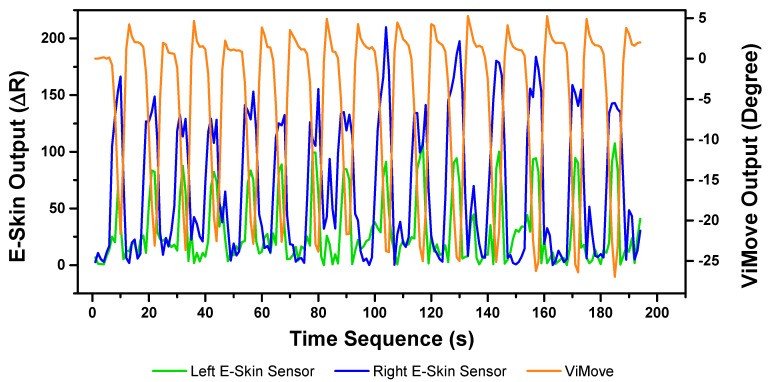
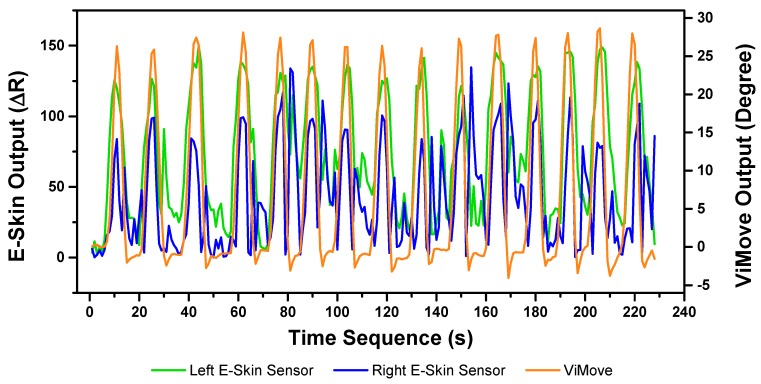
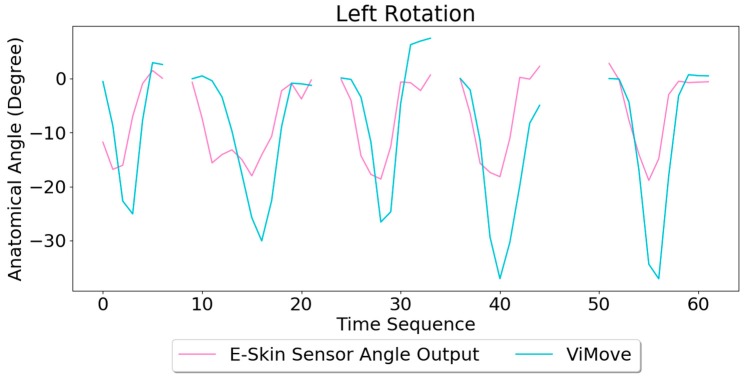
E-Skin sensor outputs showed a persistently repeating pattern for each movement. Due to the ability to sense minor skin deformation by E-skin sensor, its reaction time in detecting lumbar-pelvic movement is quicker than ViMove by ~1 s.
E-Skin sensors offer new capabilities for detecting and measuring lumbar-pelvic movements. They have lower cost compared to commercially available IMU-based systems and their non-invasive highly stretchable characteristic makes them more comfortable for long-term use. These features make them a suitable sensing technology for developing continuous, out-of-hospital real-time monitoring and management systems for individuals with low back pain.
基于纳米材料的电子皮肤(E-Skin)可穿戴传感器已成功用于检测和测量身体运动,如手指运动和足底压力。E-Skin 传感器的超薄和高灵敏度特性使其成为连续院外腰椎骨盆运动(LPM)监测的合适替代品。监测这些运动可以帮助医学专家更好地了解个体的腰痛体验。然而,在该研究领域缺乏前期研究。因此,本文通过构建线性关系模型来探索 E-Skin 传感器检测和测量腰椎骨盆运动解剖角度的潜力,以将其性能与经过临床验证的基于惯性测量单元(IMU)的传感系统(ViMove)进行比较。
本文首先对现有的用于监测身体运动的无线传感技术进行了综述和分类,然后描述了一系列使用 E-Skin 传感器进行的实验,用于检测包括屈曲、伸展、骨盆倾斜、侧屈和旋转在内的五种标准 LPM,并测量它们的解剖角度。在每次实验中,记录 E-Skin 和 ViMove 传感器的输出,并进一步分析以构建比较模型,评估检测和测量 LPM 的性能。
E-Skin 传感器的输出对于每种运动都呈现出重复的模式。由于 E-skin 传感器能够感知微小的皮肤变形,因此它检测腰椎骨盆运动的反应时间比 ViMove 快约 1 秒。
E-Skin 传感器为检测和测量腰椎骨盆运动提供了新的功能。与商用的基于 IMU 的系统相比,它们的成本更低,并且由于其非侵入性和高度可拉伸的特性,长期使用时更加舒适。这些特性使它们成为开发用于个体慢性腰痛的连续、院外实时监测和管理系统的合适传感技术。