Applied Physics Department, Faculty of Computer Science, Engineering, University of Castilla-La Mancha, Avda. de España s/n, Campus Universitario, 02071 Albacete, Spain.
School of Basic Sciences and Humanities, German Jordanian University, Amman Madaba Street, P.O. Box 35247, Amman 11180, Jordan.
Int J Environ Res Public Health. 2020 Mar 14;17(6):1898. doi: 10.3390/ijerph17061898.
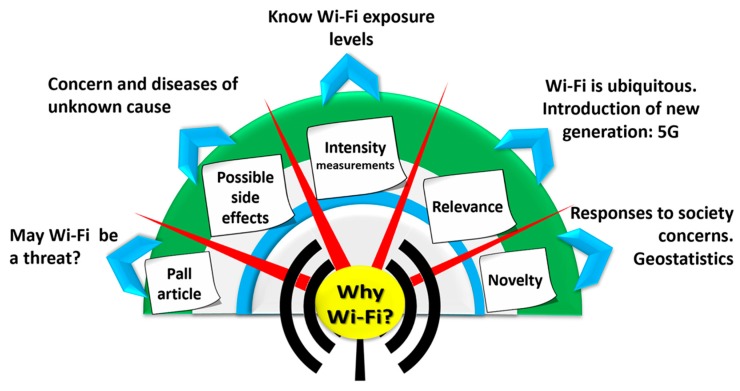
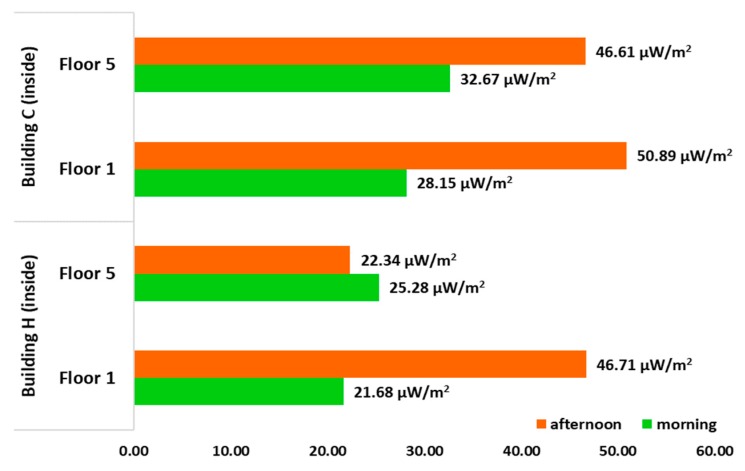
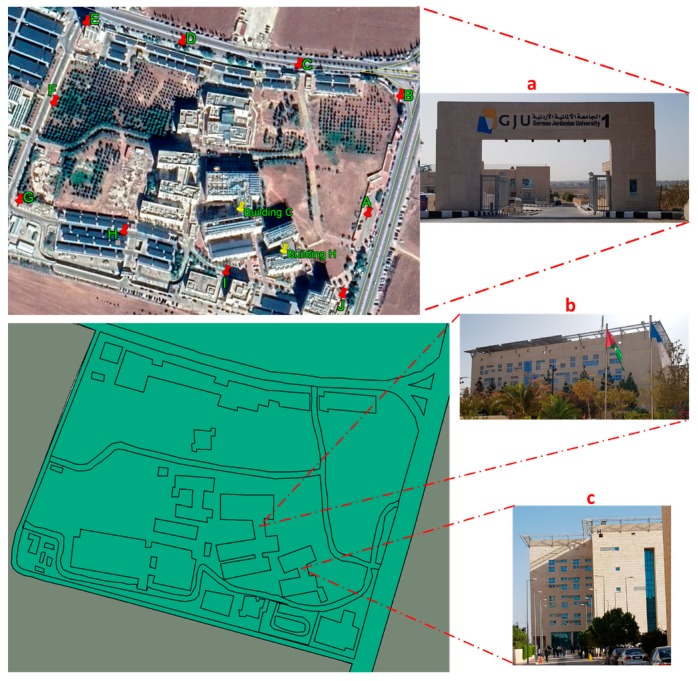
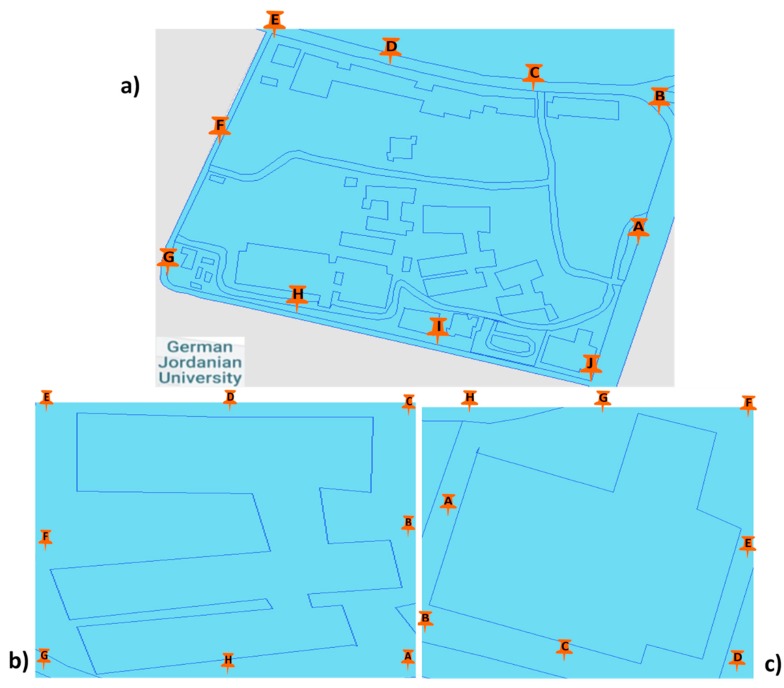
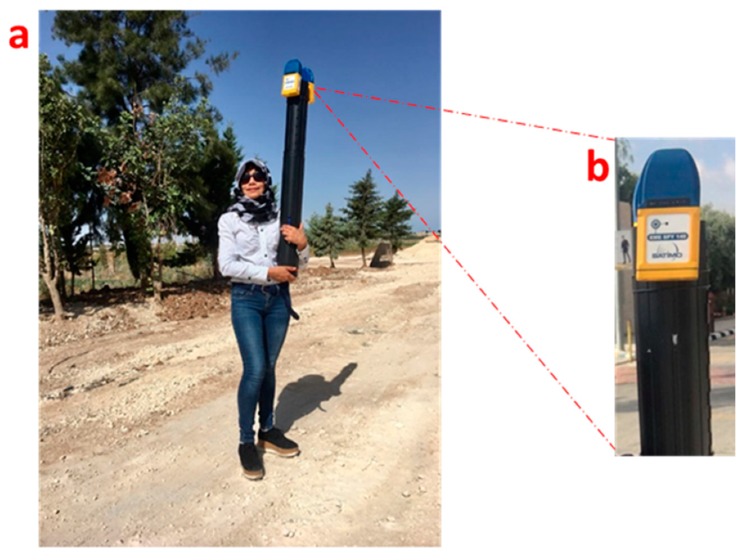
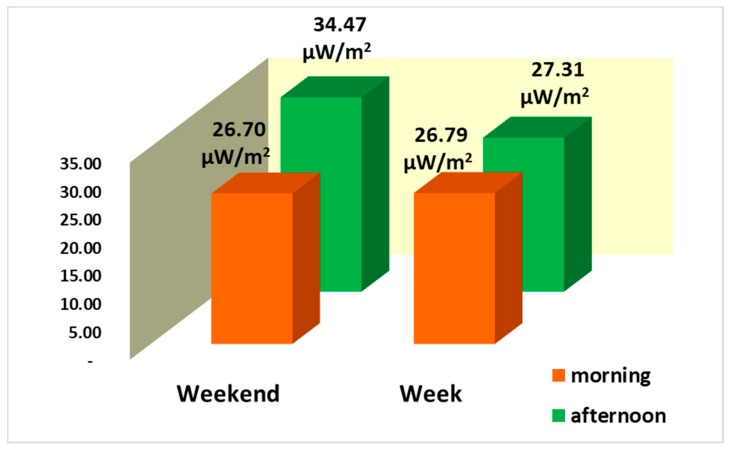
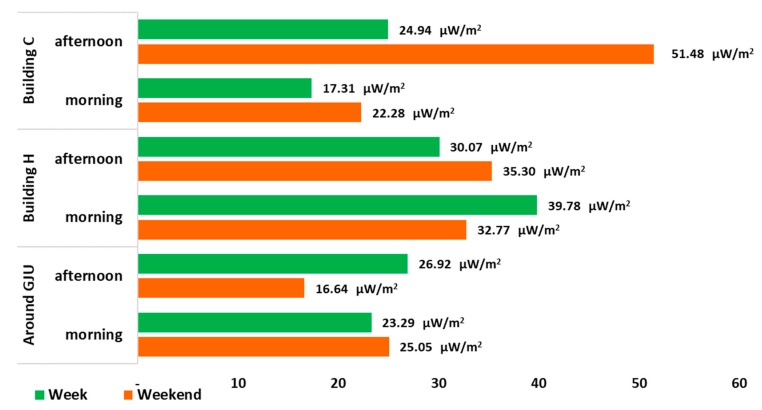
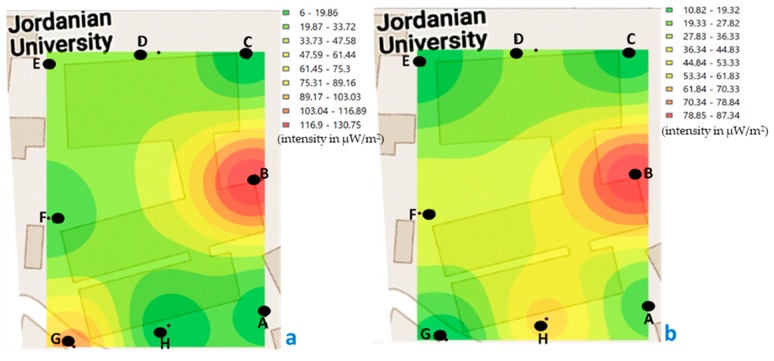
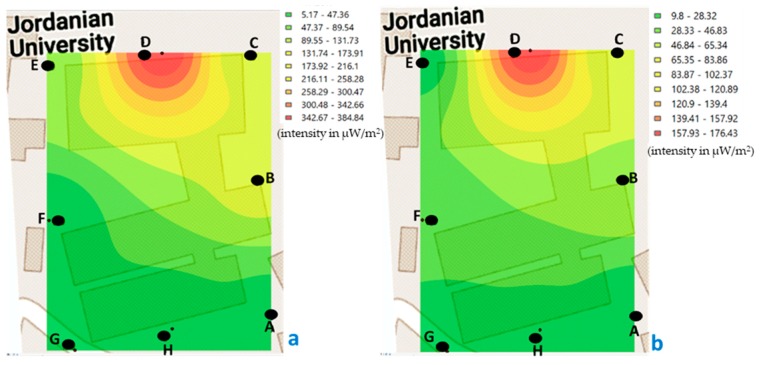
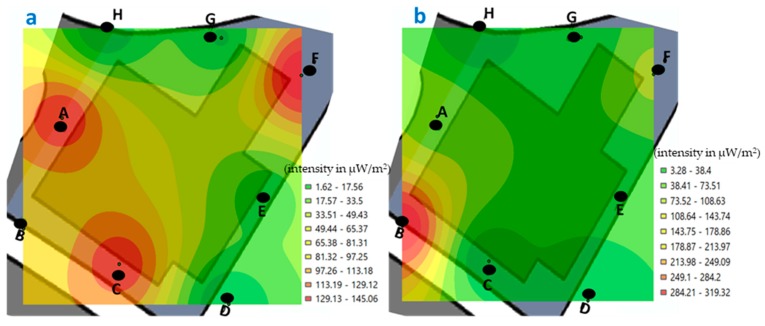
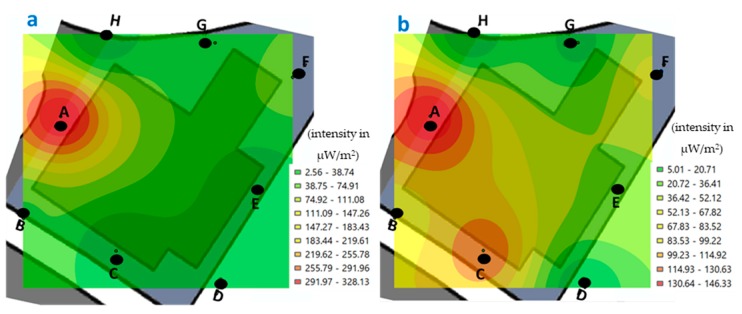
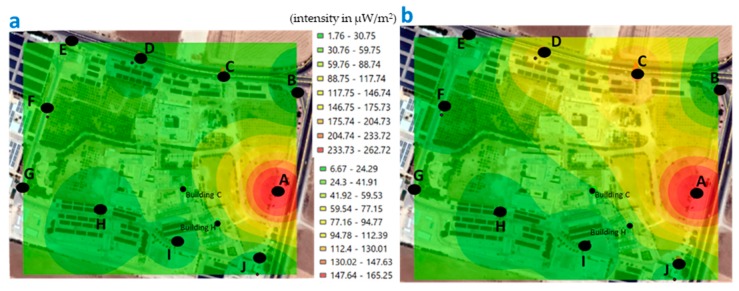
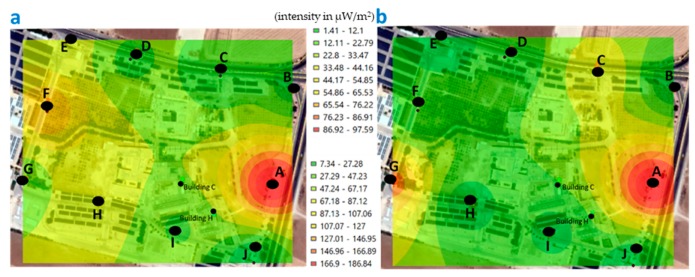
In the last two decades, due to the development of the information society, the massive increase in the use of information technologies, including the connection and communication of multiple electronic devices, highlighting Wi-Fi networks, as well as the emerging technological advances of 4G and 5G (new-generation mobile phones that will use 5G), have caused a significant increase in the personal exposure to Radiofrequency Electromagnetic Fields (RF-EMF), and as a consequence, increasing discussions about the possible adverse health effects. The main objective of this study was to measure the personal exposure to radiofrequency electromagnetic fields from the Wi-Fi in the university area of German Jordanian University (GJU) and prepare georeferenced maps of the registered intensity levels and to compare them with the basic international restrictions. Spot measurements were made outside the university area at German Jordanian University. Measurements were made in the whole university area and around two buildings. Two Satimo EME SPY 140 (Brest, France) personal exposimeters were used, and the measurements were performed in the morning and afternoon, and on weekends and weekdays. The total average personal exposure to RF-EMF from the Wi-Fi band registered in the three study areas and in the four days measured was 28.82 μW/m. The average total exposure from the Wi-Fi band registered in the ten measured points of the university area of GJU was 22.97 μW/m, the one registered in the eight measured points of building H was 34.48 μW/m, and the one registered in the eight points of building C was 29.00 μW/m. The maximum average values registered in the campus of GJU are below the guidelines allowed by International Commission on Non-ionizing Radiation Protection (ICNIRP). The measurement protocol used in this work has been applied in measurements already carried out in Spain and Mexico, and it is applicable in university areas of other countries.
在过去的二十年中,由于信息社会的发展,信息技术的大量使用,包括多种电子设备的连接和通信,突出了 Wi-Fi 网络,以及 4G 和 5G 等新兴技术的进步(新一代手机将使用 5G),导致人们个人暴露于射频电磁场(RF-EMF)的情况显著增加,因此,人们对可能产生的不良健康影响的讨论也越来越多。本研究的主要目的是测量德国约旦大学(GJU)大学校区 Wi-Fi 产生的射频电磁场的个人暴露情况,并绘制注册强度水平的地理参考图,并将其与基本的国际限制进行比较。在德国约旦大学大学校区外进行了现场测量。在整个大学校区及周围两栋建筑内进行了测量。使用了两台 Satimo EME SPY 140(法国布雷斯特)个人暴露计,测量时间为上午、下午和周末及工作日。在三个研究区域和四天内测量的 Wi-Fi 频段的 RF-EMF 总平均个人暴露量为 28.82μW/m。GJU 大学校区十个测量点记录的 Wi-Fi 频段总平均暴露量为 22.97μW/m,H 楼八个测量点记录的暴露量为 34.48μW/m,C 楼八个测量点记录的暴露量为 29.00μW/m。GJU 大学校园记录的最大平均值低于国际非电离辐射防护委员会(ICNIRP)允许的指导值。本工作中使用的测量协议已经在西班牙和墨西哥进行的测量中得到应用,并且适用于其他国家的大学校区。