Department of Pharmaceutics and Pharmaceutical Technology, Faculty of Pharmacy, The British University in Egypt (BUE), El-Sherouk City, Cairo, 11837, Egypt.
Chemotherapeutic Unit, Mansoura University Hospitals, Mansoura 35516, Egypt.
Int J Nanomedicine. 2020 Feb 28;15:1335-1347. doi: 10.2147/IJN.S237314. eCollection 2020.
Atorvastatin calcium (AT) is an ocular anti-inflammatory with limited bioavailability when taken orally due to its low solubility in low pH and extensive first-pass effect. To overcome these problems, AT was entrapped in polymeric nanoparticles (NPs) to improve surface properties and sustained release, in addition to achieving site-specific action.
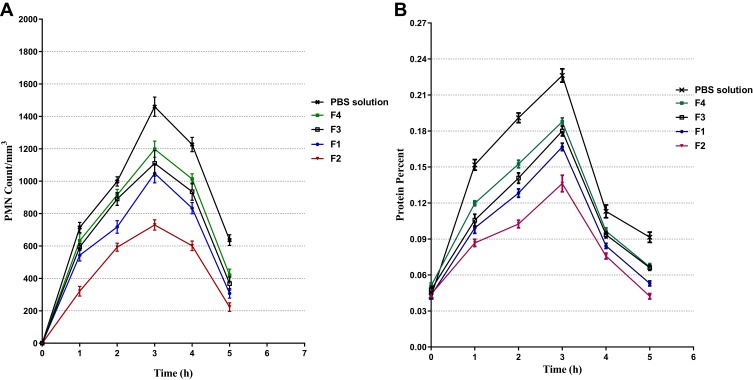
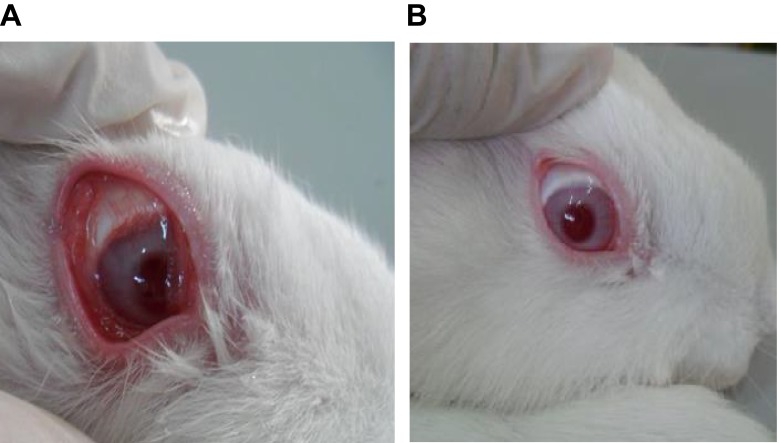
AT was entrapped in chitosan (CS)-coated polylactic-co-glycolic acid (PLGA) NPs to form AT-PLGA-CS-NPs (F1). F1 and free AT were embedded in thermosensitive Pluronic127-hydroxypropyl methylcellulose (HPMC) to form thermosensitive gels (F2) and (F3) while F4 is AT suspension in water. F1 was assessed for size, surface charge, polydispersity index (PDI), and morphology. F2 and F3 were examined for gelation temperature, gel strength, pH, and viscosity. In vitro release of the four formulations was also investigated. The ocular irritancy and anti-inflammatory efficacy of formulations against prostaglandin E-(PGE) induced ocular inflammation in rabbits were investigated by counting the polymorphonuclear leukocytes (PMNs) and protein migrated in tears.
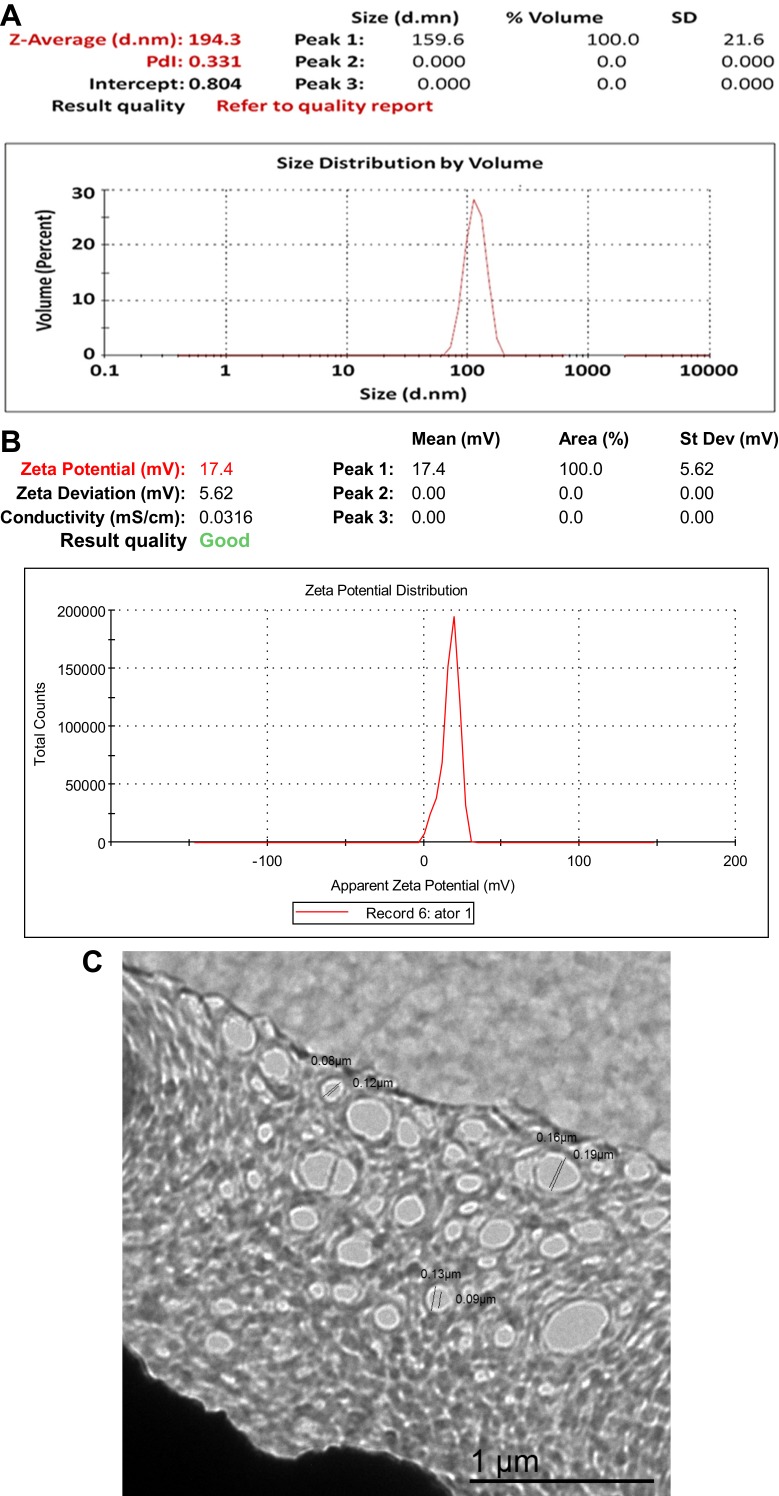
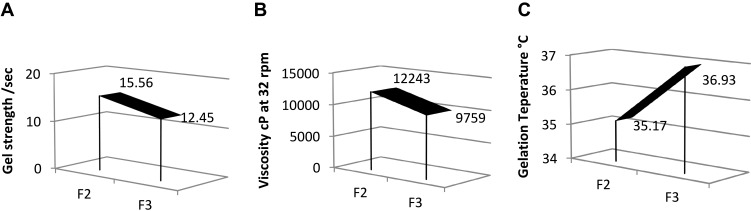
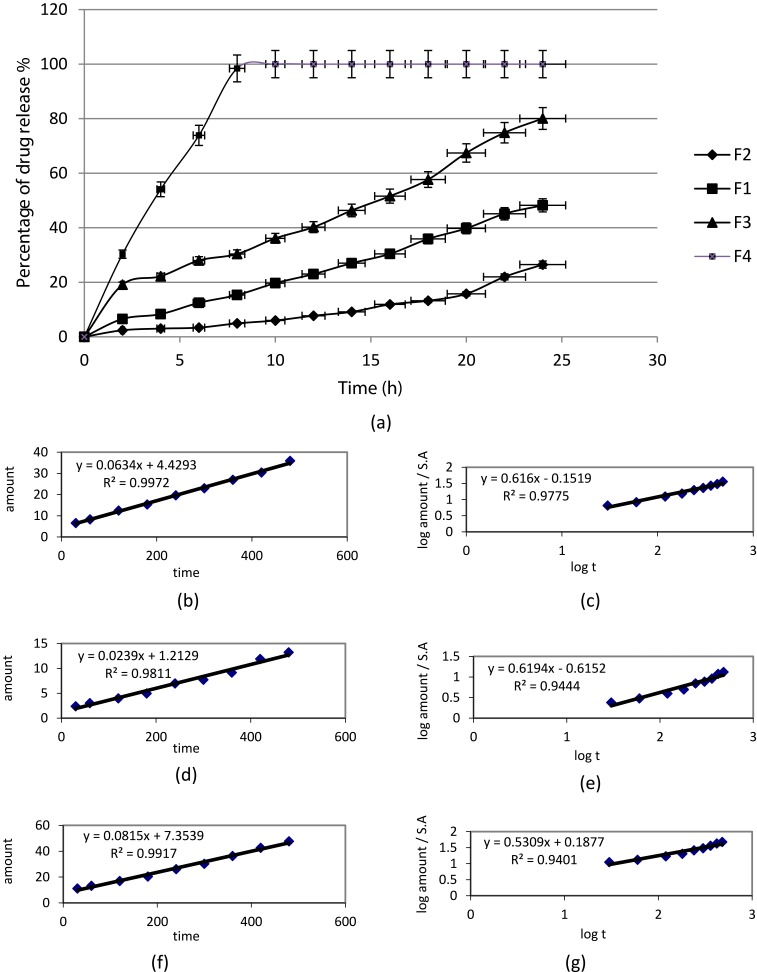
Oval F1 of 80.0-190.0±21.6 nm exhibited a PDI of 0.331 and zeta potential of 17.4±5.62 mV with a positive surface charge. F2 and F3 gelation temperatures were 35.17±0.22°C and 36.93±0.31°C, viscosity 12,243±0.64 and 9759±0.22 cP, gel strength 15.56±0.6 and 12.45±0.1 s, and pHs of 7.4±0.02 and 7.4±0.1, respectively. In vitro release of F1, F2, F3, and F4 were 48.21±0.31, 26.48±0.5, 84.76±0.11, and 100% after 24 hrs, respectively. All formulations were non-irritant. F2 significantly inhibited lid closure up to 3 h, PMN counts and proteins in tear fluids up to 5 h compared to other formulations.
AT-PLGA-CS-NP thermosensitive gels proved to be successful ocular anti-inflammatory drug delivery systems.
阿托伐他汀钙(AT)是一种眼部抗炎药,由于其在低 pH 值下溶解度低且广泛的首过效应,口服生物利用度有限。为了克服这些问题,将 AT 包封在聚合物纳米粒子(NPs)中,以改善表面性质和持续释放,同时实现靶向作用。
将 AT 包封在壳聚糖(CS)包覆的聚乳酸-共-羟基乙酸(PLGA)NPs 中,形成 AT-PLGA-CS-NPs(F1)。F1 和游离 AT 被嵌入温敏性泊洛沙姆 127-羟丙基甲基纤维素(HPMC)中,形成温敏凝胶(F2)和(F3),而 F4 是水中的 AT 混悬液。评估了 F1 的粒径、表面电荷、多分散指数(PDI)和形态。考察了 F2 和 F3 的凝胶化温度、凝胶强度、pH 值和粘度。还研究了四种制剂的体外释放情况。通过计数兔眼房水中多形核白细胞(PMN)和迁移蛋白,研究了制剂对前列腺素 E(PGE)诱导的眼内炎症的眼部刺激性和抗炎功效。
80.0-190.0±21.6nm 的椭圆形 F1 表现出 PDI 为 0.331 和 Zeta 电位为 17.4±5.62mV 的正表面电荷。F2 和 F3 的凝胶化温度分别为 35.17±0.22°C 和 36.93±0.31°C,粘度分别为 12,243±0.64 和 9759±0.22cP,凝胶强度分别为 15.56±0.6 和 12.45±0.1s,pH 值分别为 7.4±0.02 和 7.4±0.1。F1、F2、F3 和 F4 的体外释放分别在 24 小时后达到 48.21±0.31、26.48±0.5、84.76±0.11 和 100%。所有制剂均无刺激性。F2 在 3 小时内显著抑制眼睑闭合,在 5 小时内抑制PMN 计数和泪液中蛋白质的产生,优于其他制剂。
AT-PLGA-CS-NP 温敏凝胶被证明是成功的眼部抗炎药物传递系统。