Zheng Jianqiong, Liu Xiaohui, Zheng Bingbing, Zheng Zhenzhen, Zhang Hongping, Zheng Jiayong, Sun Congcong, Chen Haiying, Yang Jie, Wang Zuo, Lin Meimei, Chen Jingjing, Zhou Qingdiao, Zheng Zhi, Xu Xiaoming, Ying Hao
Department of Obstetrics, Shanghai First Maternity and Infant Hospital, Tongji University School of Medicine, Shanghai, China.
Department of Obstetrics and Gynecology, Wenzhou People's Hospital, the Third Clinical Institute Affiliated to Wenzhou Medical University, Wenzhou, China.
Front Pharmacol. 2020 Feb 28;11:97. doi: 10.3389/fphar.2020.00097. eCollection 2020.
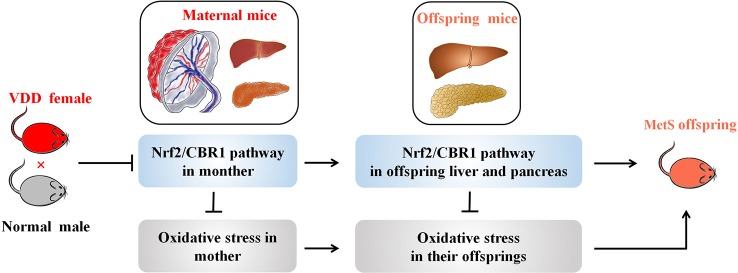
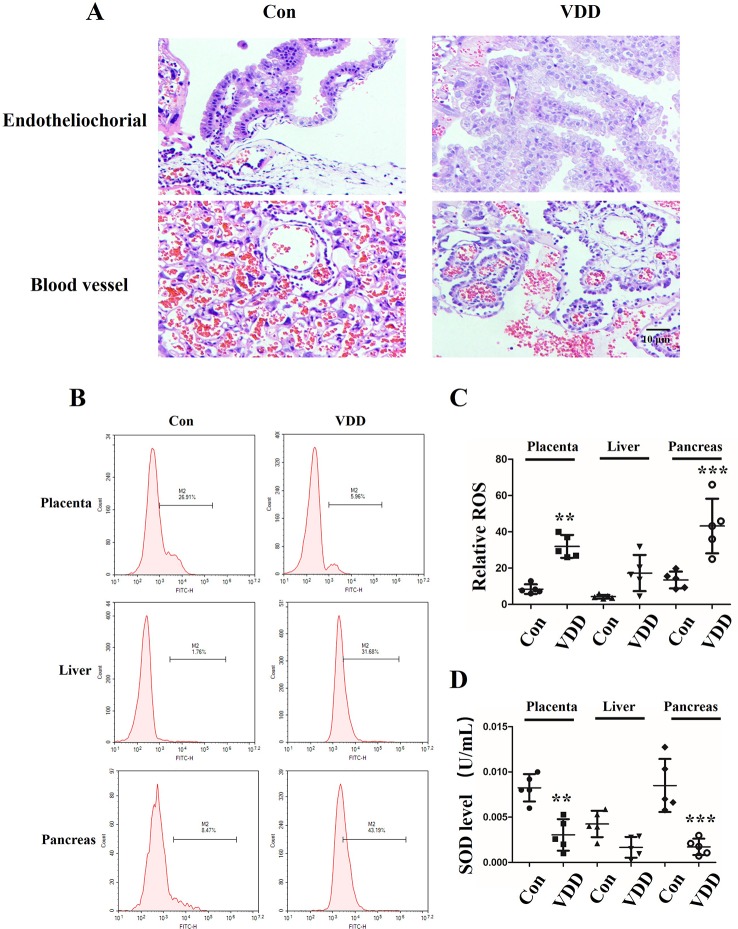
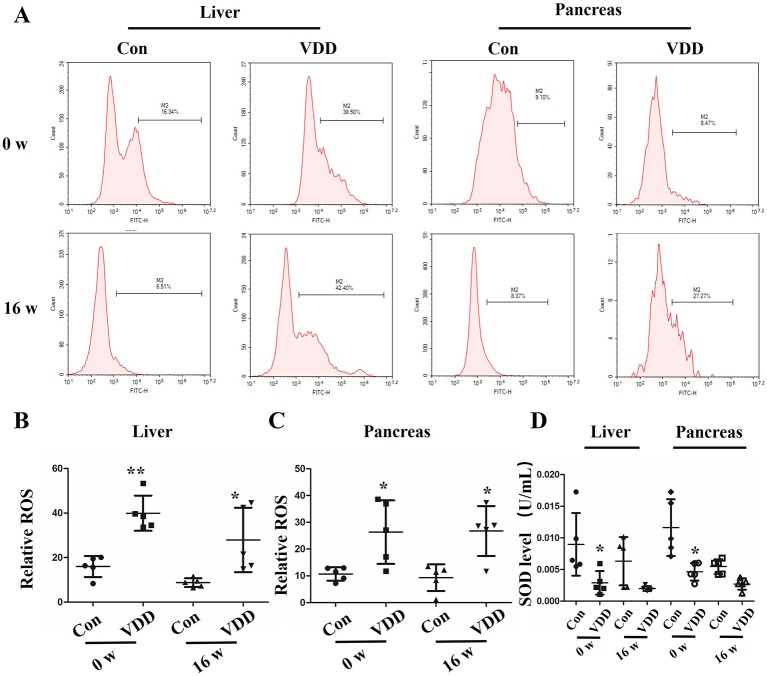
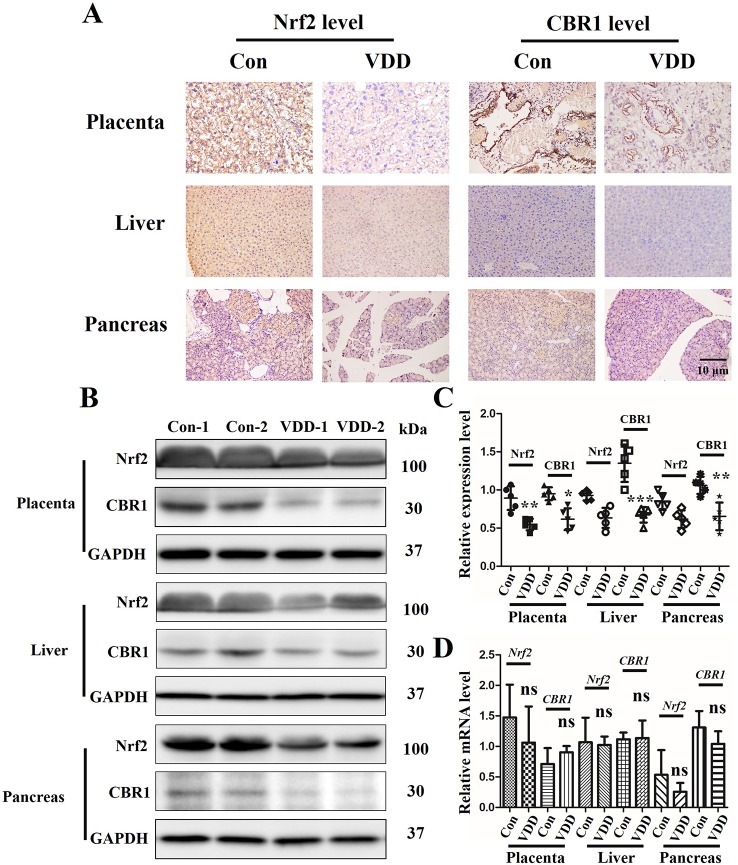
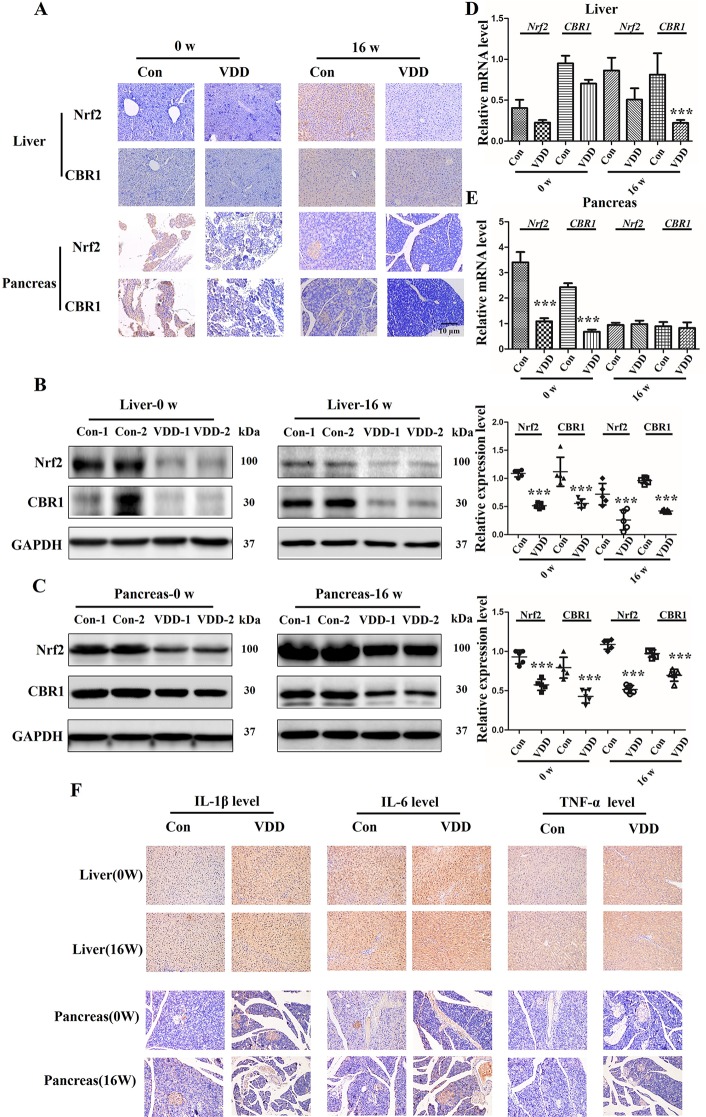
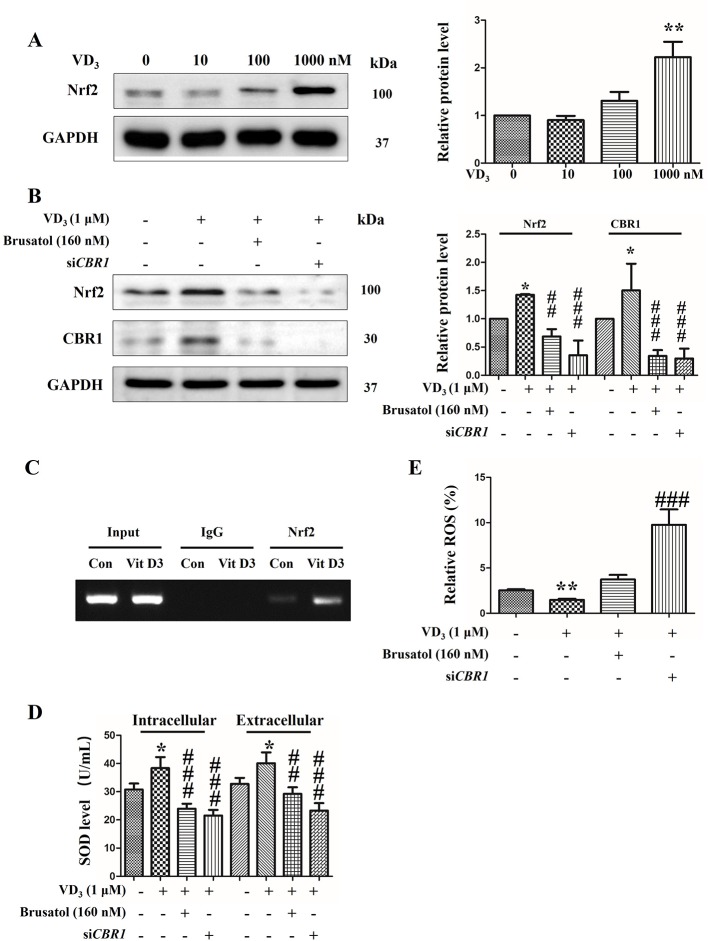
Metabolic syndrome is a disorder of energy use and storage, which is characterized by central obesity, dyslipidemia, and raised blood pressure and blood sugar levels. Maternal 25-hydroxyvitamin D deficiency is known to cause metabolic changes, chronic disease, and increased adiposity in adulthood. However, the underlying mechanism of induced metabolic syndrome (MetS) in the offspring in vitamin D deficient pregnant mothers remains unclear. We identified that maternal 25-hydroxyvitamin D deficiency enhances oxidative stress, which leads to the development of MetS in the mother and her offspring. Further, immunohistochemical, Western blotting, and qRT-PCR analyses revealed that maternal 25-hydroxyvitamin D deficiency inhibited the activation of the Nrf2/carbonyl reductase 1 (CBR1) pathway in maternal placenta, liver, and pancreas, as well as the offspring's liver and pancreas. Further analyses uncovered that application of 25-hydroxyvitamin D activated the Nrf2/CBR1 pathway, relieving the oxidative stress in BRL cells, suggesting that 25-hydroxyvitamin D regulates oxidative stress in offspring and induces the activation of the Nrf2/CBR1 pathway. Taken together, our study finds that maternal 25-hydroxyvitamin D deficiency is likely to result in offspring's MetS probably abnormal nutrition transformation across placenta. Depression of the Nrf2/CBR1 pathway in both mothers and their offspring is one of the causes of oxidative stress leading to MetS. This study suggests that 25-hydroxyvitamin D treatment may relieve the offspring's MetS.
代谢综合征是一种能量利用和储存紊乱的疾病,其特征为中心性肥胖、血脂异常以及血压和血糖水平升高。已知母体25-羟基维生素D缺乏会导致成年期代谢变化、慢性疾病和肥胖增加。然而,维生素D缺乏的孕妇所生后代发生代谢综合征(MetS)的潜在机制仍不清楚。我们发现母体25-羟基维生素D缺乏会增强氧化应激,从而导致母亲及其后代发生MetS。此外,免疫组织化学、蛋白质印迹和定量逆转录聚合酶链反应分析显示,母体25-羟基维生素D缺乏会抑制母体胎盘、肝脏和胰腺以及后代肝脏和胰腺中Nrf2/羰基还原酶1(CBR1)途径的激活。进一步分析发现,应用25-羟基维生素D可激活Nrf2/CBR1途径,减轻BRL细胞中的氧化应激,这表明25-羟基维生素D可调节后代的氧化应激并诱导Nrf2/CBR1途径的激活。综上所述,我们的研究发现母体25-羟基维生素D缺乏可能会导致后代发生MetS,这可能是由于胎盘营养转化异常所致。母亲及其后代中Nrf2/CBR1途径的抑制是导致MetS的氧化应激原因之一。这项研究表明,25-羟基维生素D治疗可能会缓解后代的MetS。