Department of Anesthesiology, Changzheng Hospital, Second Military Medical University, Shanghai 200003, P.R. China.
National Key Laboratory of Medical Immunology and Department of Immunology, Second Military Medical University, Shanghai 200433, P.R. China.
Int J Mol Med. 2020 Jun;45(6):1825-1837. doi: 10.3892/ijmm.2020.4544. Epub 2020 Mar 17.
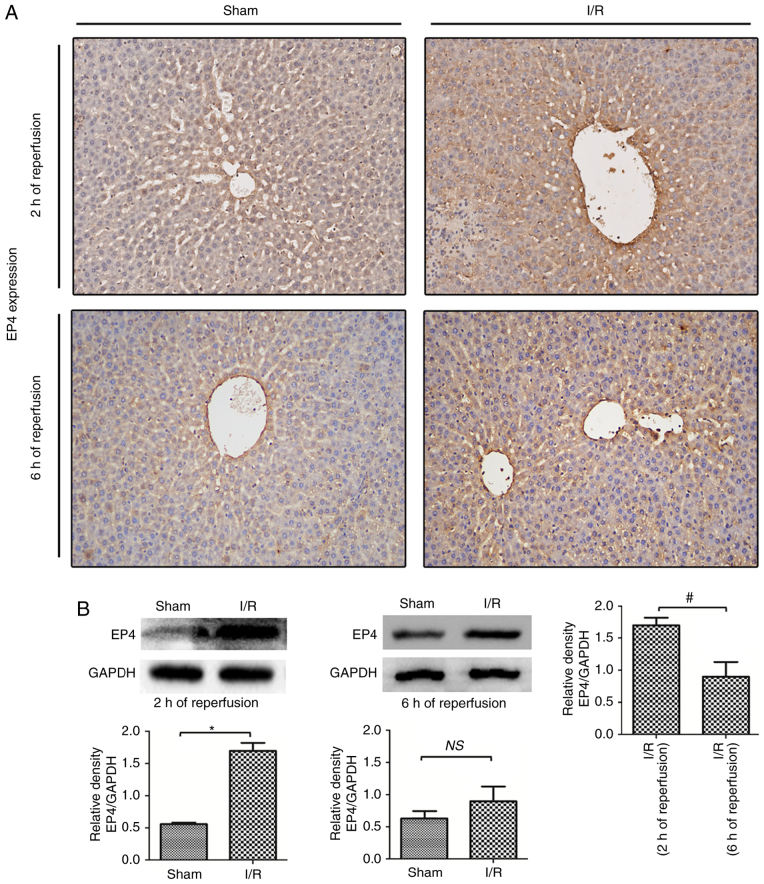
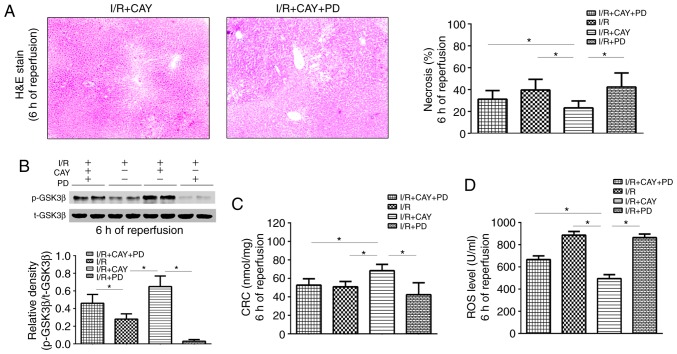
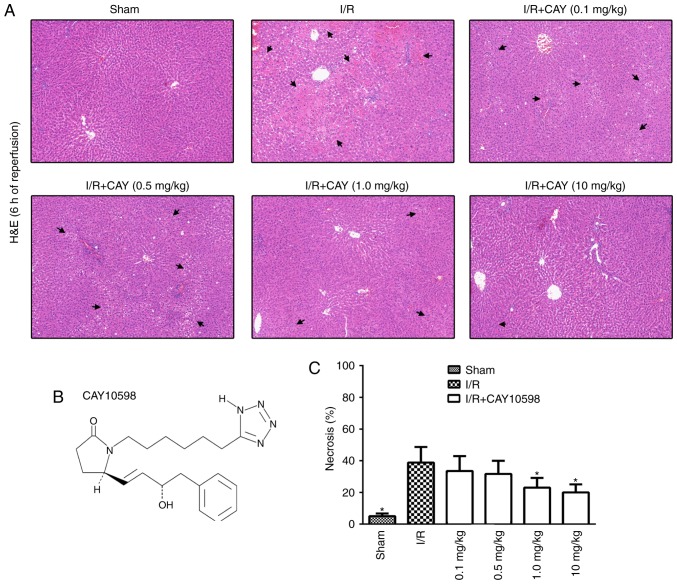
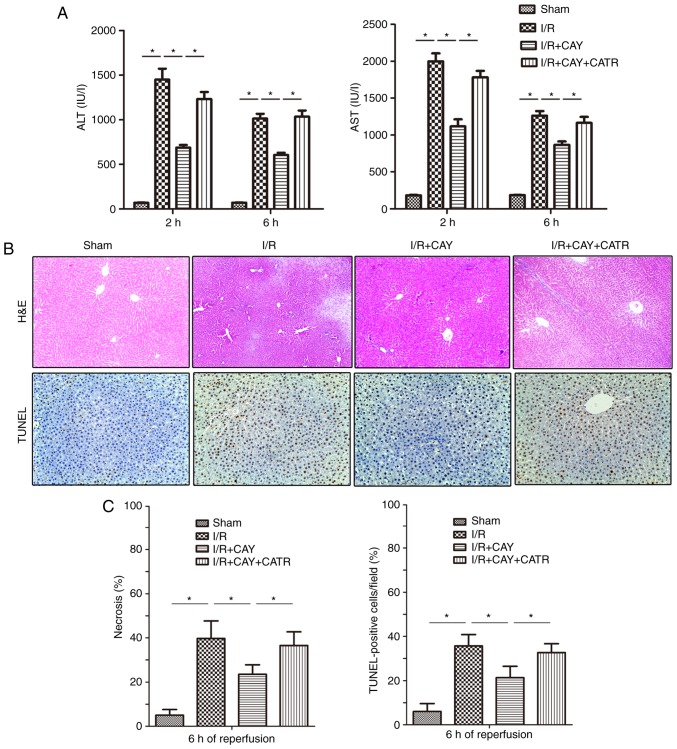
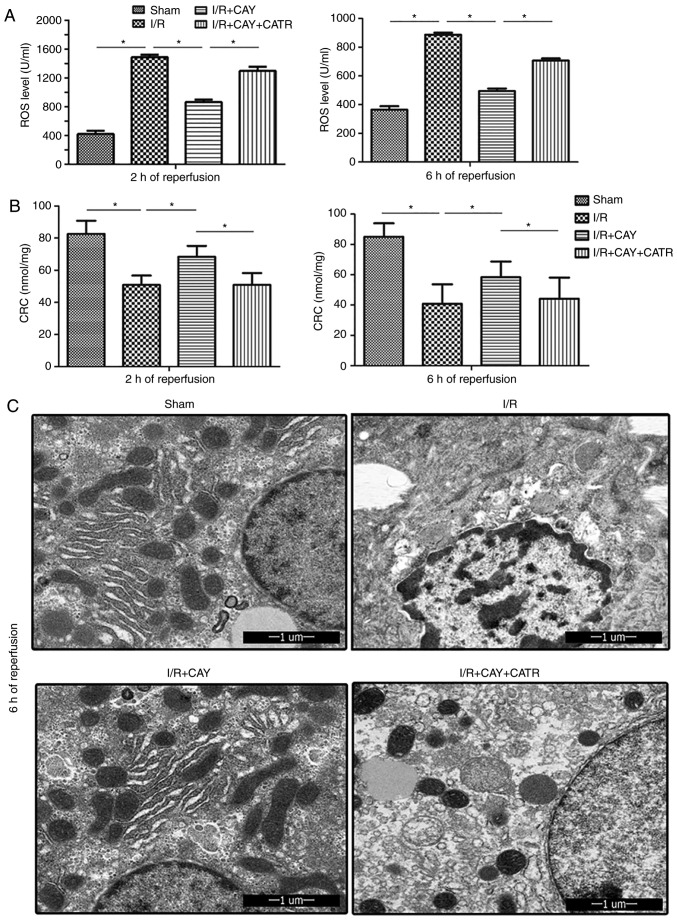
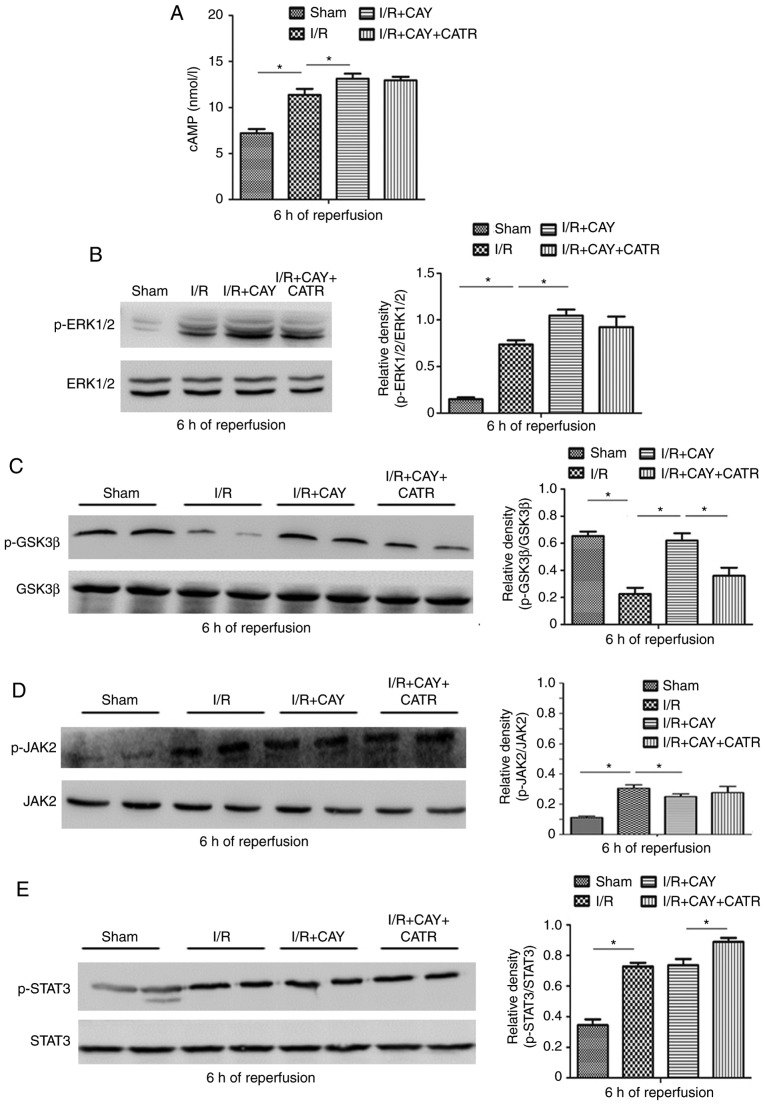
Prostaglandin E receptor subtype 4 (EP4) is widely distributed in the heart, but its role in hepatic ischemia/reperfusion (I/R), particularly in mitochondrial permeability transition pore (MPTP) modulation, is yet to be elucidated. In the present study, an EP4 agonist (CAY10598) was used in a rat model to evaluate the effects of EP4 activation on liver I/R and the mechanisms underlying this. I/R insult upregulated hepatic EP4 expression during early reperfusion. In addition, subcutaneous CAY10598 injection prior to the onset of reperfusion significantly increased hepatocyte cAMP concentrations and decreased serum ALT and AST levels and necrotic and apoptotic cell percentages, after 6 h of reperfusion. Moreover, CAY10598 protected mitochondrial morphology, markedly inhibited mitochondrial permeability transition pore (MPTP) opening and decreased liver reactive oxygen species levels. This occurred via activation of the ERK1/2‑GSK3β pathway rather than the janus kinase (JAK)2‑signal transducers and activators of transcription (STAT)3 pathway, and resulted in prevention of mitochondria‑associated cell injury. The MPTP opener carboxyatractyloside (CATR) and the ERK1/2 inhibitor PD98059 also partially reversed the protective effects of CAY10598 on the liver and mitochondria. The current findings indicate that EP4 activation induces ERK1/2‑GSK3β signaling and subsequent MPTP inhibition to provide hepatoprotection, and these observations are informative for developing new molecular targets and preventative therapies for I/R in a clinical setting.
前列腺素 E 受体亚型 4 (EP4) 在心脏中广泛分布,但它在肝缺血/再灌注 (I/R) 中的作用,特别是在调节线粒体通透性转换孔 (MPTP) 方面,尚未阐明。在本研究中,使用 EP4 激动剂 (CAY10598) 在大鼠模型中评估 EP4 激活对肝 I/R 的影响及其机制。再灌注早期,I/R 损伤使肝 EP4 表达上调。此外,在再灌注开始前皮下注射 CAY10598 可显著增加肝细胞 cAMP 浓度,降低血清 ALT 和 AST 水平以及坏死和凋亡细胞的比例,再灌注 6 小时后。此外,CAY10598 可保护线粒体形态,显著抑制线粒体通透性转换孔 (MPTP) 开放,降低肝脏活性氧水平。这是通过激活 ERK1/2-GSK3β 通路而不是 Janus 激酶 (JAK)2-信号转导和转录激活因子 (STAT)3 通路发生的,导致线粒体相关细胞损伤的预防。MPTP 开放剂羧基曲托索 (CATR) 和 ERK1/2 抑制剂 PD98059 也部分逆转了 CAY10598 对肝脏和线粒体的保护作用。目前的研究结果表明,EP4 激活诱导 ERK1/2-GSK3β 信号传导,随后抑制 MPTP,从而提供肝保护作用,这些观察结果为开发新的分子靶点和预防 I/R 的治疗方法提供了信息在临床环境中。