Chinese Medicine College, Jinan University, Guangzhou, Guangdong, China (mainland).
Med Sci Monit. 2020 Mar 18;26:e920682. doi: 10.12659/MSM.920682.
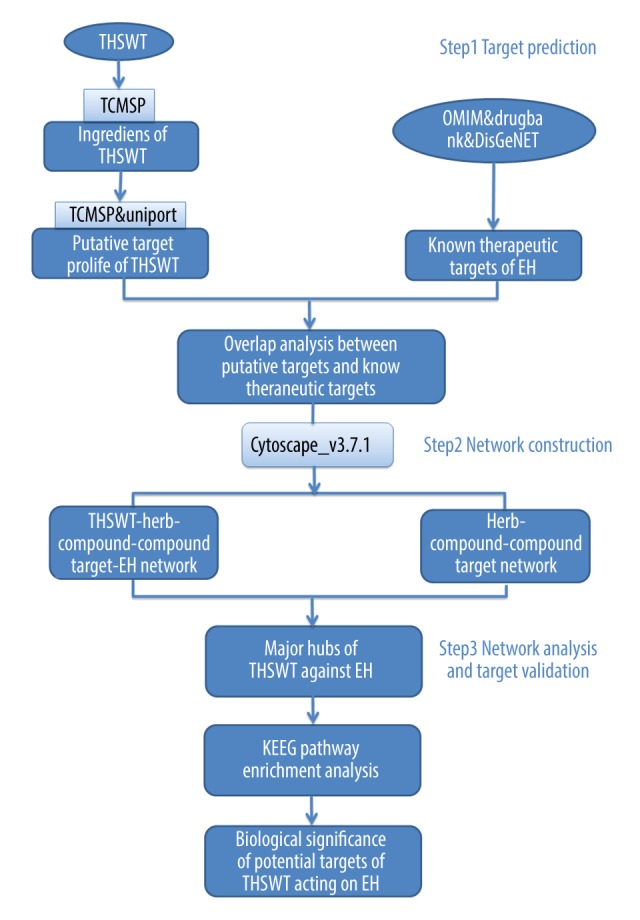
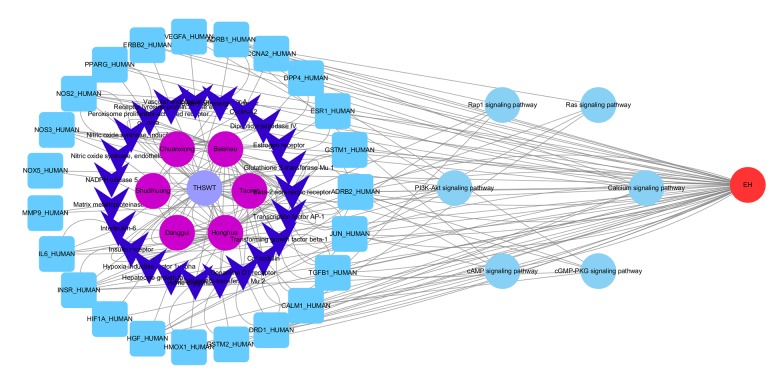
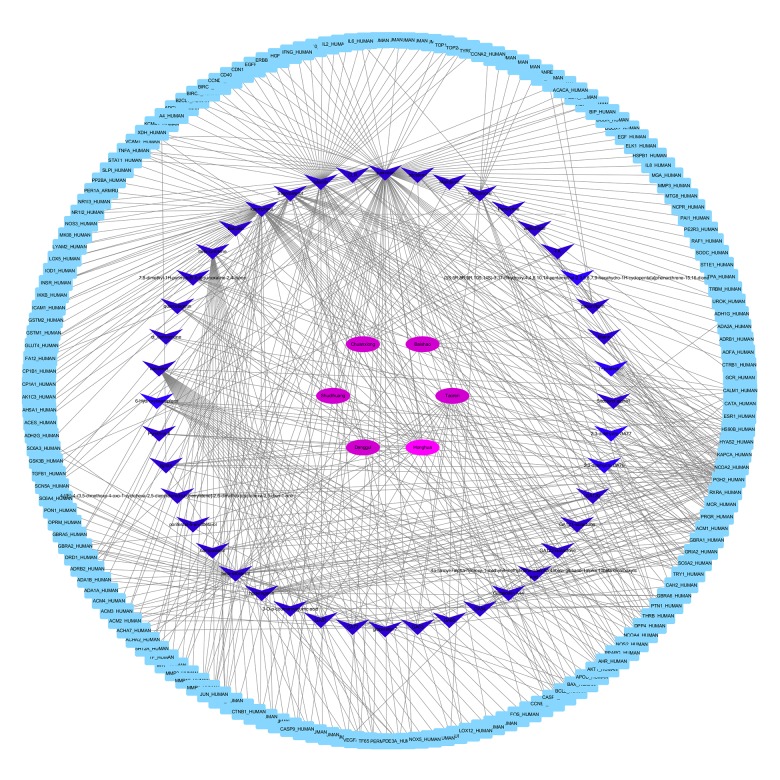
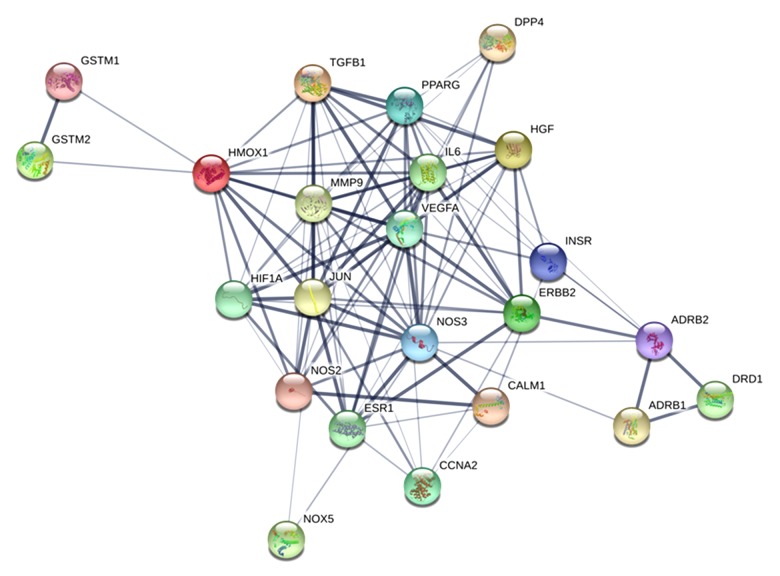
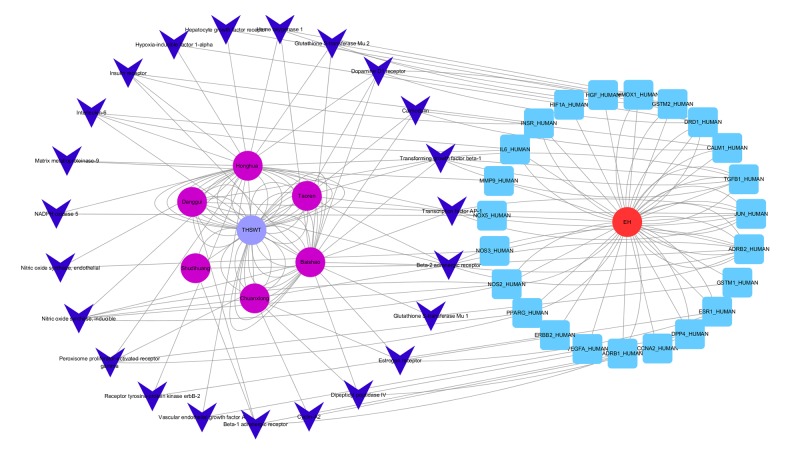
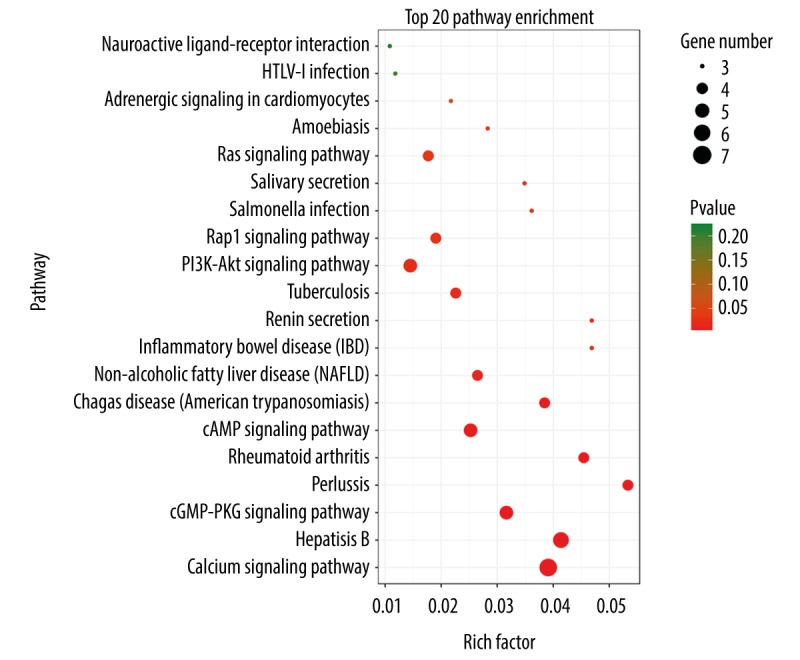
BACKGROUND TaohongSiwu decoction (THSWT), a traditional herbal formula, has been used to treat cardiovascular and cerebrovascular diseases such as essential hypertension (EH) in China. However, the pharmacological mechanism is not clear. To investigate the mechanisms of THSWT in the treatment of EH, we performed compounds, targets prediction and network analysis using a network pharmacology method. MATERIAL AND METHODS We selected chemical constituents and targets of THSWT according to TCMSP and UniProtKB databases and collected therapeutic targets on EH from Online Mendelian Inheritance in Man (OMIM), Drugbank and DisGeNET databases. The protein-protein interaction (PPI) was analyzed by using String database. Then network was constructed by using Cytoscape_v3.7.1, and the Kyoto Encyclopedia of Genes and Genomes (KEGG) pathway enrichment was performed by using Database for Annotation, Visualization and Integrated Discovery (DAVID) software. RESULTS The results of our network pharmacology research showed that the THSWT, composed of 6 Chinese herbs, contained 15 compounds, and 23 genes regulated the main signaling pathways related to EH. Moreover, the PPI network based on targets of THSWT on EH revealed the interaction relationship between targets. These core compounds were 6 of the 15 disease-related compounds in the network, kaempferol, quercetin, luteolin, Myricanone, beta-sitosterol, baicalein, and the core genes contained ADRB2, CALM1, HMOX1, JUN, PPARG, and VEGFA, which were regulated by more than 3 compounds and significantly associated with Calcium signaling pathway, cGMP-PKG signaling pathway, cAMP signaling pathway, PI3K-Akt signaling pathway, Rap1 signaling pathway, and Ras signaling pathway. CONCLUSIONS This network pharmacological study can reveal potential mechanisms of multi-target and multi-component THSWT in the treatment of EH, provide a scientific basis for studying the mechanism.
桃红四物汤(THSWT)是一种传统的中草药配方,已在中国用于治疗心血管和脑血管疾病,如原发性高血压(EH)。然而,其药理机制尚不清楚。为了研究 THSWT 治疗 EH 的机制,我们采用网络药理学方法对其进行了化合物、靶点预测和网络分析。
我们根据 TCMSP 和 UniProtKB 数据库选择 THSWT 的化学组成和靶点,并从在线孟德尔遗传人类(OMIM)、Drugbank 和 DisGeNET 数据库中收集 EH 的治疗靶点。使用 String 数据库分析蛋白质-蛋白质相互作用(PPI)。然后使用 Cytoscape_v3.7.1 构建网络,并使用数据库 for Annotation、Visualization and Integrated Discovery(DAVID)软件进行京都基因与基因组百科全书(KEGG)通路富集。
我们的网络药理学研究结果表明,由 6 种中药组成的 THSWT 含有 15 种化合物,调节与 EH 相关的主要信号通路的 23 个基因。此外,基于 THSWT 对 EH 靶点的 PPI 网络揭示了靶点之间的相互作用关系。这些核心化合物是网络中 15 种疾病相关化合物中的 6 种,包括山奈酚、槲皮素、木樨草素、杨梅酮、β-谷甾醇、黄芩素,核心基因包括 ADRB2、CALM1、HMOX1、JUN、PPARG 和 VEGFA,它们受到 3 种以上化合物的调节,并与钙信号通路、cGMP-PKG 信号通路、cAMP 信号通路、PI3K-Akt 信号通路、Rap1 信号通路和 Ras 信号通路显著相关。
本网络药理学研究可以揭示 THSWT 多靶点、多成分治疗 EH 的潜在机制,为研究其机制提供科学依据。