Department of Plant Molecular Biology, Biophore, University of Lausanne, Lausanne, Switzerland.
Electron Microscopy Facility, University of Lausanne, Lausanne, Switzerland.
EMBO J. 2020 May 4;39(9):e103894. doi: 10.15252/embj.2019103894. Epub 2020 Mar 18.
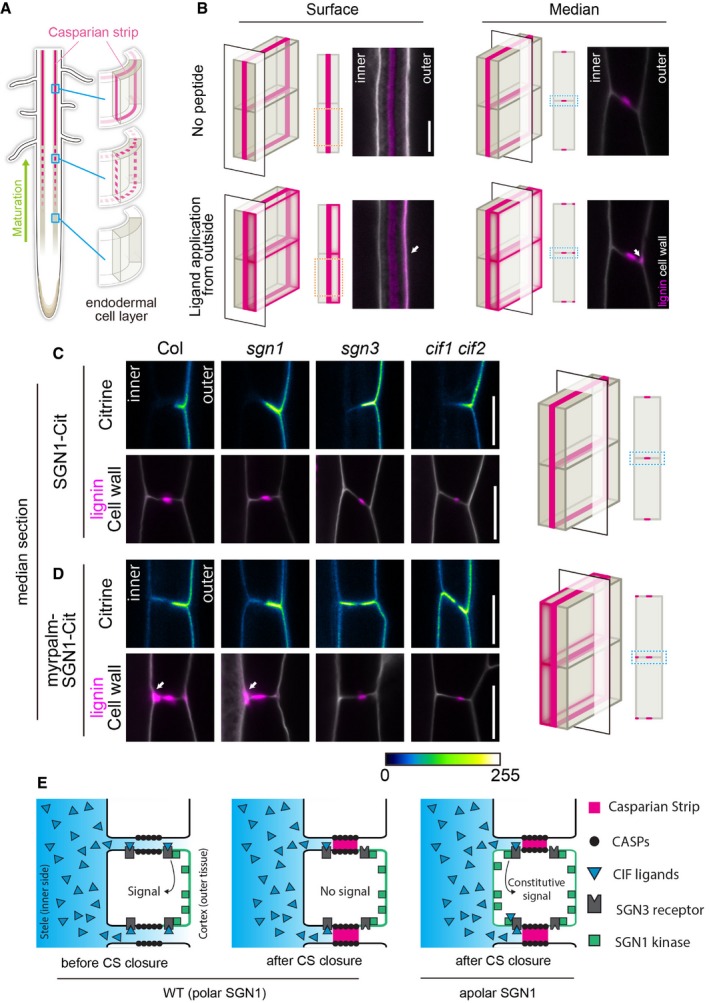
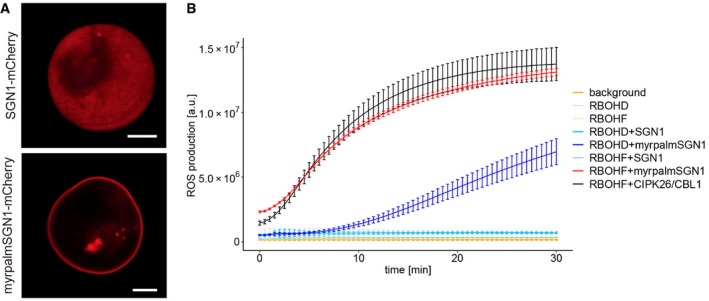
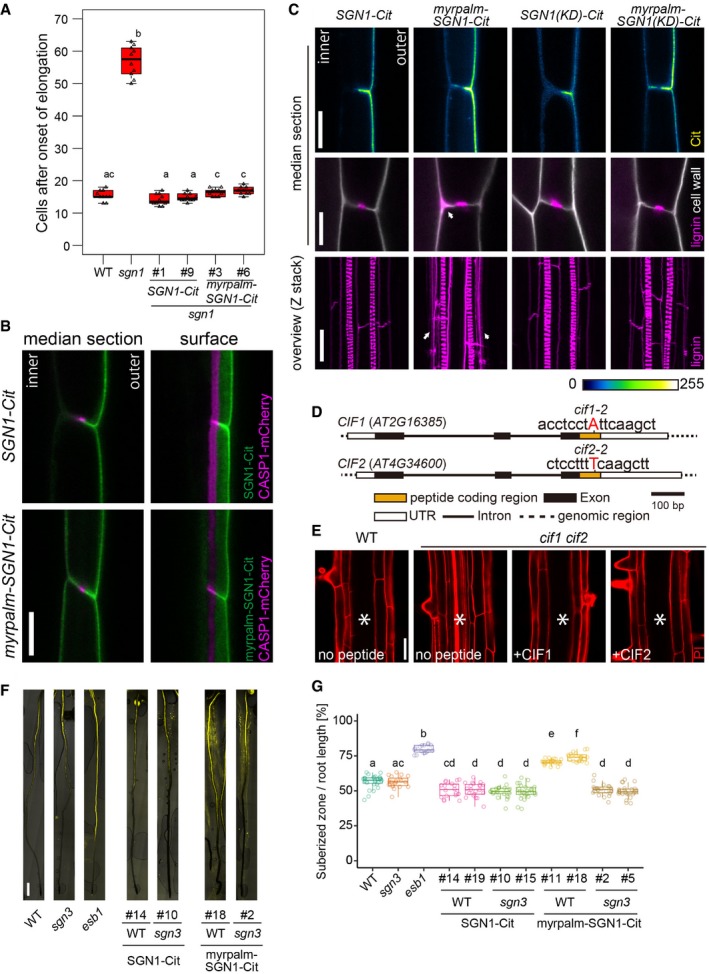
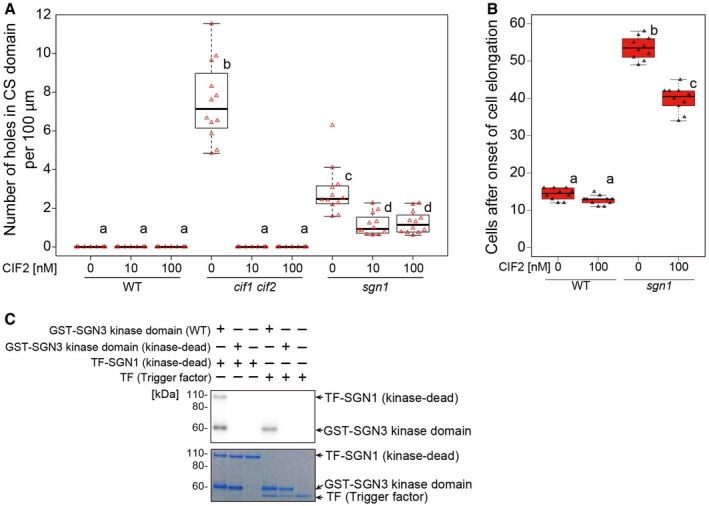
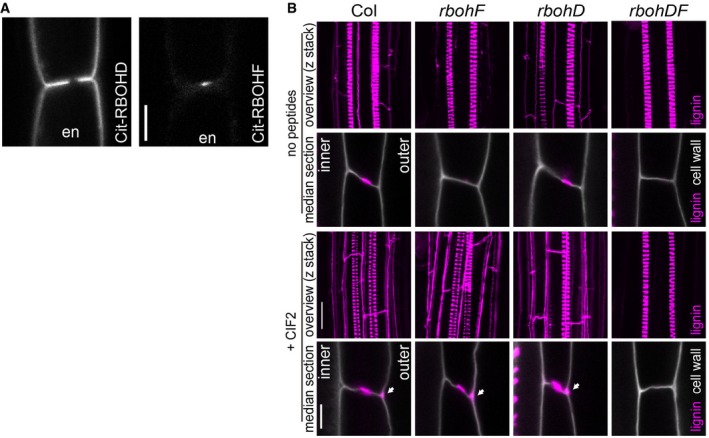
Production of reactive oxygen species (ROS) by NADPH oxidases (NOXs) impacts many processes in animals and plants, and many plant receptor pathways involve rapid, NOX-dependent increases of ROS. Yet, their general reactivity has made it challenging to pinpoint the precise role and immediate molecular action of ROS. A well-understood ROS action in plants is to provide the co-substrate for lignin peroxidases in the cell wall. Lignin can be deposited with exquisite spatial control, but the underlying mechanisms have remained elusive. Here, we establish a kinase signaling relay that exerts direct, spatial control over ROS production and lignification within the cell wall. We show that polar localization of a single kinase component is crucial for pathway function. Our data indicate that an intersection of more broadly localized components allows for micrometer-scale precision of lignification and that this system is triggered through initiation of ROS production as a critical peroxidase co-substrate.
NADPH 氧化酶(NOXs)产生的活性氧(ROS)会影响动物和植物的许多过程,许多植物受体途径都涉及到 ROS 的快速、NOX 依赖性增加。然而,由于其普遍的反应性,要确定 ROS 的精确作用和直接的分子作用一直具有挑战性。在植物中,ROS 的一个作用是为细胞壁中的木质素过氧化物酶提供共底物。木质素可以被精确地控制在空间上沉积,但潜在的机制仍然难以捉摸。在这里,我们建立了一个激酶信号转导途径,该途径对细胞壁内的 ROS 产生和木质化进行直接的、空间控制。我们表明,单个激酶成分的极性定位对于途径功能至关重要。我们的数据表明,更广泛的局部化成分的交叉允许木质化达到微米级的精度,并且该系统通过 ROS 产生作为关键过氧化物酶共底物来触发。