Zhang Zhenbiao, Han Huibin, Zhao Junxiang, Liu Zhiwen, Deng Lei, Wu Liuji, Niu Junpeng, Guo Yongfeng, Wang Guodong, Gou Xiaoping, Li Chao, Li Chuanyou, Liu Chun-Ming
Tobacco Research Institute, Chinese Academy of Agricultural Sciences, Qingdao, 266101, China.
College of Bioscience and Bioengineering, Jiangxi Agricultural University, Nanchang, 330045, China.
Mol Hortic. 2025 Jan 23;5(1):7. doi: 10.1186/s43897-024-00134-y.
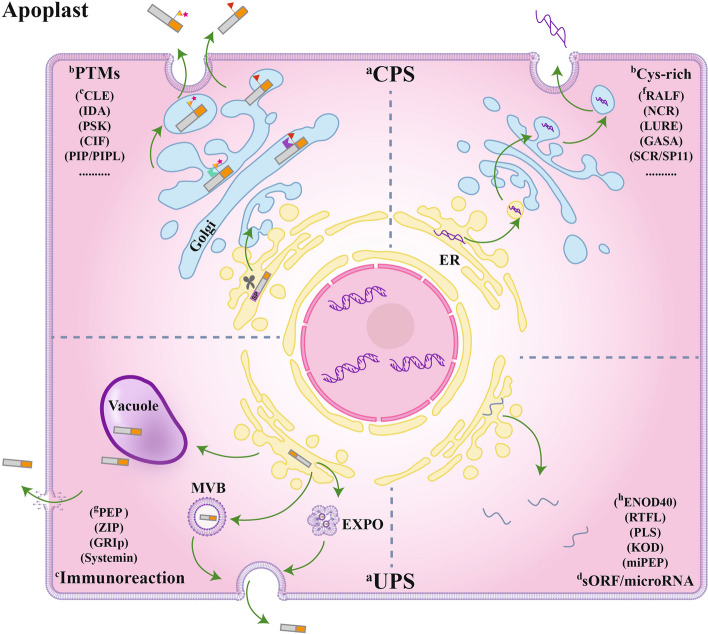
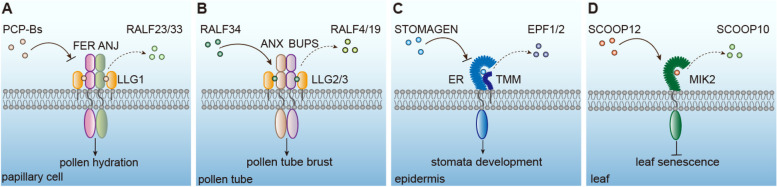
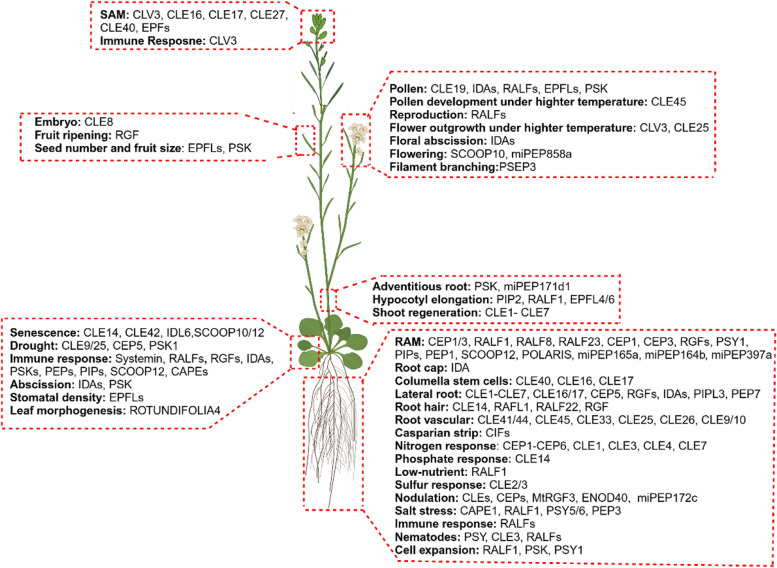
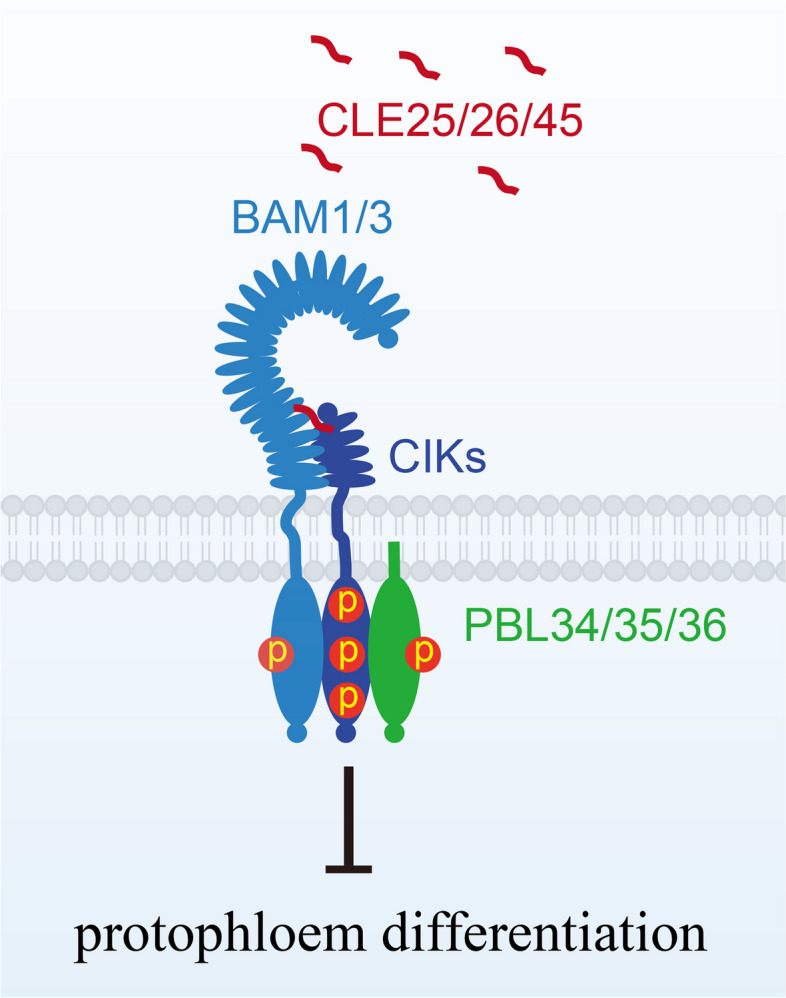
Peptide hormones are defined as small secreted polypeptide-based intercellular communication signal molecules. Such peptide hormones are encoded by nuclear genes, and often go through proteolytic processing of preproproteins and post-translational modifications. Most peptide hormones are secreted out of the cell to interact with membrane-associated receptors in neighboring cells, and subsequently activate signal transductions, leading to changes in gene expression and cellular responses. Since the discovery of the first plant peptide hormone, systemin, in tomato in 1991, putative peptide hormones have continuously been identified in different plant species, showing their importance in both short- and long-range signal transductions. The roles of peptide hormones are implicated in, but not limited to, processes such as self-incompatibility, pollination, fertilization, embryogenesis, endosperm development, stem cell regulation, plant architecture, tissue differentiation, organogenesis, dehiscence, senescence, plant-pathogen and plant-insect interactions, and stress responses. This article, collectively written by researchers in this field, aims to provide a general overview for the discoveries, functions, chemical natures, transcriptional regulations, and post-translational modifications of peptide hormones in plants. We also updated recent discoveries in receptor kinases underlying the peptide hormone sensing and down-stream signal pathways. Future prospective and challenges will also be discussed at the end of the article.
肽激素被定义为基于分泌型小多肽的细胞间通讯信号分子。这类肽激素由核基因编码,通常要经过前体蛋白的蛋白水解加工和翻译后修饰。大多数肽激素分泌到细胞外,与邻近细胞中的膜相关受体相互作用,随后激活信号转导,导致基因表达和细胞反应发生变化。自1991年在番茄中发现第一种植物肽激素系统素以来,在不同植物物种中不断鉴定出假定的肽激素,显示出它们在短程和长程信号转导中的重要性。肽激素的作用涉及但不限于诸如自交不亲和、授粉、受精、胚胎发生、胚乳发育、干细胞调控、植物形态、组织分化、器官发生、开裂、衰老、植物-病原体和植物-昆虫相互作用以及应激反应等过程。本文由该领域的研究人员共同撰写,旨在对植物中肽激素的发现、功能、化学性质、转录调控和翻译后修饰进行概述。我们还更新了肽激素感知和下游信号通路中受体激酶的最新发现。本文结尾还将讨论未来展望和挑战。