Unit Suicide Research and Mental Health Promotion, Department of Social and Preventive Medicine, Centre for Public Health, Medical University of Vienna, Kinderspitalgasse 15, A-1090 Vienna, Austria
Wiener Werkstaette for Suicide Research, Vienna, Austria.
BMJ. 2020 Mar 18;368:m575. doi: 10.1136/bmj.m575.
To examine the association between reporting on suicides, especially deaths of celebrities by suicide, and subsequent suicides in the general population.
Systematic review and meta-analysis.
PubMed/Medline, PsychInfo, Scopus, Web of Science, Embase, and Google Scholar, searched up to September 2019.
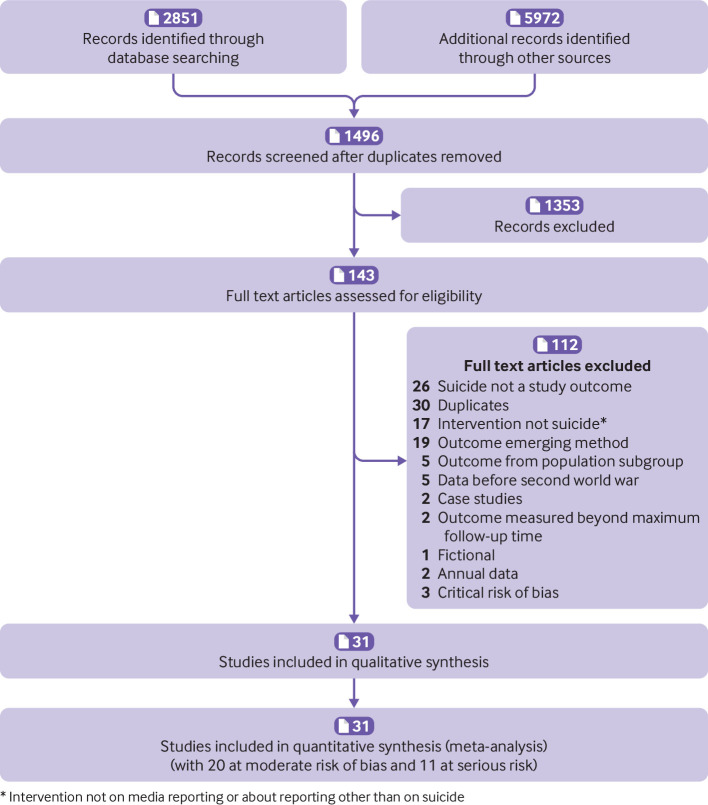
Studies were included if they compared at least one time point before and one time point after media reports on suicide; follow-up was two months or less; the outcome was death by suicide; and the media reports were about non-fictional suicides. Data from studies adopting an interrupted time series design, or single or multiple arm before and after comparisons, were reviewed.
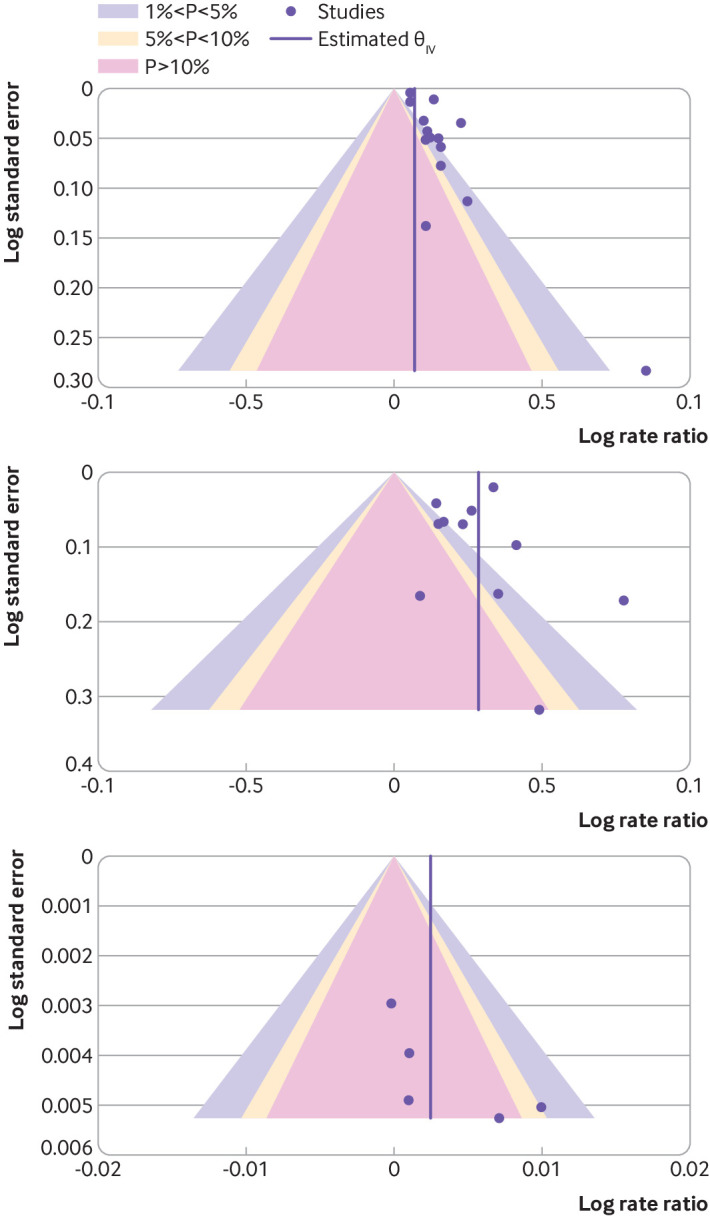
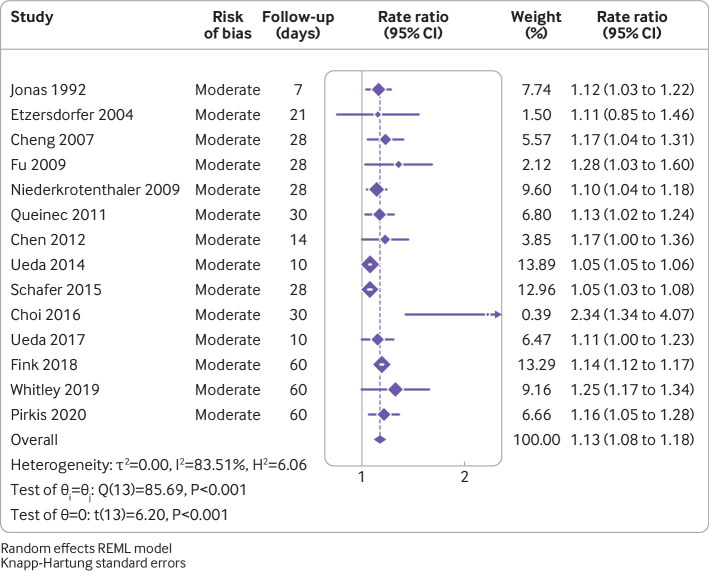
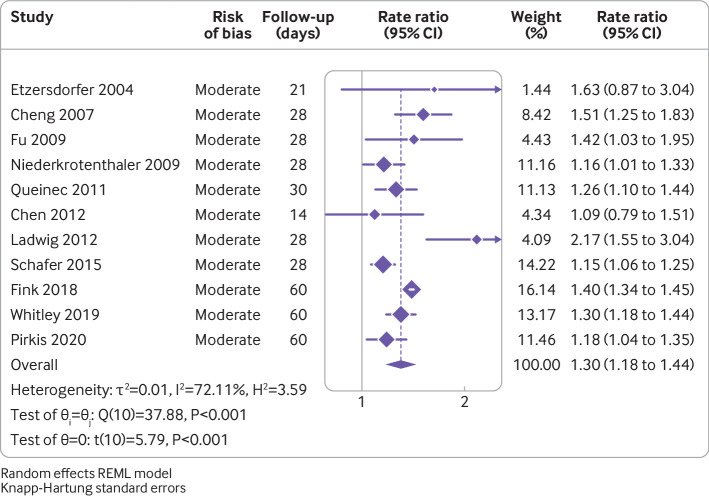
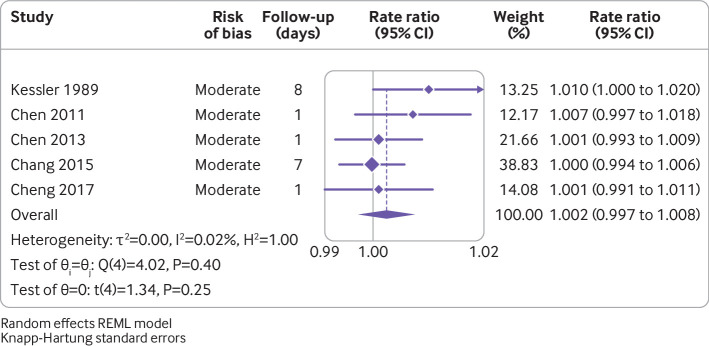
31 studies were identified and analysed, and 20 studies at moderate risk of bias were included in the main analyses. The risk of suicide increased by 13% in the period after the media reported a death of a celebrity by suicide (rate ratio 1.13, 95% confidence interval 1.08 to 1.18; 14 studies; median follow-up 28 days, range 7-60 days). When the suicide method used by the celebrity was reported, there was an associated 30% increase in deaths by the same method (rate ratio 1.30, 95% confidence interval 1.18 to 1.44; 11 studies; median follow-up 28 days, range 14-60 days). For general reporting of suicide, the rate ratio was 1.002 (0.997 to 1.008; five studies; median follow-up 1 day, range 1-8 days) for a one article increase in the number of reports on suicide. Heterogeneity was large and partially explained by celebrity and methodological factors. Enhanced funnel plots suggested some publication bias in the literature.
Reporting of deaths of celebrities by suicide appears to have made a meaningful impact on total suicides in the general population. The effect was larger for increases by the same method as used by the celebrity. General reporting of suicide did not appear to be associated with suicide although associations for certain types of reporting cannot be excluded. The best available intervention at the population level to deal with the harmful effects of media reports is guidelines for responsible reporting. These guidelines should be more widely implemented and promoted, especially when reporting on deaths of celebrities by suicide.
PROSPERO CRD42019086559.
探讨媒体报道自杀事件,尤其是名人自杀事件,与普通人群随后自杀之间的关联。
系统评价和荟萃分析。
PubMed/Medline、PsychInfo、Scopus、Web of Science、Embase 和 Google Scholar,检索时间截至 2019 年 9 月。
纳入的研究需符合以下标准:至少比较一次媒体报道自杀事件前后的时间点;随访时间不超过两个月;结局为自杀死亡;且媒体报道的是真实自杀事件。采用中断时间序列设计或单臂或双臂前后比较的研究数据被纳入分析。
共确定 31 项研究,20 项研究被纳入主要分析,这些研究存在中度偏倚风险。在媒体报道名人自杀后,自杀风险增加了 13%(率比 1.13,95%置信区间 1.08 至 1.18;14 项研究;中位随访时间 28 天,范围 7 至 60 天)。当报道名人所使用的自杀方法时,同一方法的自杀死亡人数增加了 30%(率比 1.30,95%置信区间 1.18 至 1.44;11 项研究;中位随访时间 28 天,范围 14 至 60 天)。对于一般的自杀报道,报道数量每增加一篇文章,自杀率比增加 1.002(0.997 至 1.008;5 项研究;中位随访时间 1 天,范围 1 至 8 天)。异质性较大,部分原因可由名人因素和方法学因素解释。扩充漏斗图提示文献中存在一定程度的发表偏倚。
报道名人自杀事件似乎对普通人群的总自杀人数产生了有意义的影响。这种影响对于与名人使用相同方法的自杀增加更为显著。一般的自杀报道似乎与自杀无关,但不能排除某些类型的报道与自杀之间存在关联。在人群层面上,应对媒体报道的有害影响的最佳干预措施是制定负责任的报道指南。这些指南应更广泛地实施和推广,特别是在报道名人自杀事件时。
PROSPERO CRD42019086559。