Biltekin Fatih, Akyol Husnu Fadil, Gültekin Melis, Yildiz Ferah
Department of Radiation Oncology, Faculty of Medicine, Hacettepe University, Ankara, Turkey.
J Contemp Brachytherapy. 2020 Feb;12(1):17-26. doi: 10.5114/jcb.2020.92407. Epub 2020 Feb 28.
To design a novel high-dose-rate intracavitary applicator which may lead to enhanced dose modulation in the brachytherapy of gynecological cancers.
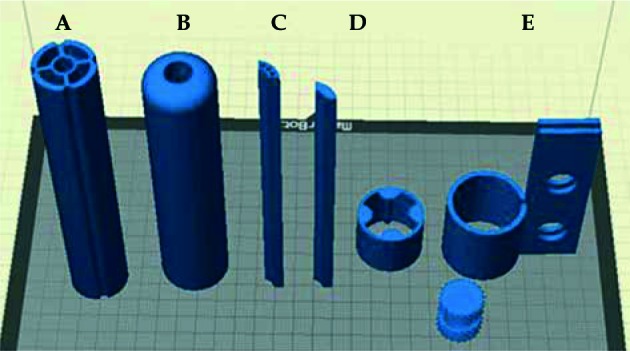
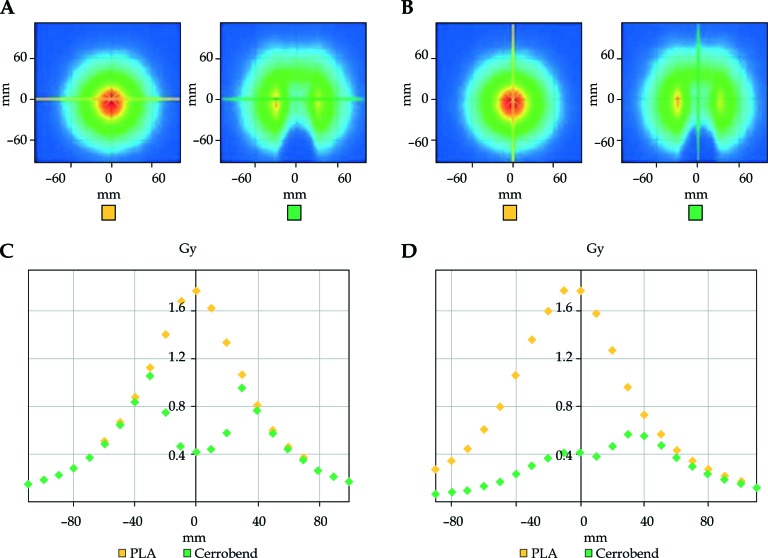
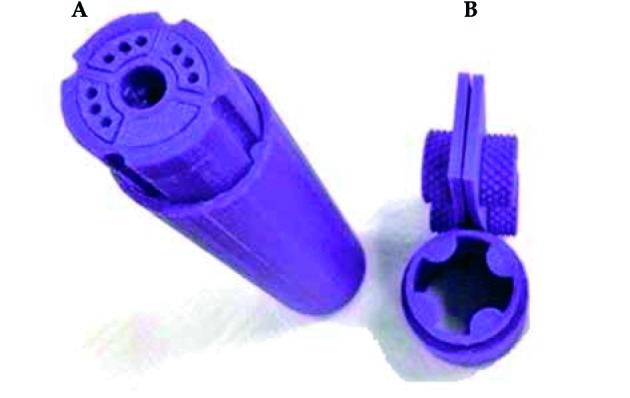
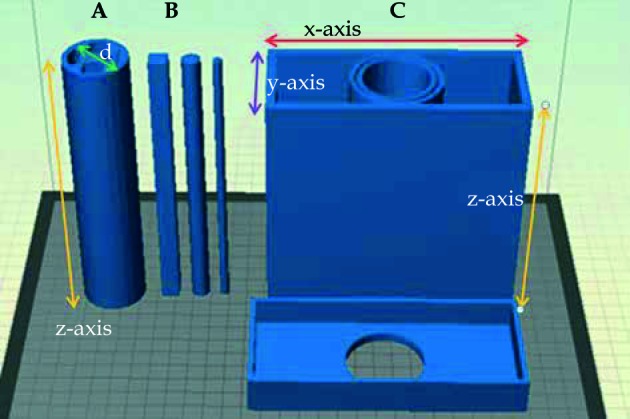
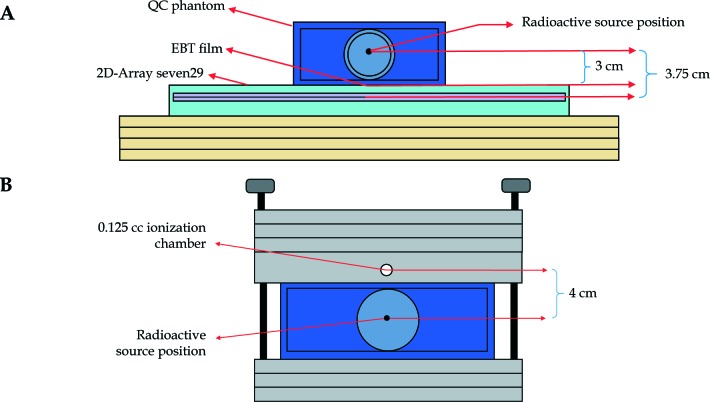
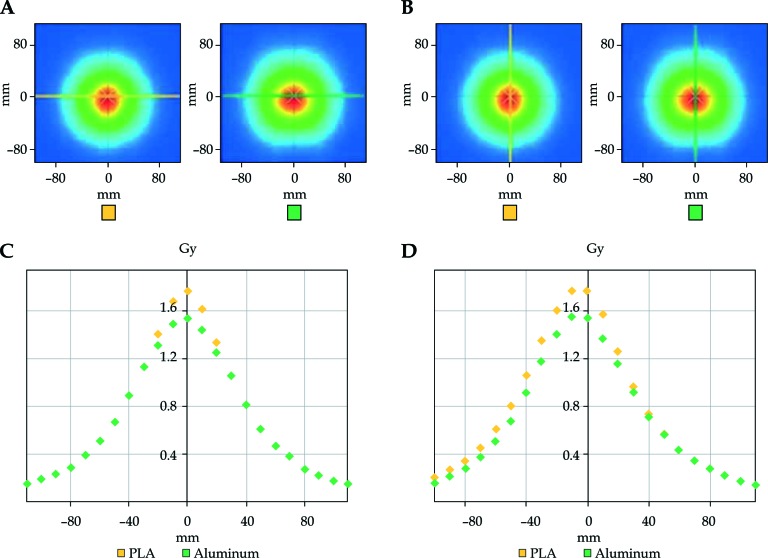
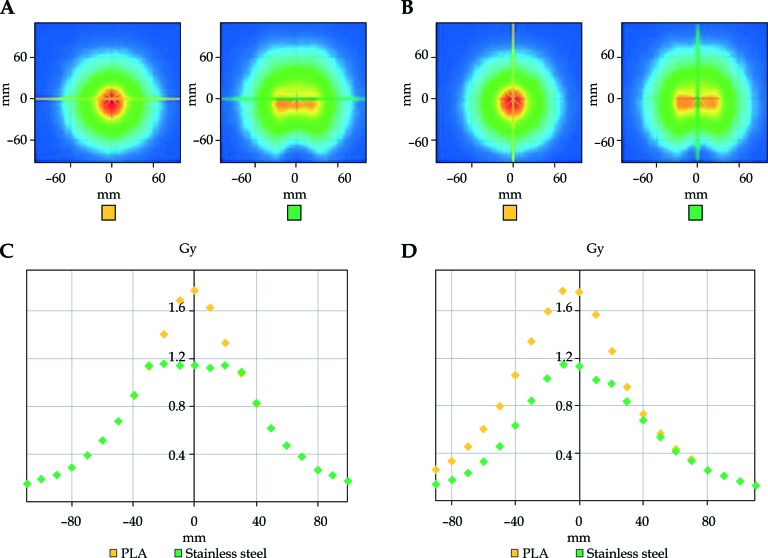
A novel brachytherapy applicator, auxiliary equipment and quality control phantom were modeled in SketchUp Pro 2017 modeling software and printed out from a MakerBot Replicator Z18 three-dimensional printer. As a printing material polylactic acid (PLA) filament was used and compensator materials including aluminum, stainless-steel and Cerrobend alloy were selected according to their radiation attenuation properties. To evaluate the feasibility of the novel applicator, two sets of measurements were performed in a Varian GammaMed iX Plus high-dose rate iridium-192 (Ir) brachytherapy unit and all of the treatment plans were calculated in Varian BrachyVision treatment planning system v.8.9 with TG43-based formalism. In the first step, catheter and source-dwell positioning accuracy, reproducibility of catheter and source positions, linearity of relative dose with changing dwell times and compensator materials were tested to evaluate the mechanical stability of the designed applicator. In the second step, to validate the dosimetric accuracy of the novel applicator measured point dose and two-dimensional dose distributions in homogeneous medium were compared with calculated data in the treatment planning system using PTW VeriSoft v.5.1 software.
In mechanical quality control tests source-dwell positioning accuracy and linearity of the designed applicator were measured as ≤ 0.5 mm and ≤ 1.5%, respectively. Reproducibility of the treatment planning was ≥ 97.7% for gamma evaluation criteria of 1 mm distance to agreement and 1% dose difference of local dose. In dosimetric quality control tests, maximum difference between measured and calculated point dose was found as 3.8% in homogeneous medium. In two-dimensional analysis, the number of passing points was greater than 90% for all measurements using gamma evaluation criteria of 3 mm distance to agreement and 3% dose difference of local dose.
The novel brachytherapy applicator met the necessary requirements in quality control tests.
设计一种新型高剂量率腔内施源器,有望在妇科癌症近距离治疗中增强剂量调制。
在SketchUp Pro 2017建模软件中对新型近距离治疗施源器、辅助设备及质量控制体模进行建模,并通过MakerBot Replicator Z18三维打印机打印出来。使用聚乳酸(PLA)长丝作为打印材料,并根据其辐射衰减特性选择包括铝、不锈钢和铈铱合金在内的补偿材料。为评估新型施源器的可行性,在Varian GammaMed iX Plus高剂量率铱 - 192(Ir)近距离治疗单元中进行了两组测量,并在Varian BrachyVision治疗计划系统v.8.9中基于TG43形式计算了所有治疗计划。第一步,测试导管和源驻留定位精度、导管和源位置的可重复性、相对剂量随驻留时间和补偿材料变化的线性度,以评估所设计施源器的机械稳定性。第二步,为验证新型施源器的剂量学准确性,使用PTW VeriSoft v.5.1软件将均匀介质中的测量点剂量和二维剂量分布与治疗计划系统中的计算数据进行比较。
在机械质量控制测试中,所设计施源器的源驻留定位精度和线性度分别测量为≤0.5毫米和≤1.5%。对于1毫米距离一致性和局部剂量1%剂量差异的伽马评估标准,治疗计划的可重复性≥97.7%。在剂量学质量控制测试中,均匀介质中测量点剂量与计算点剂量的最大差异为3.8%。在二维分析中,对于所有使用3毫米距离一致性和局部剂量3%剂量差异的伽马评估标准的测量,通过点的数量大于90%。
新型近距离治疗施源器在质量控制测试中满足了必要要求。