Meyer-Szary Jarosław, Luis Marlon Souza, Mikulski Szymon, Patel Agastya, Schulz Finn, Tretiakow Dmitry, Fercho Justyna, Jaguszewska Kinga, Frankiewicz Mikołaj, Pawłowska Ewa, Targoński Radosław, Szarpak Łukasz, Dądela Katarzyna, Sabiniewicz Robert, Kwiatkowska Joanna
Department of Pediatric Cardiology and Congenital Heart Defects, Faculty of Medicine, Medical University of Gdańsk, 80-210 Gdańsk, Poland.
First Doctoral School, Medical University of Gdańsk, 80-211 Gdańsk, Poland.
Int J Environ Res Public Health. 2022 Mar 11;19(6):3331. doi: 10.3390/ijerph19063331.
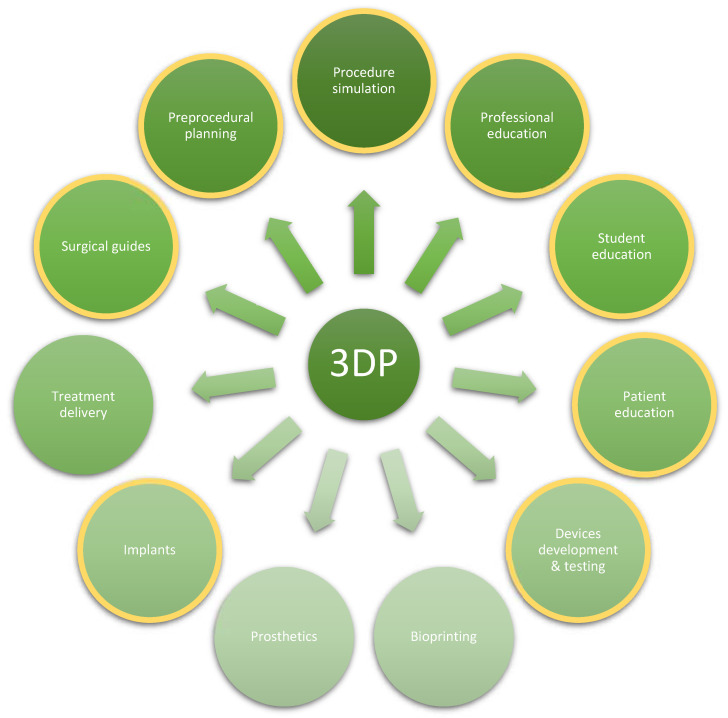
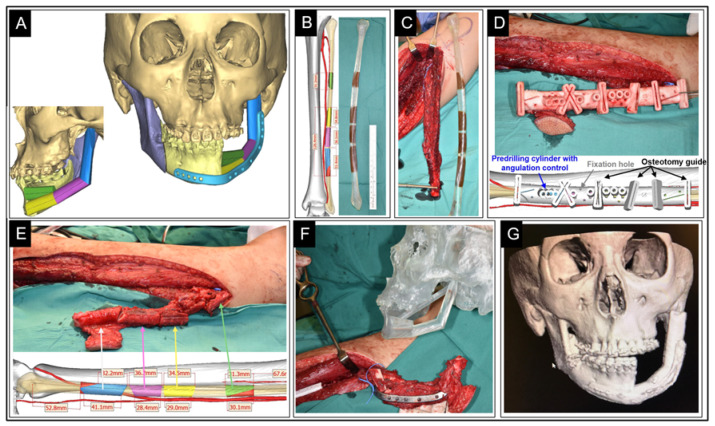
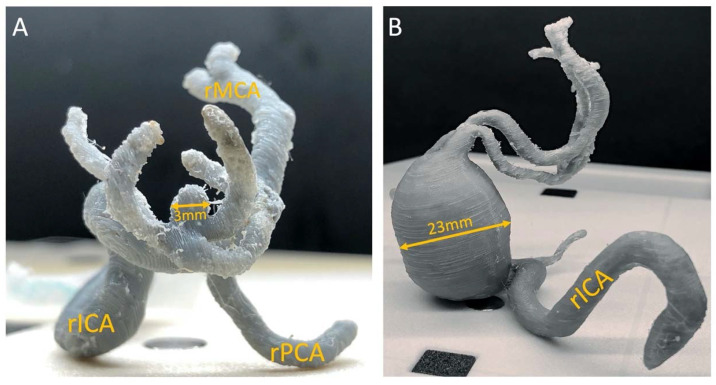
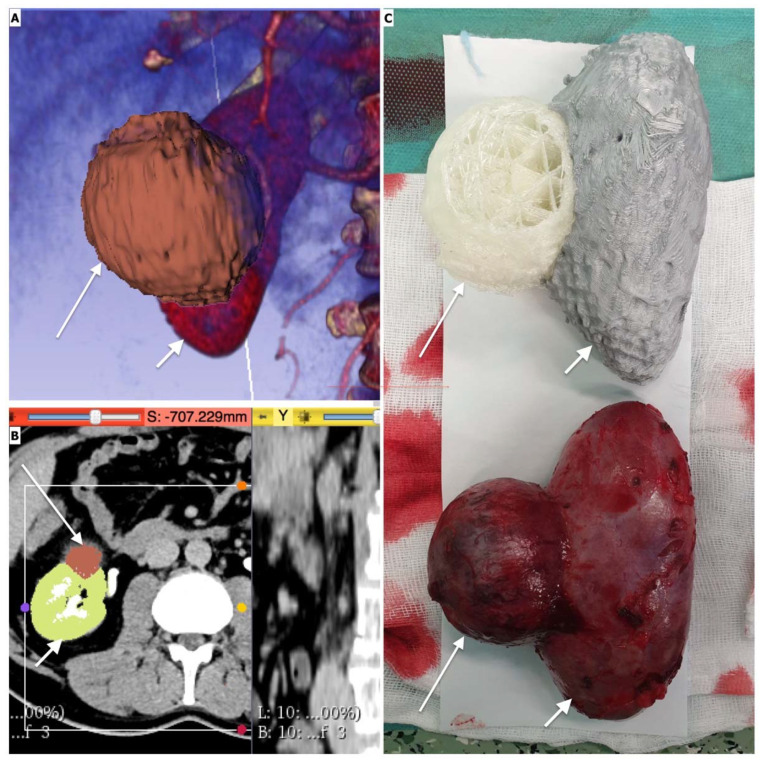
Medicine is a rapidly-evolving discipline, with progress picking up pace with each passing decade. This constant evolution results in the introduction of new tools and methods, which in turn occasionally leads to paradigm shifts across the affected medical fields. The following review attempts to showcase how 3D printing has begun to reshape and improve processes across various medical specialties and where it has the potential to make a significant impact. The current state-of-the-art, as well as real-life clinical applications of 3D printing, are reflected in the perspectives of specialists practicing in the selected disciplines, with a focus on pre-procedural planning, simulation (rehearsal) of non-routine procedures, and on medical education and training. A review of the latest multidisciplinary literature on the subject offers a general summary of the advances enabled by 3D printing. Numerous advantages and applications were found, such as gaining better insight into patient-specific anatomy, better pre-operative planning, mock simulated surgeries, simulation-based training and education, development of surgical guides and other tools, patient-specific implants, bioprinted organs or structures, and counseling of patients. It was evident that pre-procedural planning and rehearsing of unusual or difficult procedures and training of medical professionals in these procedures are extremely useful and transformative.
医学是一门快速发展的学科,每过十年进步的步伐就会加快。这种持续的发展导致新工具和方法的引入,进而偶尔会在受影响的医学领域引发范式转变。以下综述试图展示3D打印如何开始重塑和改进各个医学专业的流程,以及它在哪些方面有可能产生重大影响。3D打印的当前技术水平以及实际临床应用,体现在所选学科领域专家的观点中,重点关注术前规划、非常规手术的模拟(预演)以及医学教育与培训。对该主题最新多学科文献的综述提供了3D打印所带来进展的总体概述。发现了许多优势和应用,比如更深入了解患者特定解剖结构、更好的术前规划、模拟手术、基于模拟的培训与教育、手术导板及其他工具的开发、定制化植入物、生物打印器官或结构以及患者咨询。很明显,术前规划和对不寻常或困难手术的预演,以及对医学专业人员在这些手术方面的培训极其有用且具有变革性。