Zhang Shuai, Song Xiaoding
Department of Radiation Oncology, Hainan General Hospital, Haikou, China.
Clinical Laboratory, Hainan General Hospital, Haikou, China.
Arch Med Sci. 2019 Jan 16;16(2):386-394. doi: 10.5114/aoms.2019.81311. eCollection 2020.
Although long non-coding RNA SNHG1 (lncRNA SNHG1) action on cell proliferation and invasion of hepatocellular carcinoma (HCC) cells has been reported, the effects of lncRNA SNHG1 on migration of HCC cells and the mechanisms are still unclear. The present study aimed to investigate the influence of lncRNA SNHG1 on metastasis in HCC cells and the possible mechanisms underlying this phenotype.
Expression of lncRNA SNHG1 and miR-195 was determined using qRT-PCR in both HCC cell lines Huh7 and HepG2. Si-RNA was used to silence SNHG1 and miR-195 inhibitor was used to inhibit expression of miR-195. Luciferase reporter assay was conducted to confirm whether miR-195 was the direct binding target of SNHG1.
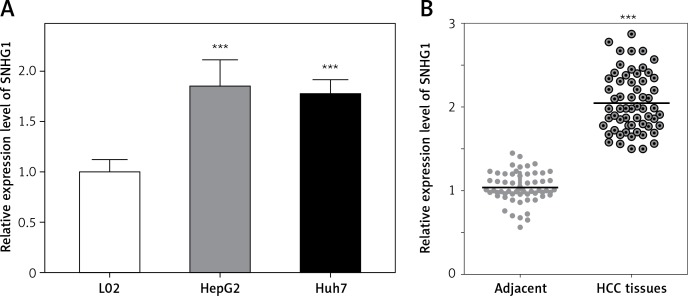
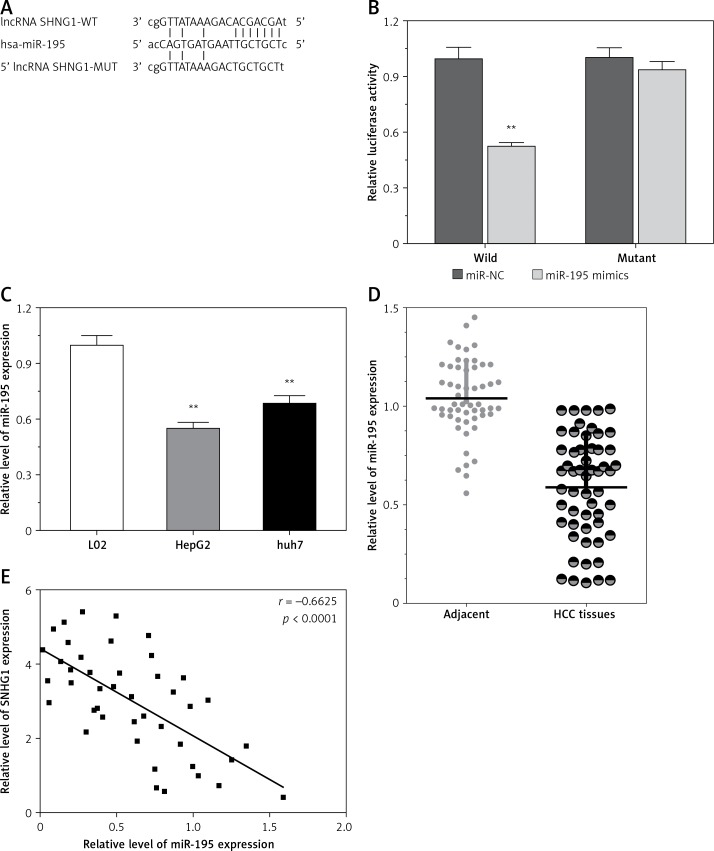
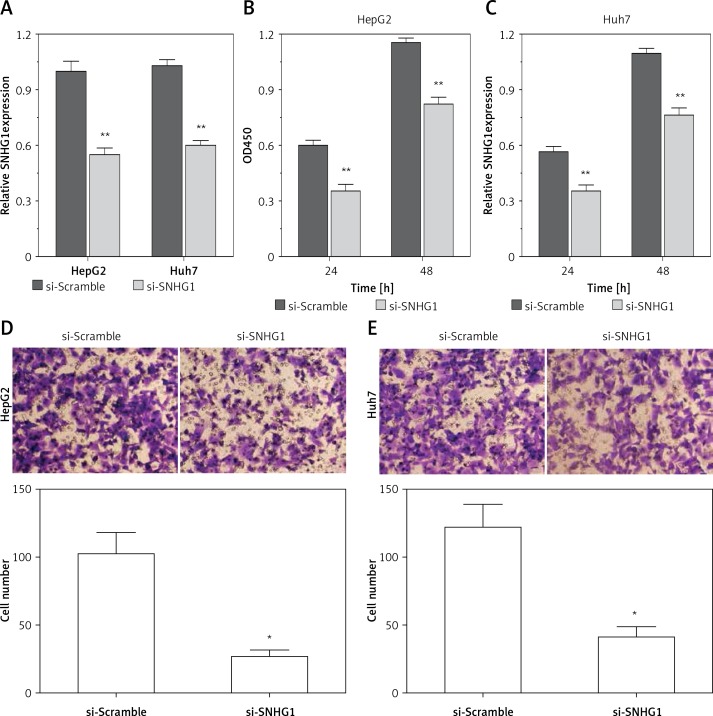
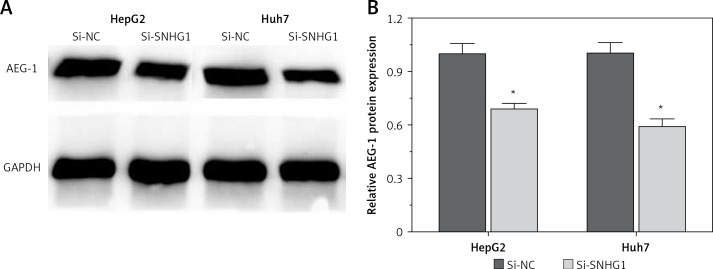
lncRNA SNHG1 was significantly up-regulated and miR-195 was significantly down-regulated in HCC cell lines. When transfected with si-SNHG1, migration and invasion of HCC cells, as well as expression of astrocyte elevated gene 1 (AEG-1) protein, were significantly inhibited compared with the control cells. Results of dual luciferase reporter assay showed that lncRNA SNHG1 acted as an endogenous sponge of miR-195. On the other hand, the expression of miR-195 in tumor tissue was much lower than that of miR-195 in the corresponding normal tissue. Furthermore, the correlation analysis showed a strong negative relationship between lncRNA SNHG1 and miR-195 expression in HCC tissues.
SNHG1 may promote cell invasion and migration in HCC cells by sponging miR-195. These results can provide deeper understanding of SNHG1 in hepatocellular cancer and give new potential targets for treatment of HCC.
尽管已有报道称长链非编码RNA SNHG1(lncRNA SNHG1)对肝癌(HCC)细胞的增殖和侵袭有作用,但lncRNA SNHG1对HCC细胞迁移的影响及其机制仍不清楚。本研究旨在探讨lncRNA SNHG1对HCC细胞转移的影响及其潜在机制。
采用qRT-PCR检测HCC细胞系Huh7和HepG2中lncRNA SNHG1和miR-195的表达。使用小干扰RNA(Si-RNA)沉默SNHG1,并使用miR-195抑制剂抑制miR-195的表达。进行荧光素酶报告基因检测以确认miR-195是否为SNHG1的直接结合靶点。
在HCC细胞系中,lncRNA SNHG1显著上调,miR-195显著下调。与对照细胞相比,用si-SNHG1转染后,HCC细胞的迁移和侵袭以及星形胶质细胞升高基因1(AEG-1)蛋白的表达均受到显著抑制。双荧光素酶报告基因检测结果表明,lncRNA SNHG1作为miR-195的内源性海绵。另一方面,肿瘤组织中miR-195的表达远低于相应正常组织中的miR-195。此外,相关性分析显示HCC组织中lncRNA SNHG1与miR-195表达之间存在强烈的负相关关系。
SNHG1可能通过吸附miR-195促进HCC细胞的侵袭和迁移。这些结果可以加深对SNHG1在肝细胞癌中的理解,并为HCC的治疗提供新的潜在靶点。