Allergy Service, Hospital Universitario Infanta Leonor, Madrid, Spain.
Allergy Service, Hospital General Universitario Morales Meseguer, Murcia, Spain.
PLoS One. 2020 Mar 19;15(3):e0230010. doi: 10.1371/journal.pone.0230010. eCollection 2020.
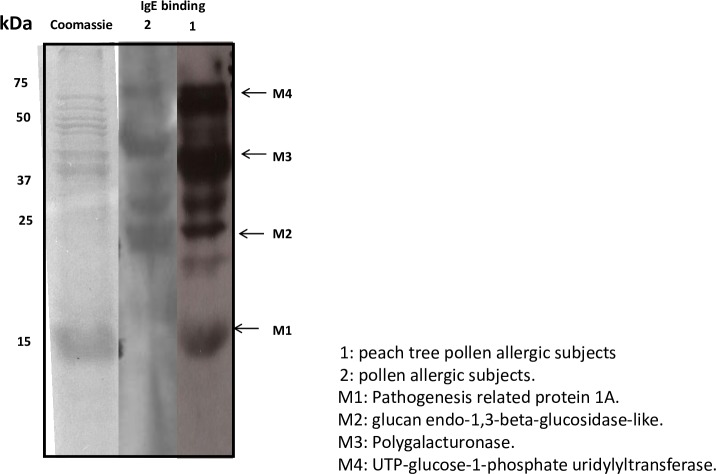
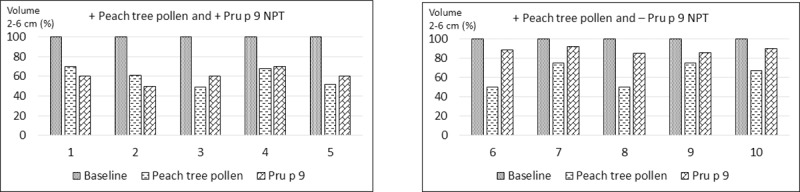
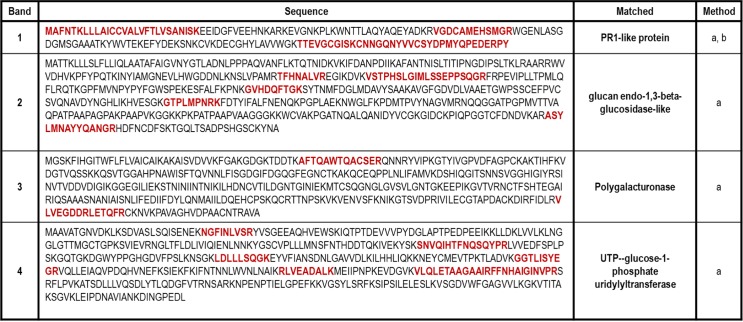
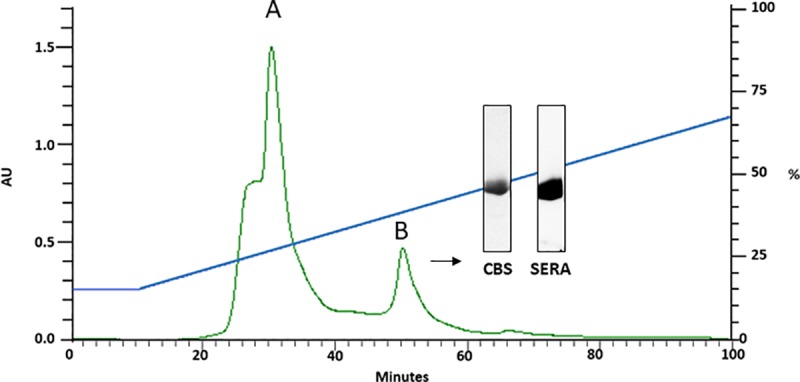
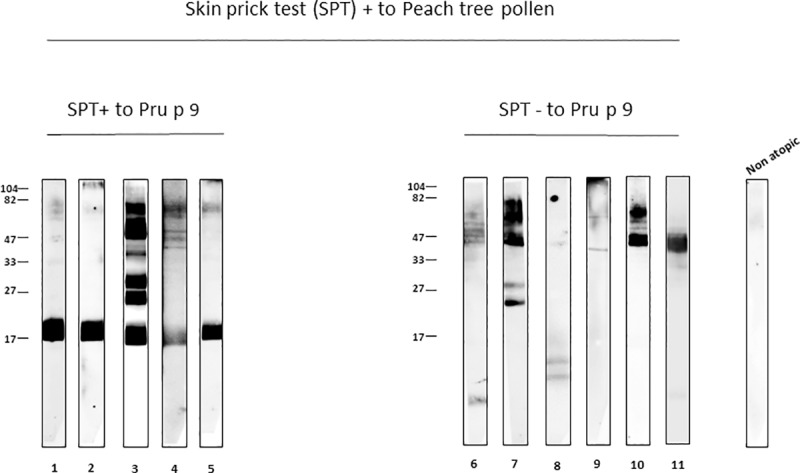
Peach tree (PT) pollen sensitization is highly prevalent in subjects living in areas where this tree is widely cultivated. None of the allergens responsible for these sensitizations have been identified so far. Our aim was to identify the most relevant PT pollen allergens and analyze their capacity for inducing respiratory symptoms. We studied sixty-two individuals sensitized to PT pollen who developed symptoms after its exposure. The IgE binding profile on peach pollen extract by means of immunoblotting using sera from these subjects was analyzed. Protein extract was fractionated by anion-exchange chromatography and HPLC, fractions run in SDS-PAGE and proteins were identified from IgE-binding bands by mass spectrometry. Several allergenic proteins in the PT pollen extract were recognized by patients' IgE: a glucan endo-1,3-beta-glucosidase-like, a polygalacturonase, an UTP-glucose-1-phosphate uridylyltransferase and a PR-1a protein. This PR-1a protein is a novel allergen frequently recognized with a molecular mass of 18 kDa, named as Pru p 9 following the WHO-IUIS nomenclature. Skin Prick Test (SPT) performed with this allergen was positive in 41% of the PT pollen-sensitized clinical cases. Most of them had rhinitis or rhinoconjunctivitis, but a significant percentage experienced asthma with seasonal symptoms during the period of PT flowering. Nasal Provocation test (NPT) with Pru p 9 was positive in all cases with positive SPT to this new allergen eliciting nasal symptoms similar to those challenged with PT pollen. We demonstrate that PT pollen can induce sensitization and allergy in an exposed population, being Pru p 9 a relevant allergen responsible of respiratory symptoms. Considering the extensive peach worldwide production with a large number of people involved, our results add a great value for the diagnosis and management of subjects allergic to this pollen.
桃树(PT)花粉致敏在广泛种植这种树的地区生活的人群中高度流行。到目前为止,还没有确定导致这些致敏的过敏原。我们的目的是鉴定最相关的 PT 花粉过敏原,并分析它们引起呼吸道症状的能力。我们研究了 62 名对 PT 花粉致敏的个体,这些个体在暴露于 PT 花粉后出现了症状。通过使用这些患者的血清进行免疫印迹分析,研究了桃花粉提取物中 IgE 结合谱。使用阴离子交换色谱和 HPLC 对蛋白质提取物进行分级,在 SDS-PAGE 中运行馏分,并通过质谱法从 IgE 结合带中鉴定蛋白质。PT 花粉提取物中的几种过敏原蛋白被患者的 IgE 识别:一种葡聚糖内切-1,3-β-葡聚糖酶样蛋白、多聚半乳糖醛酸酶、UTP-葡萄糖-1-磷酸尿苷酰转移酶和 PR-1a 蛋白。这种 PR-1a 蛋白是一种新型过敏原,常被识别为分子量为 18 kDa 的蛋白,根据世界卫生组织-国际免疫学会联合会命名法命名为 Pru p 9。用这种过敏原进行皮肤点刺试验(SPT),在 41%的 PT 花粉致敏临床病例中呈阳性。他们中的大多数人患有鼻炎或鼻结膜炎,但相当一部分人患有哮喘,在 PT 开花期间出现季节性症状。用 Pru p 9 进行鼻激发试验(NPT),所有 SPT 阳性的病例均呈阳性,引发类似 PT 花粉激发的鼻部症状。我们证明 PT 花粉可以在暴露人群中引起致敏和过敏,Pru p 9 是一种重要的过敏原,可引起呼吸道症状。考虑到全球范围内桃的广泛种植,涉及大量人群,我们的结果为诊断和管理对这种花粉过敏的患者提供了重要价值。