Department of Geriatric, Zhejiang Hospital, No. 12 Lingyin Road, Hangzhou, 310013, Zhejiang Province, China.
BMC Geriatr. 2020 Mar 19;20(1):110. doi: 10.1186/s12877-020-01511-0.
Motoric cognitive risk syndrome (MCR) is a newly proposed predementia syndrome incorporating subjective cognitive complaints and slow gait. Previous studies have reported that subjective cognitive complaints and slow gait are associated with frailty in cognitively unimpaired older adults, but little is known about the link between MCR and frailty in older adults. Therefore, the aim of the study was to explore the associations of MCR and its components with frailty in older Chinese adults.
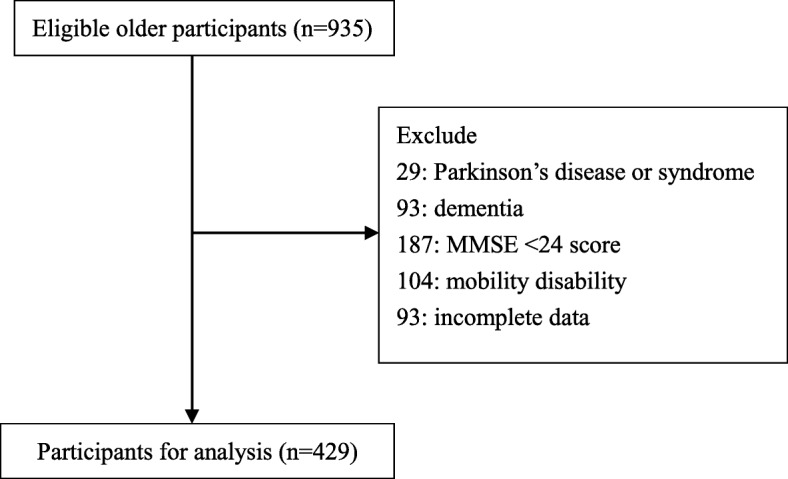
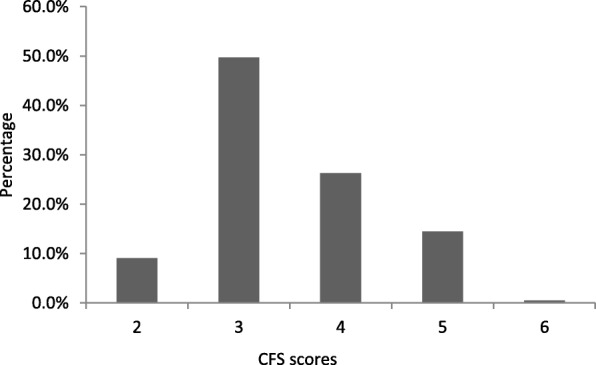
In an observational cross-sectional study, a total of 429 older adults aged 60 years and older were admitted to the geriatric department. According to MCR criteria, all participants were classified into 4 groups: 1) the MCR group; 2) the subjective cognitive complaints only group; 3) the slow gait only group; and 4) the healthy control group. Physical frailty was assessed by the Clinical Frailty Scale (CFS). Multivariate logistic regression analysis was used to examine the association between MCR and frailty in older adults.
The prevalence rates of subjective cognitive complaints, slow gait and MCR were 15.9, 10.0 and 4.0%, respectively. After adjusting for confounding variables, the logistic regression analysis showed that slow gait (odds ratio [OR]: 3.40, 95% confidence interval [CI]: 1.40-8.23, P = 0.007) and MCR (OR: 5.53, 95% CI: 1.46-20.89, P = 0.012) were independently associated with frailty, but subjective cognitive complaints were not.
MCR and slow gait were significantly associated with frailty in older Chinese adults. Further studies should prospectively determine the causal relationship between MCR and frailty.
运动认知风险综合征(MCR)是一种新提出的前驱痴呆综合征,包含主观认知主诉和步态缓慢。先前的研究报告称,主观认知主诉和步态缓慢与认知正常的老年人虚弱有关,但对于 MCR 与老年人虚弱之间的联系知之甚少。因此,本研究旨在探讨 MCR 及其各组成部分与中国老年人群体虚弱之间的关联。
在一项观察性横断面研究中,共纳入 429 名年龄在 60 岁及以上的老年患者。根据 MCR 标准,所有参与者被分为 4 组:1)MCR 组;2)仅有主观认知主诉组;3)仅有步态缓慢组;4)健康对照组。采用临床虚弱量表(CFS)评估躯体虚弱。采用多变量逻辑回归分析评估 MCR 与老年人虚弱之间的关系。
主观认知主诉、步态缓慢和 MCR 的患病率分别为 15.9%、10.0%和 4.0%。调整混杂因素后,逻辑回归分析显示,步态缓慢(比值比 [OR]:3.40,95%置信区间 [CI]:1.40-8.23,P=0.007)和 MCR(OR:5.53,95% CI:1.46-20.89,P=0.012)与虚弱独立相关,而主观认知主诉则不然。
MCR 和步态缓慢与中国老年人群体的虚弱显著相关。需要进一步的前瞻性研究来确定 MCR 和虚弱之间的因果关系。