Univ. Lille, CNRS, UMR 9193 - SCALab - Sciences Cognitives et Sciences Affectives, F-59000, Lille, France.
Sci Rep. 2020 Mar 19;10(1):5065. doi: 10.1038/s41598-020-61963-7.
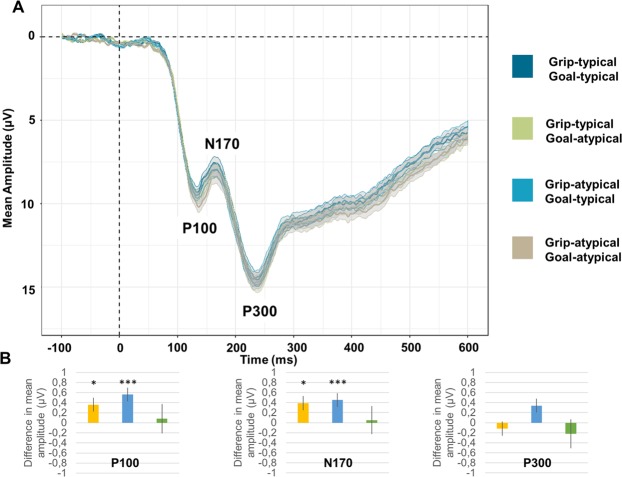
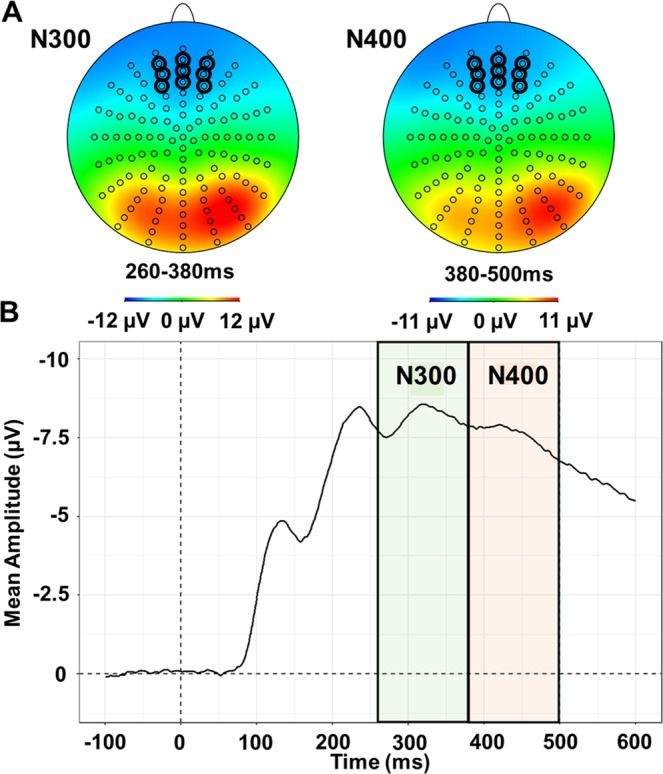
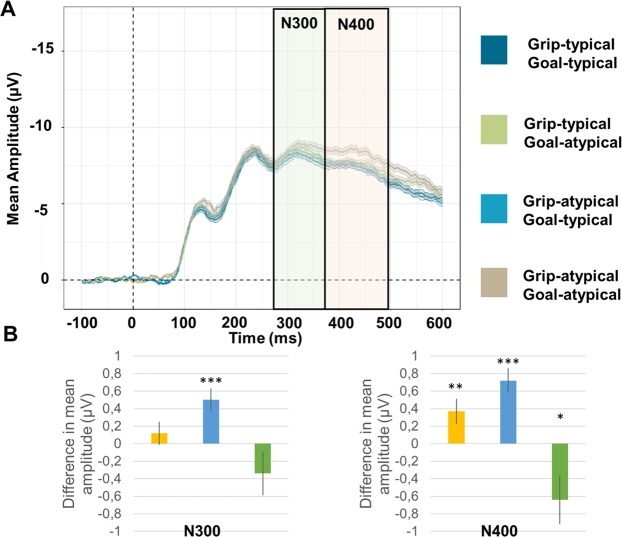
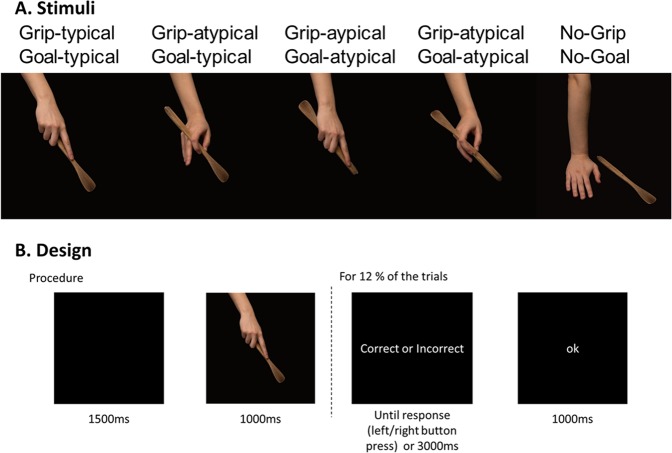
Recent behavioural evidence suggests that when processing others' actions, motor acts and goal-related information both contribute to action recognition. Yet the neuronal mechanisms underlying the dynamic integration of the two action dimensions remain unclear. This study aims to elucidate the ERP components underlying the processing and integration of grip and goal-related information. The electrophysiological activity of 28 adults was recorded during the processing of object-directed action photographs (e.g., writing with pencil) containing either grip violations (e.g. upright pencil grasped with atypical-grip), goal violations (e.g., upside-down pencil grasped with typical-grip), both grip and goal violations (e.g., upside-down pencil grasped with atypical-grip), or no violations. Participants judged whether actions were overall typical or not according to object typical use. Brain activity was sensitive to the congruency between grip and goal information on the N400, reflecting the semantic integration between the two dimensions. On earlier components, brain activity was affected by grip and goal typicality independently. Critically, goal typicality but not grip typicality affected brain activity on the N300, supporting an earlier role of goal-related representations in action recognition. Findings provide new insights on the neural temporal dynamics of the integration of motor acts and goal-related information during the processing of others' actions.
最近的行为证据表明,在处理他人的动作时,运动动作和与目标相关的信息都有助于动作识别。然而,两种动作维度的动态整合的神经机制尚不清楚。本研究旨在阐明处理和整合抓握和与目标相关信息的 ERP 成分。在处理包含抓握违规(例如,用铅笔写字)、目标违规(例如,用典型抓握握住颠倒的铅笔)、抓握和目标违规(例如,用非典型抓握握住颠倒的铅笔)或无违规的物体指向动作照片时,记录了 28 名成年人的电生理活动。参与者根据物体的典型用途判断动作是否整体典型。N400 上的脑活动对抓握和目标信息的一致性敏感,反映了两个维度之间的语义整合。在较早的成分上,脑活动受到抓握和目标典型性的独立影响。关键的是,目标典型性而不是抓握典型性影响了 N300 上的脑活动,这支持了目标相关表示在动作识别中的早期作用。研究结果为处理他人动作时运动动作和与目标相关信息的整合的神经时间动态提供了新的见解。