Department of General Surgery, Fourth Affiliated Hospital of Harbin Medical University, Harbin, China.
Department of Gastrointestinal Surgery, Harbin Medical University Cancer Hospital, Harbin, China.
Front Immunol. 2020 Mar 5;11:366. doi: 10.3389/fimmu.2020.00366. eCollection 2020.
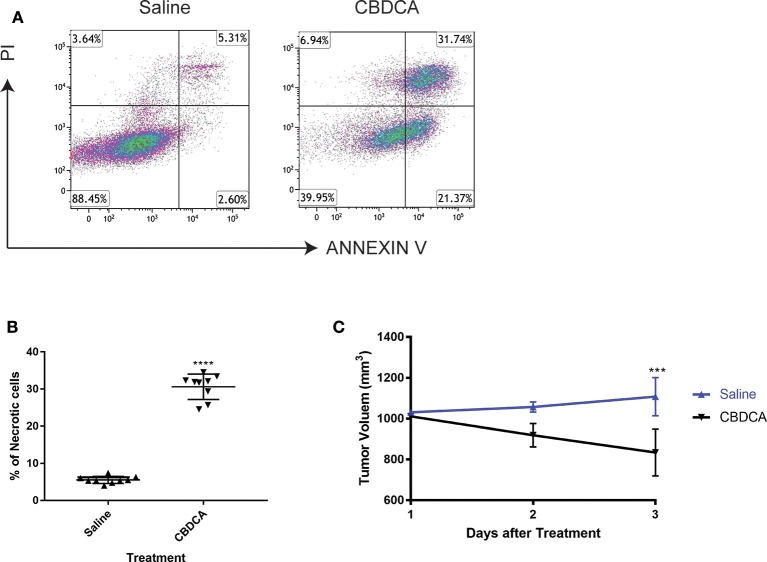
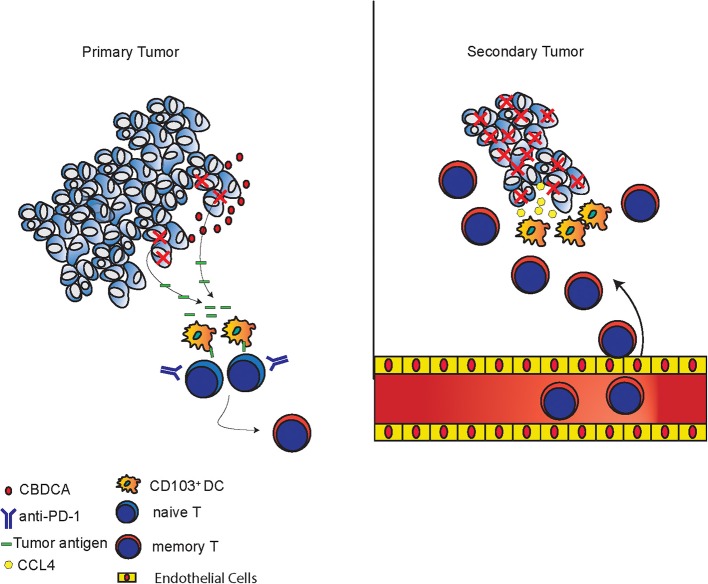
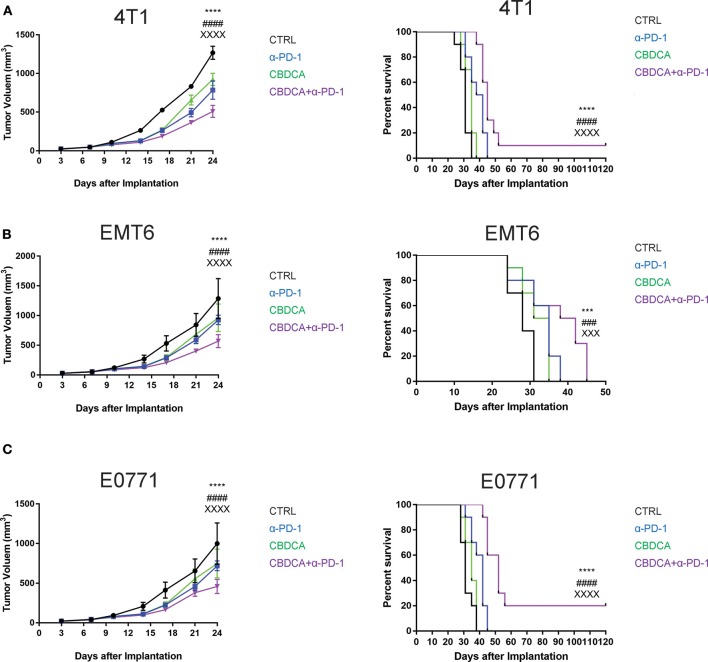
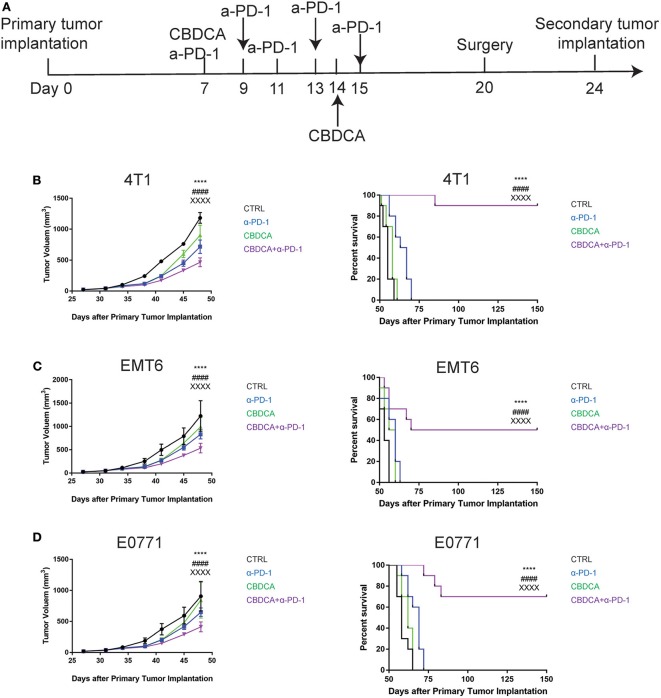
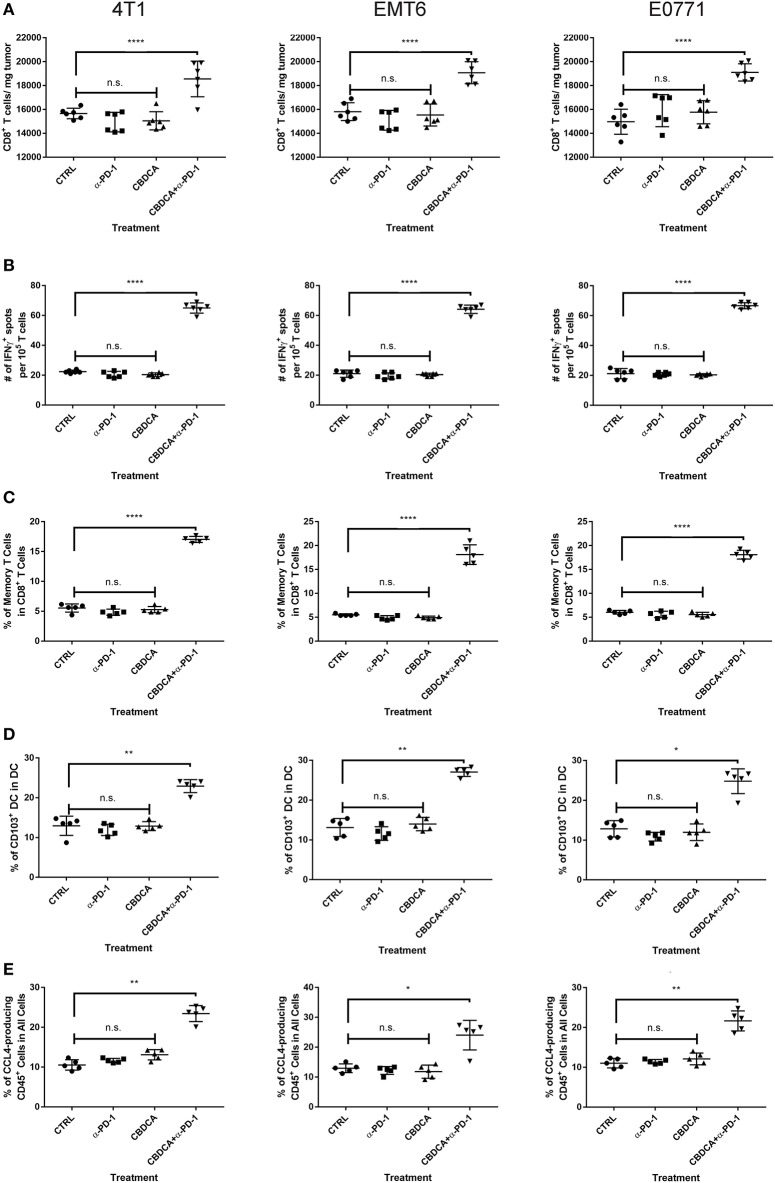
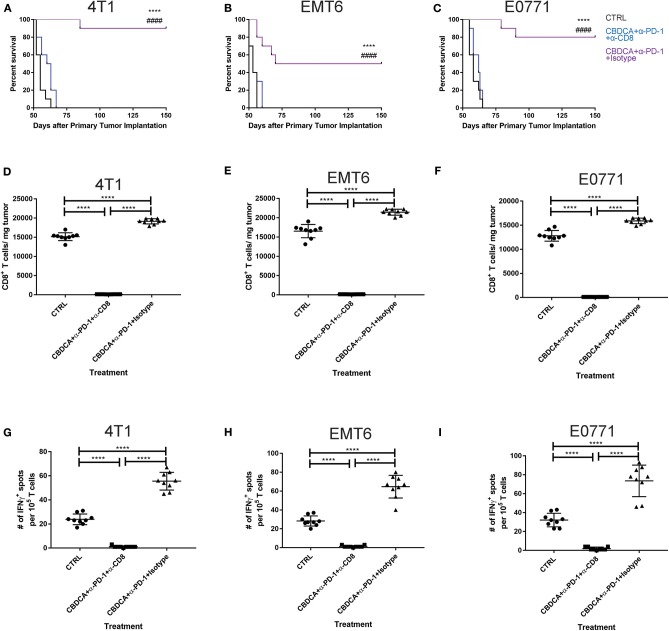
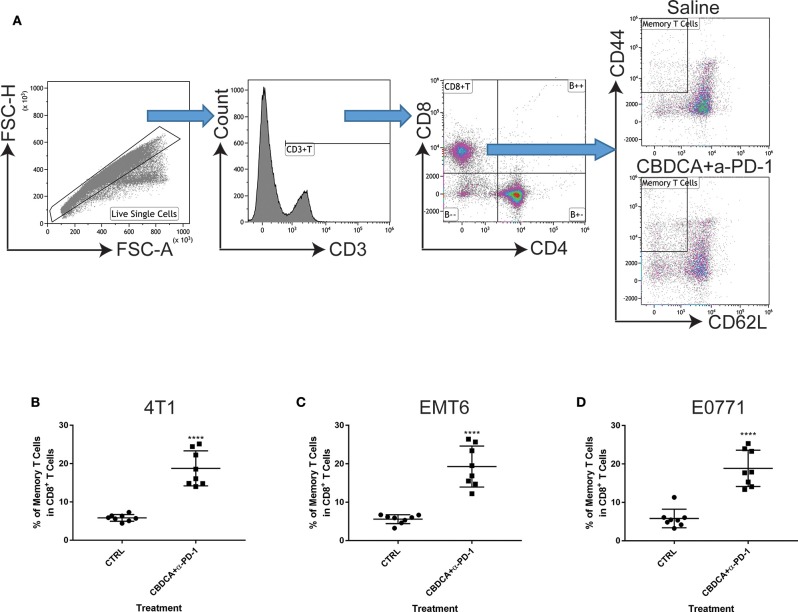
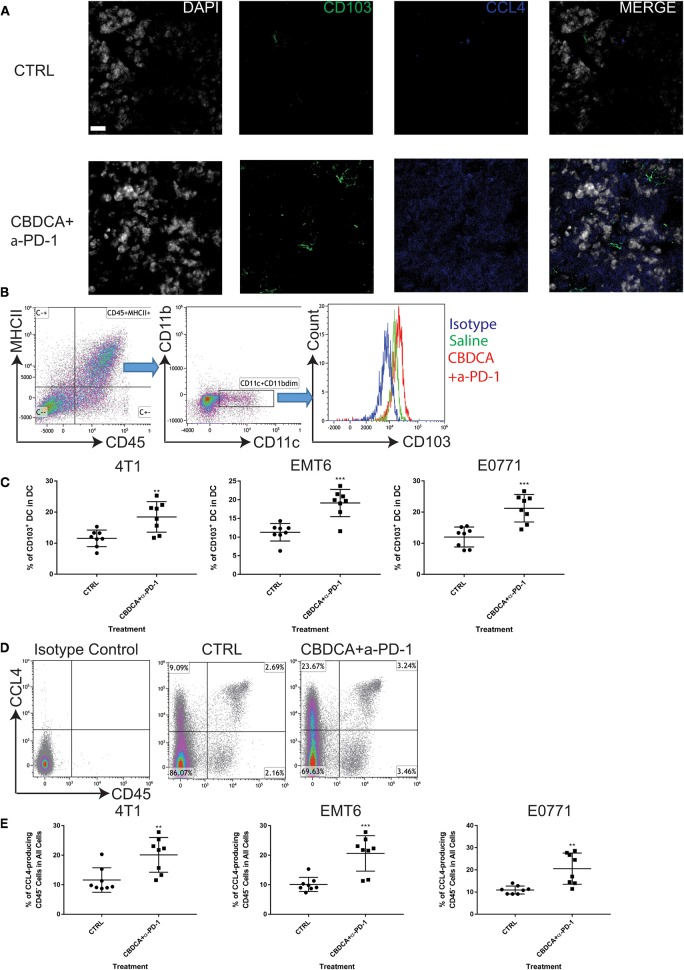
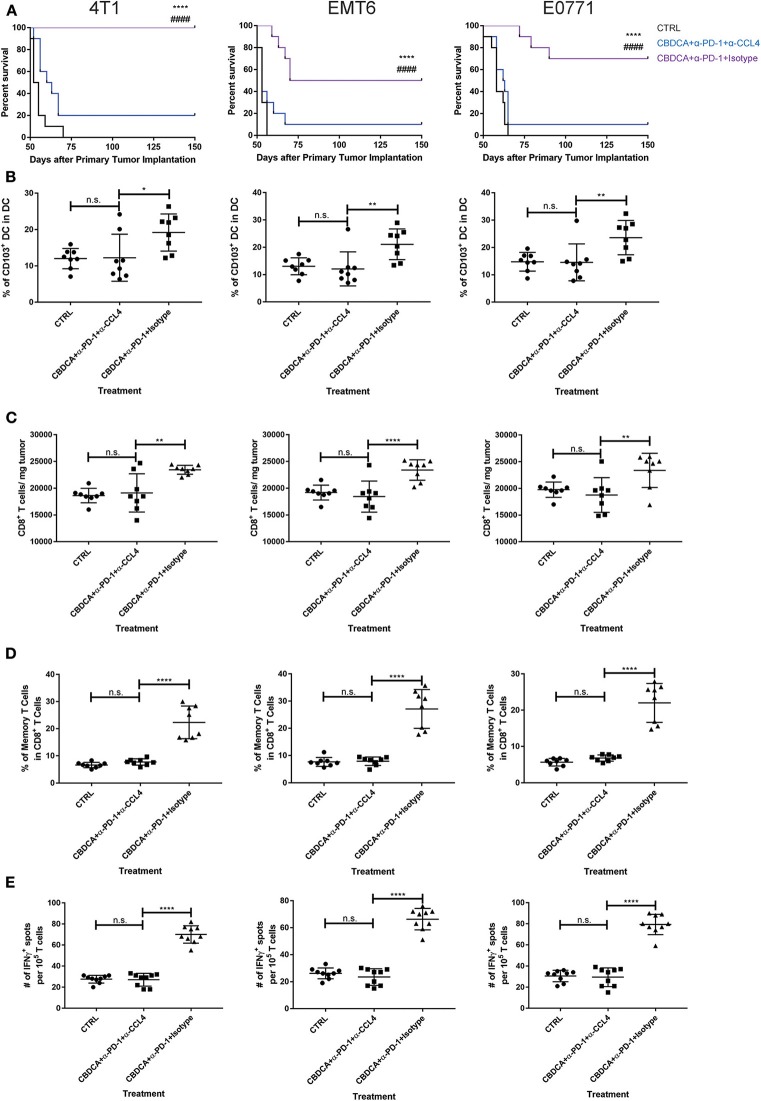
Patients with triple-negative breast cancer (TNBC) suffer an unfavorable prognosis. Carboplatin (CBDCA) as a cytotoxic reagent has been widely administered to patients with cancer including TNBC. Programmed cell death protein 1 (PD-1) is an immune checkpoint, blockade of which unleashes T cell functions that kill cancer cells. However, the efficacy of CBDCA combined with anti-PD-1 antibodies in TNBC has not been determined. Patient-derived xenografts (PDX) were implanted to immune-deficient mice. Three mouse TNBC cell lines (4T1, EMT6, and E0771) were seeded to immune-competent mice. Tumor volumes and survival rates were monitored. CBDCA and anti-PD-1 antibodies were administered by intra-peritoneal injection at designated time points. Total CD8 T cells, memory CD8 T cells, and CD103 dendritic cells (DC) in the tumor were measured by flow cytometry. Tumor-specific CD8 T cells were quantified by the ELISpot assay. Administration of CBDCA to PDX-bearing mice induced increased levels of tumor cell necrosis and reduced tumor size. Treatment with CBDCA and anti-PD-1 antibodies reduced TNBC tumor volumes and slightly improved survival rates. More importantly, therapy with CBDCA and anti-PD-1 antibodies before surgery showed a remarkably improved, sustainable protection against a secondary tumor after surgery by a CD8- T-cell-dependent manner, which required CCL4 expressed in the tumor and subsequently CD103 DC recruited to the tumor microenvironment. Immunochemotherapy with CBDCA and anti-PD-1 antibodies before surgery improves the outcome of a secondary tumor after surgery via increasing the number of tumor-specific CD8 T cells in the tumor microenvironment of murine TNBC. These results highlight the possibility to utilize this regimen in clinical practice.
三阴性乳腺癌(TNBC)患者预后不良。卡铂(CBDCA)作为细胞毒性试剂已广泛用于包括 TNBC 在内的癌症患者。程序性死亡蛋白 1(PD-1)是一种免疫检查点,阻断它可以释放杀死癌细胞的 T 细胞功能。然而,CBDCA 联合抗 PD-1 抗体在 TNBC 中的疗效尚未确定。将患者来源的异种移植物(PDX)植入免疫缺陷小鼠中。将三种小鼠 TNBC 细胞系(4T1、EMT6 和 E0771)接种到免疫功能正常的小鼠中。监测肿瘤体积和存活率。在指定时间点通过腹腔注射给予 CBDCA 和抗 PD-1 抗体。通过流式细胞术测量肿瘤中的总 CD8 T 细胞、记忆 CD8 T 细胞和 CD103 树突状细胞(DC)。通过 ELISpot 测定定量测定肿瘤特异性 CD8 T 细胞。给予 CBDCA 至 PDX 荷瘤小鼠诱导肿瘤细胞坏死水平增加并减小肿瘤体积。CBDCA 和抗 PD-1 抗体治疗可减小 TNBC 肿瘤体积并略微提高存活率。更重要的是,手术前 CBDCA 和抗 PD-1 抗体治疗以 CD8-T 细胞依赖性方式显著改善了手术后二次肿瘤的持续保护,这需要肿瘤中表达的 CCL4 以及随后募集到肿瘤微环境中的 CD103 DC。手术前 CBDCA 和抗 PD-1 抗体的免疫化学疗法通过增加肿瘤微环境中肿瘤特异性 CD8 T 细胞的数量改善了手术后二次肿瘤的结果。这些结果突出了在临床实践中利用该方案的可能性。