Grup d'Enginyeria de Materials (GEMAT) Institut Químic de Sarrià (IQS) Universitat Ramon Llull (URL), 08017 Barcelona, Spain.
Sagetis Biotech SL, 08017 Barcelona, Spain.
Theranostics. 2020 Feb 3;10(6):2744-2758. doi: 10.7150/thno.40902. eCollection 2020.
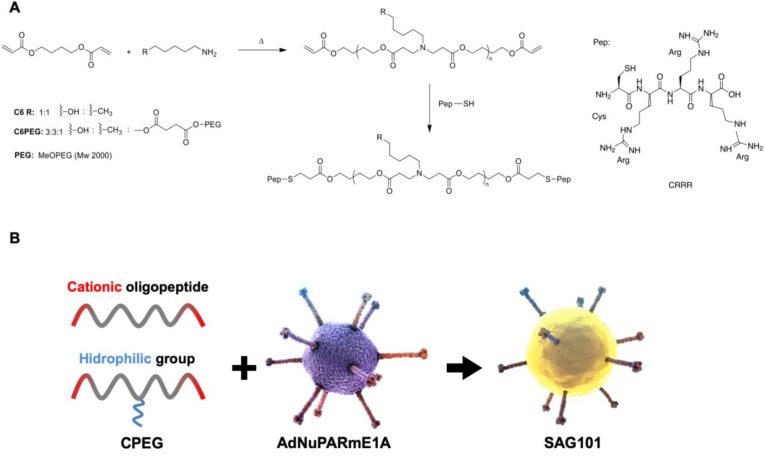
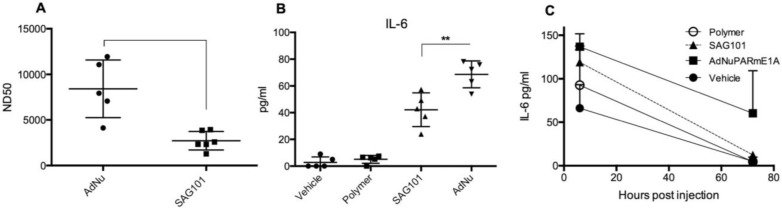
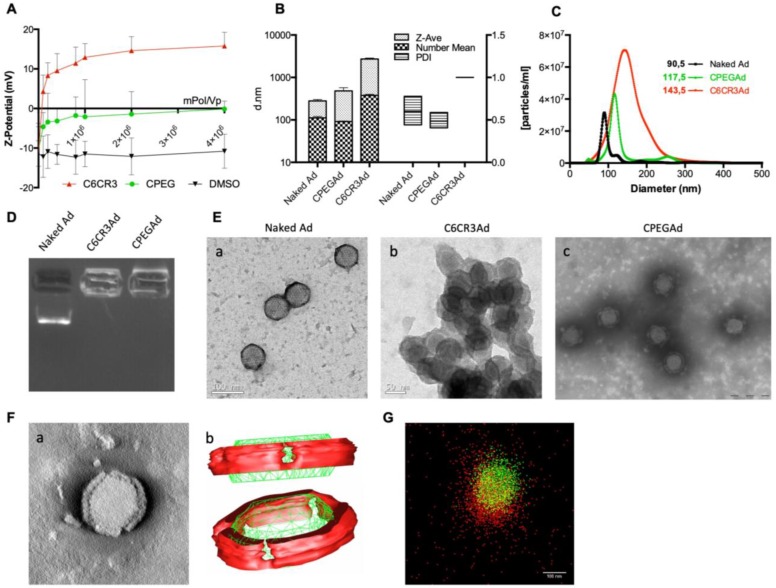
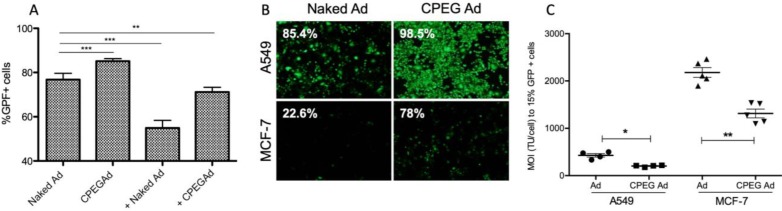
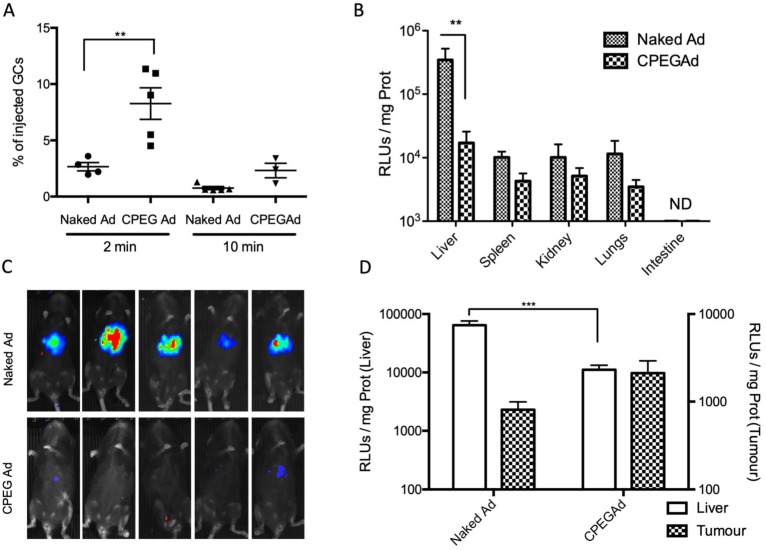
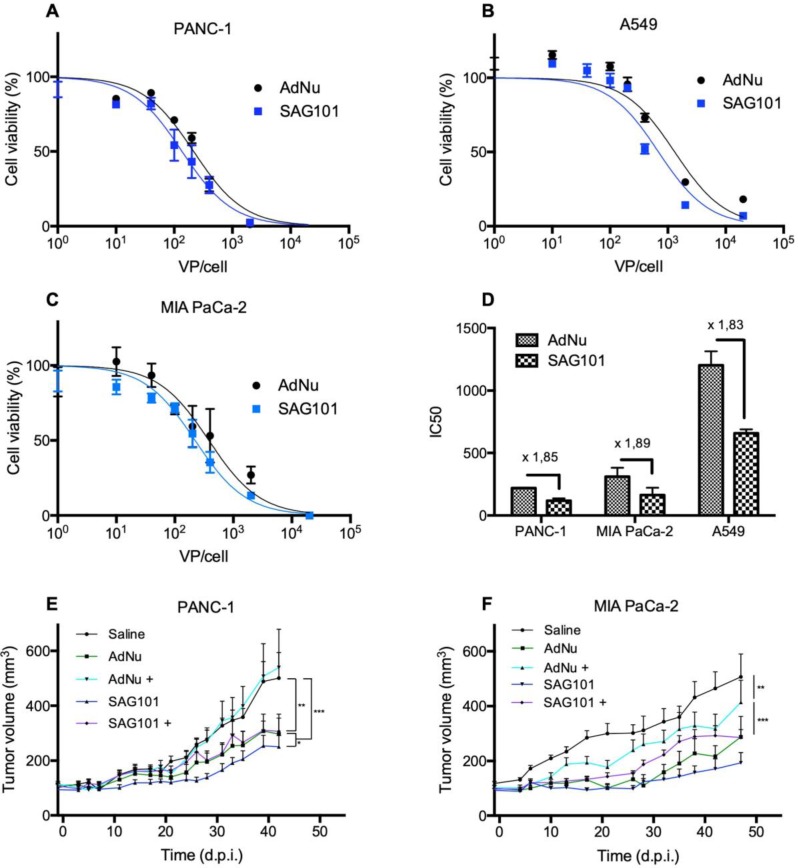
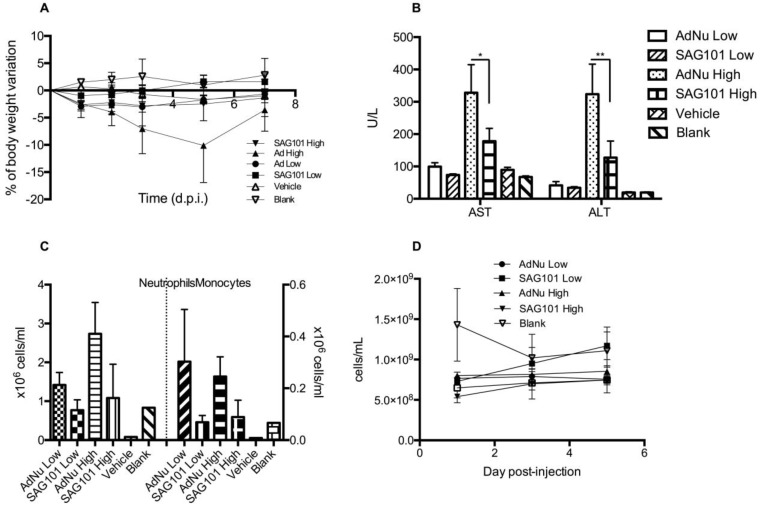
Oncolytic adenoviruses are used as agents for the treatment of cancer. However, their potential is limited due to the high seroprevalence of anti-adenovirus neutralizing antibodies (nAbs) within the population and the rapid liver sequestration when systemically administered. To overcome these challenges, we explored using nanoparticle formulation to boost the efficacy of systemic oncolytic adenovirus administration. : Adenovirus were conjugated with PEGylated oligopeptide-modified poly(-amino ester)s (OM-pBAEs). The resulting coated viral formulation was characterized in terms of surface charge, size, aggregation state and morphology and tested for anti-adenovirus nAbs evasion and activity in cancer cells. pharmacokinetics, biodistribution, tumor targeting, and immunogenicity studies were performed. The antitumor efficacy of the oncolytic adenovirus AdNuPARmE1A coated with OM-pBAEs (SAG101) in the presence of nAbs was evaluated in pancreatic ductal adenocarcinoma (PDAC) mouse models. Toxicity of the coated formulation was analyzed in immunocompetent mice. : OM-pBAEs conjugated to adenovirus and generated discrete nanoparticles with a neutral charge and an optimal size. The polymeric coating with the reporter AdGFPLuc (CPEG) showed enhanced transduction and evasion of antibody neutralization . Moreover, systemic intravenous administration of the formulation showed improved blood circulation and reduced liver sequestration, substantially avoiding activation of nAb production. OM-pBAEs coating of the oncolytic adenovirus AdNuPARmE1A (SAG101) improved its oncolytic activity and enhanced antitumor efficacy in PDAC mouse models. The coated formulation protected virions from neutralization by nAbs, as antitumor efficacy was preserved in their presence but was completely lost in mice that received the non-formulated AdNuPARmE1A. Finally, coated-AdNuPARmE1A showed reduced toxicity when high doses of the formulation were administered. : The developed technology represents a promising improvement for future clinical cancer therapy using oncolytic adenoviruses.
溶瘤腺病毒被用作癌症治疗的药物。然而,由于人群中存在针对腺病毒中和抗体(nAb)的高血清流行率以及全身给药时肝脏的快速隔离,其应用潜力受到限制。为了克服这些挑战,我们探索了使用纳米颗粒制剂来提高系统给予溶瘤腺病毒的疗效。方法:腺病毒与聚乙二醇化寡肽修饰的聚(-氨基酸酯)(OM-pBAEs)偶联。从表面电荷、大小、聚集状态和形态等方面对所得包被病毒制剂进行了表征,并在癌细胞中对其逃避和活性进行了抗腺病毒 nAb 检测。进行了药代动力学、生物分布、肿瘤靶向和免疫原性研究。在存在 nAb 的情况下,用 OM-pBAEs(SAG101)包被的溶瘤腺病毒 AdNuPARmE1A 在胰腺导管腺癌(PDAC)小鼠模型中的抗肿瘤功效进行了评估。分析了免疫功能正常小鼠中包被制剂的毒性。结果:腺病毒与 OM-pBAEs 偶联并生成离散的纳米颗粒,带有中性电荷和最佳尺寸。带有报告基因 AdGFPLuc(CPEG)的聚合物涂层显示出增强的转导和抗体中和的逃避能力。此外,制剂的全身静脉给药显示出改善的血液循环和减少的肝脏隔离,从而大大避免了 nAb 产生的激活。溶瘤腺病毒 AdNuPARmE1A(SAG101)的 OM-pBAEs 包被提高了其溶瘤活性,并增强了 PDAC 小鼠模型中的抗肿瘤功效。包被制剂保护病毒免受 nAb 的中和,因为在存在 nAb 的情况下保留了抗肿瘤功效,但在接受非包被的 AdNuPARmE1A 的小鼠中完全丧失。最后,当给予高剂量制剂时,包被的 AdNuPARmE1A 显示出降低的毒性。结论:所开发的技术代表了使用溶瘤腺病毒进行未来癌症临床治疗的一种有前途的改进。