de Martín Garrido Natàlia, Aylett Christopher H S
Section for Structural and Synthetic Biology, Department of Infectious Disease, Imperial College London, London, United Kingdom.
Front Cell Dev Biol. 2020 Mar 3;8:108. doi: 10.3389/fcell.2020.00108. eCollection 2020.
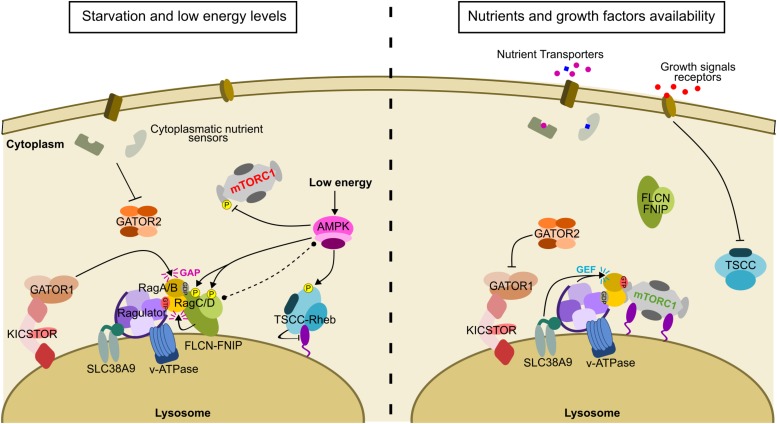
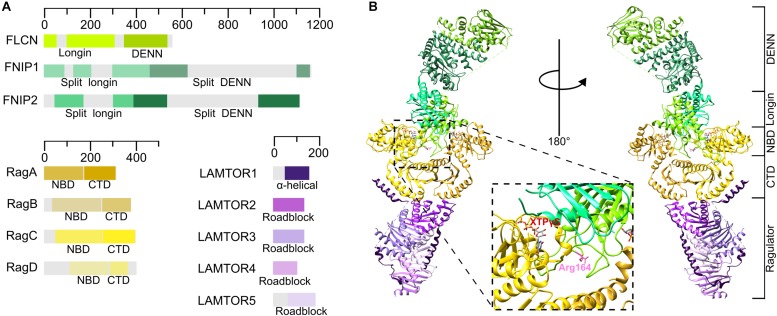
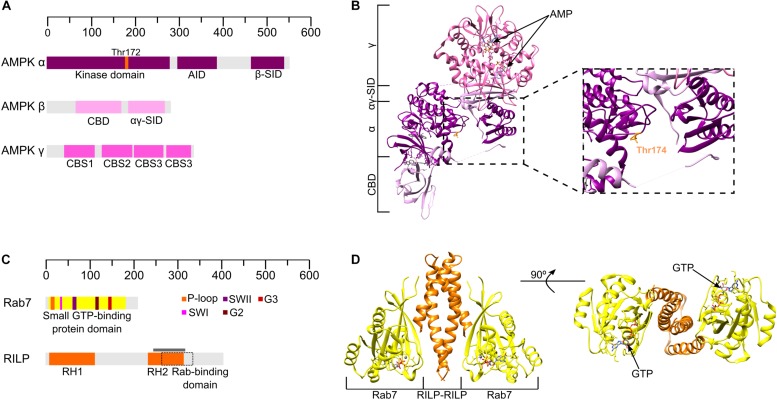
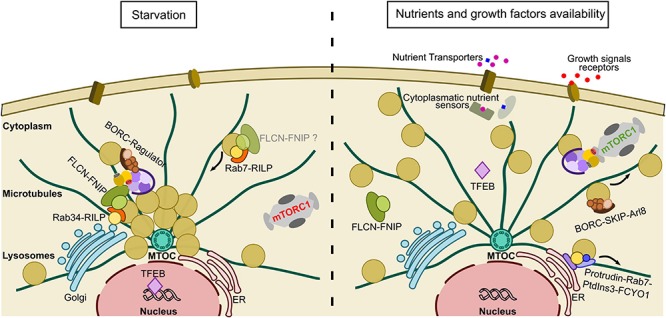
was identified as the gene responsible for (BHD) syndrome, a hereditary syndrome associated with the appearance of familiar renal oncocytomas. Most mutations affecting result in the truncation of the protein, and therefore loss of its associated functions, as typical for a tumor suppressor. encodes the protein (FLCN), which is involved in numerous biological processes; mutations affecting this protein thus lead to different phenotypes depending on the cellular context. FLCN forms complexes with two large interacting proteins, FNIP1 and FNIP2. Structural studies have shown that both FLCN and FNIPs contain longin and (DENN) domains, typically involved in the regulation of small GTPases. Accordingly, functional studies show that FLCN regulates both the Rag and the Rab GTPases depending on nutrient availability, which are respectively involved in the mTORC1 pathway and lysosomal positioning. Although recent structural studies shed light on the precise mechanism by which FLCN regulates the Rag GTPases, which in turn regulate mTORC1, how FLCN regulates membrane trafficking through the Rab GTPases or the significance of the intriguing FLCN-FNIP-AMPK complex formation are questions that still remain unanswered. We discuss the recent progress in our understanding of FLCN regulation of both growth signaling and lysosomal positioning, as well as future approaches to establish detailed mechanisms to explain the disparate phenotypes caused by the loss of FLCN function and the development of BHD-associated and other tumors.
被鉴定为导致遗传性平滑肌瘤病肾细胞癌(BHD)综合征的基因,该综合征与家族性肾嗜酸细胞瘤的出现有关。大多数影响该基因的突变会导致蛋白质截短,进而丧失其相关功能,这是肿瘤抑制基因的典型特征。该基因编码卵泡抑素(FLCN)蛋白,其参与众多生物学过程;因此,影响该蛋白的突变会根据细胞环境导致不同的表型。FLCN与两种大型相互作用蛋白FNIP1和FNIP2形成复合物。结构研究表明,FLCN和FNIPs均含有longin和DENN结构域,通常参与小GTP酶的调节。相应地,功能研究表明,FLCN根据营养物质的可用性调节Rag和Rab GTP酶,它们分别参与mTORC1途径和溶酶体定位。尽管最近的结构研究揭示了FLCN调节Rag GTP酶进而调节mTORC1的精确机制,但FLCN如何通过Rab GTP酶调节膜运输或有趣的FLCN - FNIP - AMPK复合物形成的意义仍是未解之谜。我们讨论了在理解FLCN对生长信号传导和溶酶体定位调节方面的最新进展,以及未来建立详细机制以解释FLCN功能丧失导致的不同表型以及BHD相关肿瘤和其他肿瘤发生发展的方法。