Nagashima Katsuyuki, Fukushima Hidefumi, Shimizu Kouhei, Yamada Aya, Hidaka Masumi, Hasumi Hisashi, Ikebe Tetsuro, Fukumoto Satoshi, Okabe Koji, Inuzuka Hiroyuki
Center for Advanced Stem Cell and Regenerative Research, Tohoku University Graduate School of Dentistry, Sendai 980-8575, Japan.
Department of Physiological Sciences and Molecular Biology, Fukuoka Dental College, Fukuoka 814-0193, Japan.
Oncotarget. 2017 Feb 7;8(6):9947-9960. doi: 10.18632/oncotarget.14221.
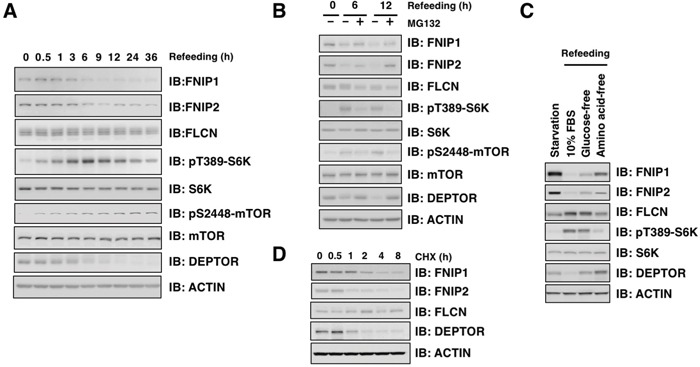
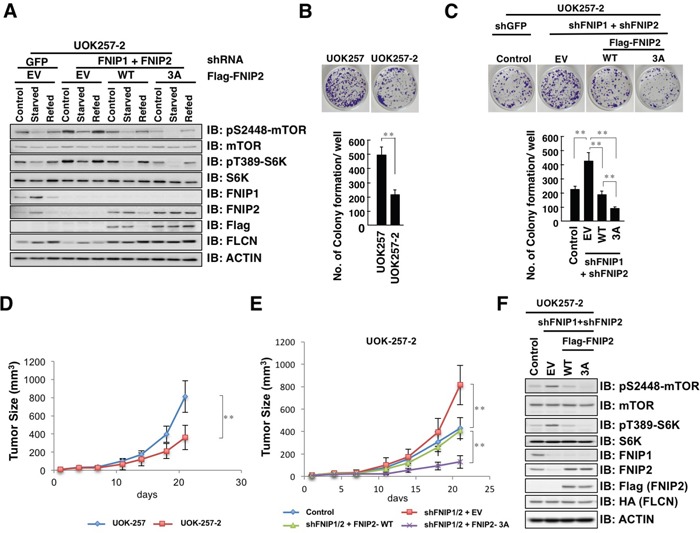
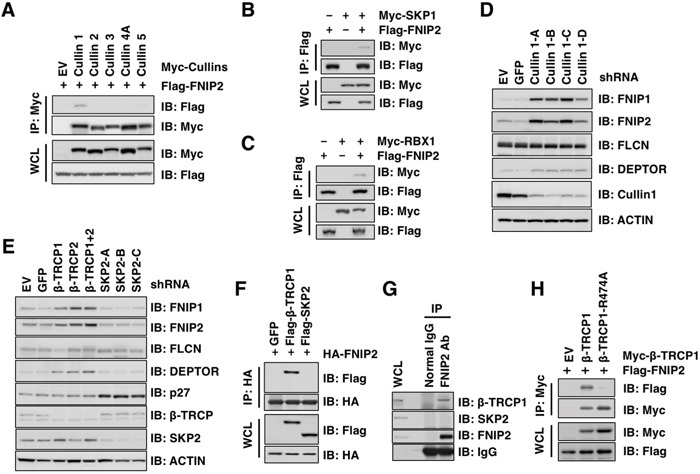
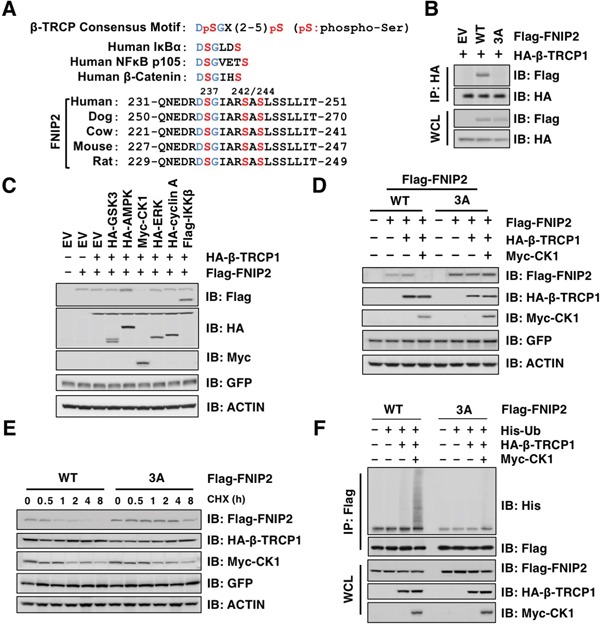
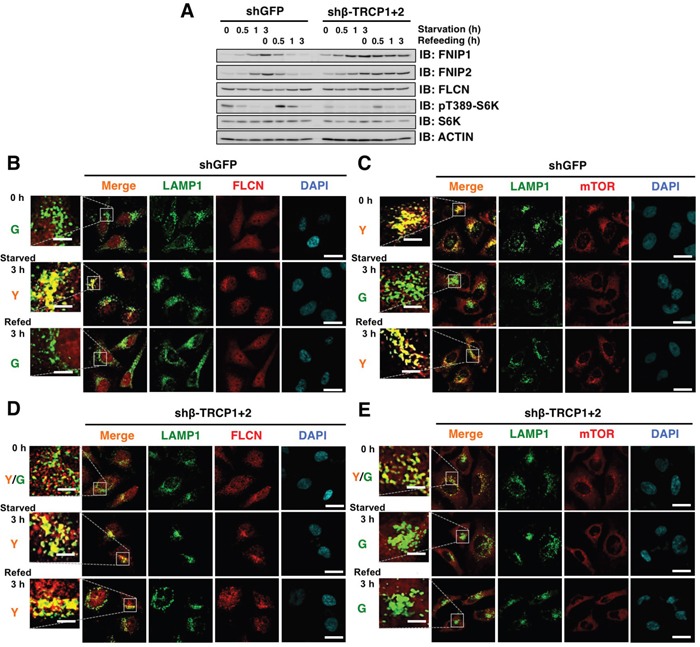
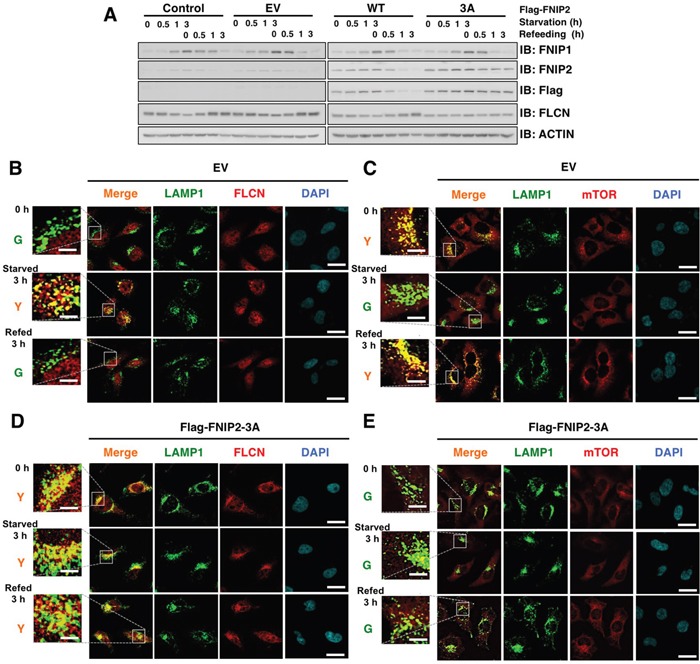
Folliculin-interacting protein 1 and 2 (FNIP1 and FNIP2) play critical roles in preventing renal malignancy through their association with the tumor suppressor FLCN. Mutations in FLCN are associated with Birt-Hogg-Dubé (BHD) syndrome, a rare disorder with increased risk of renal cancer. Recent studies indicated that FNIP1/FNIP2 double knockout mice display enlarged polycystic kidneys and renal carcinoma, which phenocopies FLCN knockout mice, suggesting that these two proteins function together to suppress renal cancer. However, the molecular mechanism functionally linking FNIP1/FNIP2 and FLCN remains largely elusive. Here, we demonstrated that FNIP2 protein is unstable and subjected to proteasome-dependent degradation via β-TRCP and Casein Kinase 1 (CK1)-directed ubiquitination in a nutrition-dependent manner. Degradation of FNIP2 leads to lysosomal dissociation of FLCN and subsequent lysosomal association of mTOR, which in turn promotes the proliferation of renal cancer cells. These results indicate that SCFβ-TRCP negatively regulates the FLCN complex by promoting FNIP degradation and provide molecular insight into the pathogenesis of BHD-associated renal cancer.
卵泡素相互作用蛋白1和2(FNIP1和FNIP2)通过与肿瘤抑制因子FLCN结合,在预防肾恶性肿瘤中发挥关键作用。FLCN的突变与Birt-Hogg-Dubé(BHD)综合征相关,这是一种患肾癌风险增加的罕见疾病。最近的研究表明,FNIP1/FNIP2双敲除小鼠表现出多囊肾增大和肾癌,这与FLCN敲除小鼠的表型相似,表明这两种蛋白共同发挥作用抑制肾癌。然而,在功能上连接FNIP1/FNIP2和FLCN的分子机制仍 largely难以捉摸。在这里,我们证明FNIP2蛋白不稳定,并通过β-TRCP和酪蛋白激酶1(CK1)指导的泛素化以营养依赖的方式进行蛋白酶体依赖性降解。FNIP2的降解导致FLCN的溶酶体解离以及随后mTOR的溶酶体结合,进而促进肾癌细胞的增殖。这些结果表明,SCFβ-TRCP通过促进FNIP降解对FLCN复合物产生负调控,并为BHD相关肾癌的发病机制提供了分子见解。