Department of Horticultural Biotechnology, College of Life Sciences, Kyung Hee University, Yongin, South Korea.
Planning and Coordination Division, National Institute of Agricultural Sciences, Rural Development Administration, Wanju, South Korea.
Mol Plant Pathol. 2020 Jun;21(6):808-819. doi: 10.1111/mpp.12932. Epub 2020 Mar 20.
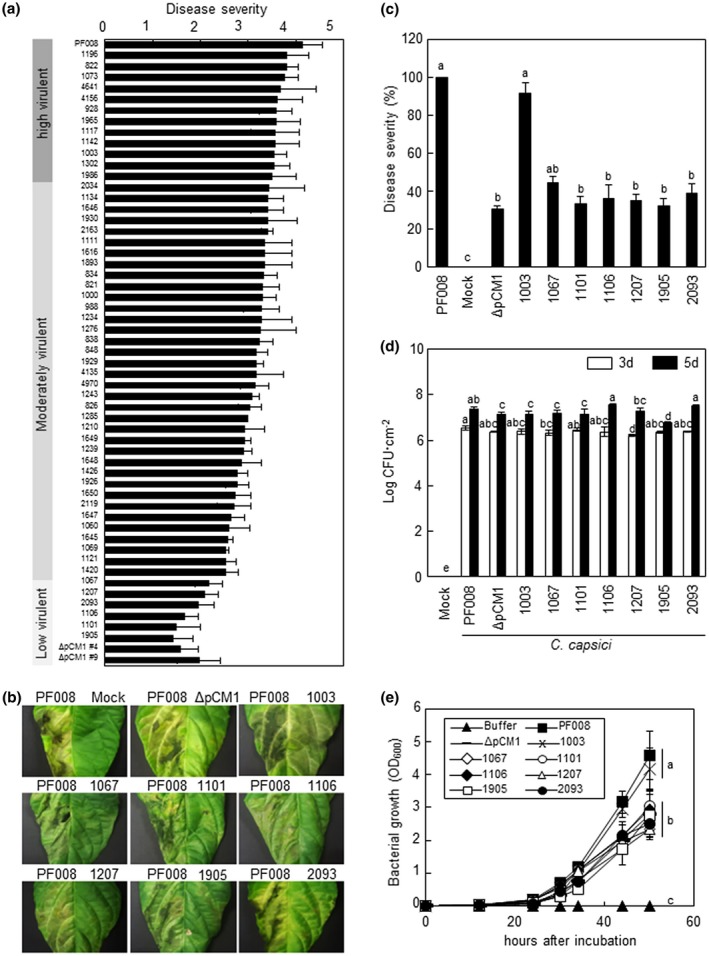
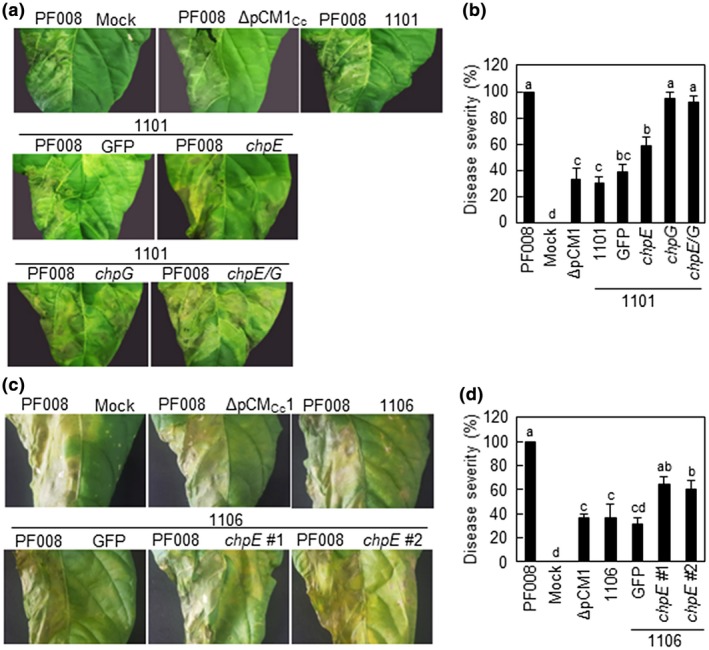
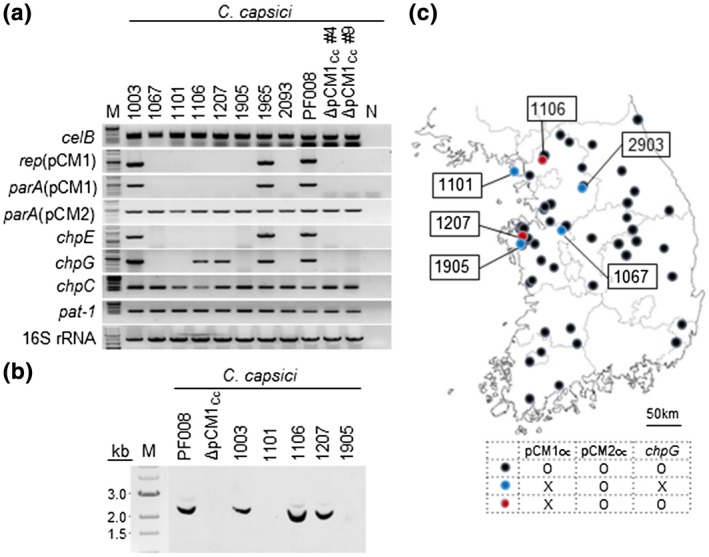
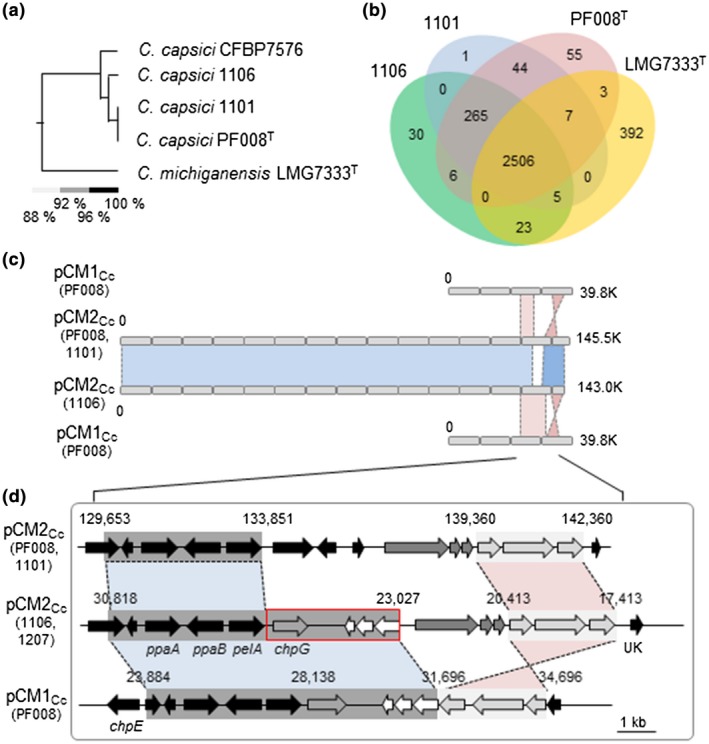
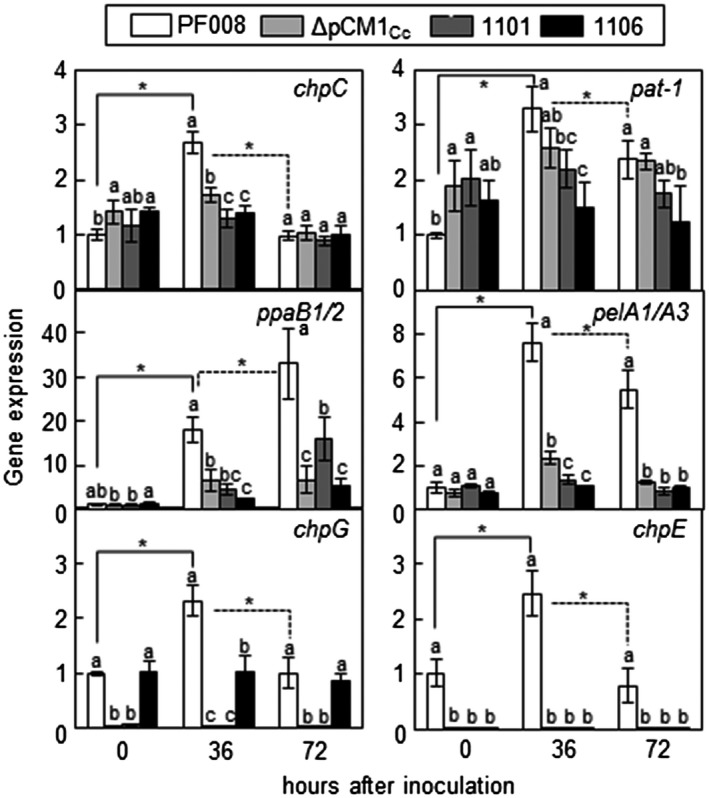
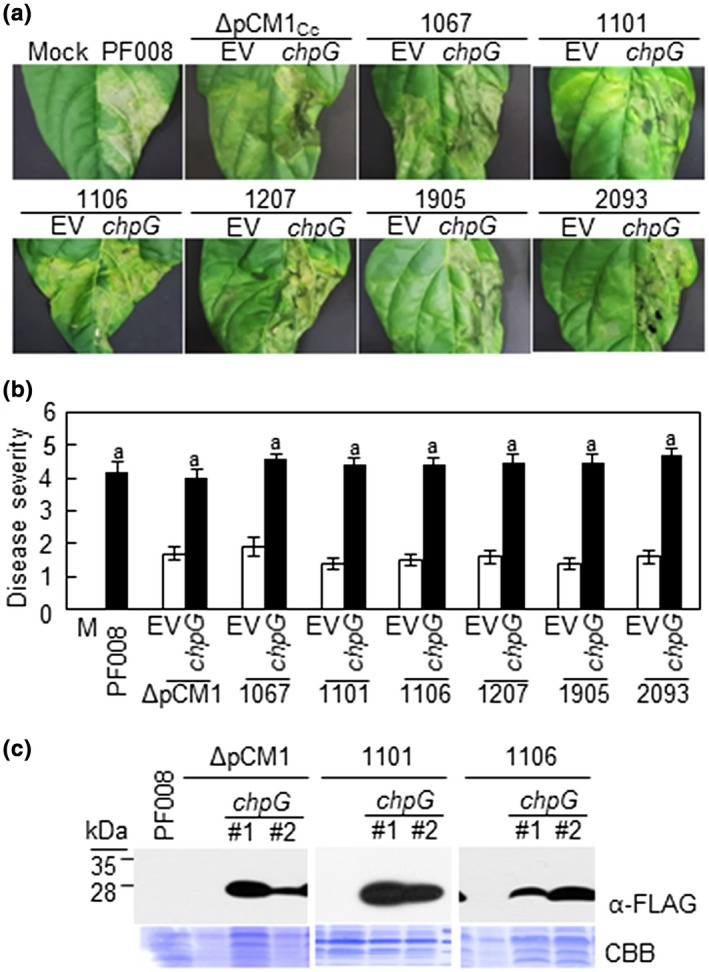
The gram-positive bacterial species Clavibacter capsici causes necrosis and canker in pepper plants. Genomic and functional analyses of C. capsici type strain PF008 have shown that multiple virulence genes exist in its two plasmids. We aimed to identify the key determinants that control the virulence of C. capsici. Pepper leaves inoculated with 54 natural isolates exhibited significant variation in the necrosis. Six isolates showed very low virulence, but their population titres in plants were not significantly different from those of the highly virulent isolates. All six isolates lacked the pCM1 plasmid that carries chpG, which has been shown to be required for virulence and encodes a putative serine protease, but two of them, isolates 1,106 and 1,207, had the intact chpG elsewhere in the genome. Genomic analysis of these two isolates revealed that chpG was located in the pCM2 plasmid, and two highly homologous regions were present next to the chpG locus. The chpG expression in isolate 1,106 was not induced in plants. Introduction of chpG of the PF008 strain into the six low-virulence isolates restored their virulence to that of PF008. Our findings indicate that there are at least three different variant groups of C. capsici and that the plasmid composition and the chpG gene are critical for determining the virulence level. Moreover, our findings also indicate that the virulence level of C. capsici does not directly correlate with bacterial titres in plants.
辣椒细菌性斑点病黄单胞菌引起辣椒植株坏死和溃疡。对 C. capsici PF008 型菌株的基因组和功能分析表明,其两个质粒中存在多个毒力基因。我们旨在鉴定控制 C. capsici 毒力的关键决定因素。用 54 个天然分离株接种辣椒叶片,发现坏死有明显的差异。6 个分离株的毒力非常低,但它们在植物中的群体滴度与高毒力分离株没有显著差异。这 6 个分离株都缺乏携带 chpG 的 pCM1 质粒,chpG 已被证明是毒力所必需的,并编码一种假定的丝氨酸蛋白酶,但其中两个分离株 1,106 和 1,207 在基因组的其他地方有完整的 chpG。对这两个分离株的基因组分析表明,chpG 位于 pCM2 质粒中,chpG 基因座附近存在两个高度同源的区域。分离株 1,106 中的 chpG 表达在植物中没有被诱导。将 PF008 菌株的 chpG 导入 6 个低毒力分离株中,恢复了它们对 PF008 的毒力。我们的研究结果表明,C. capsici 至少有三个不同的变体群,质粒组成和 chpG 基因是决定毒力水平的关键因素。此外,我们的研究结果还表明,C. capsici 的毒力水平与植物中的细菌滴度并不直接相关。