Department of Plant Pathology and Weed Research, Agricultural Research Organization, Volcani Institute, Rishon LeZion, Israel.
Mol Plant Pathol. 2022 Jul;23(7):933-946. doi: 10.1111/mpp.13215. Epub 2022 Apr 19.
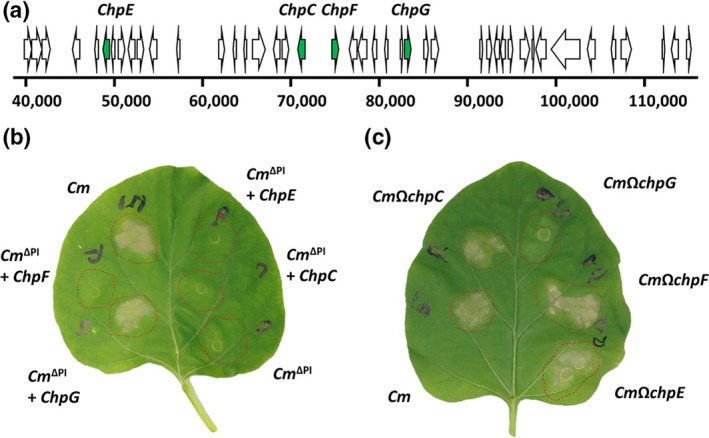
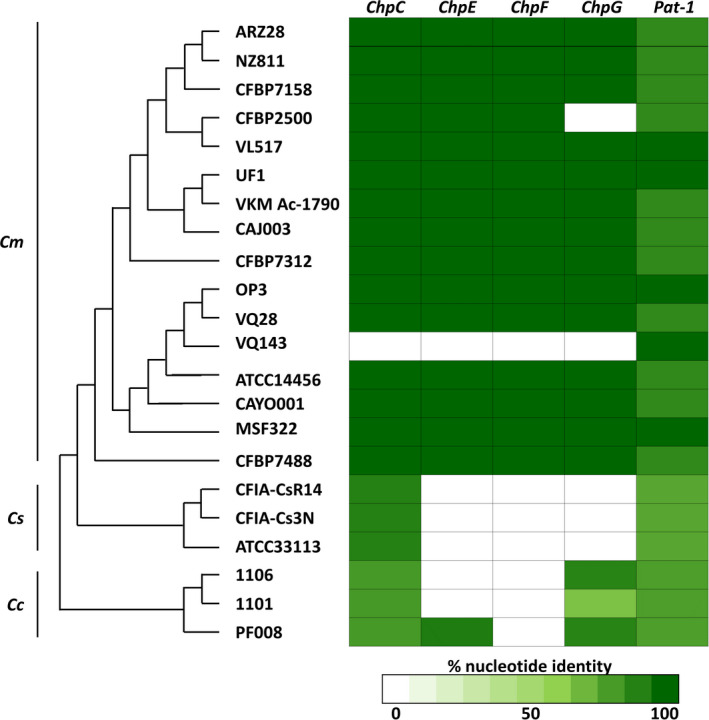
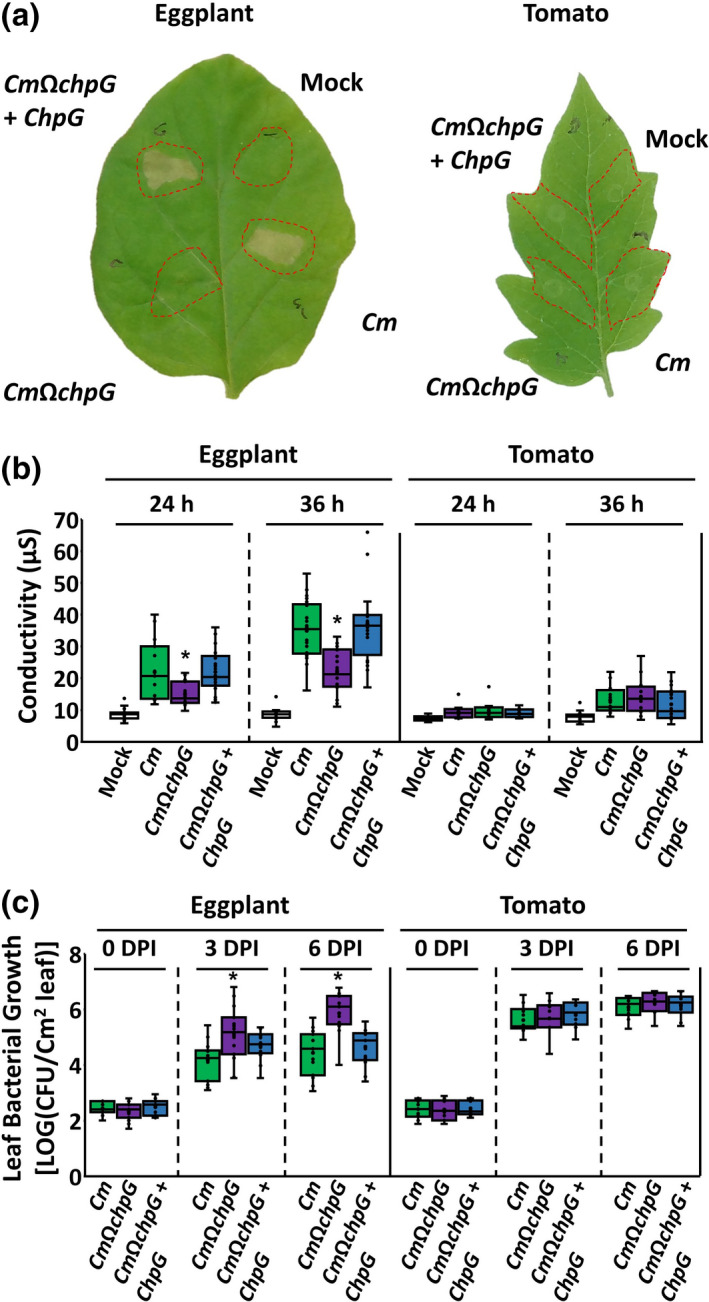
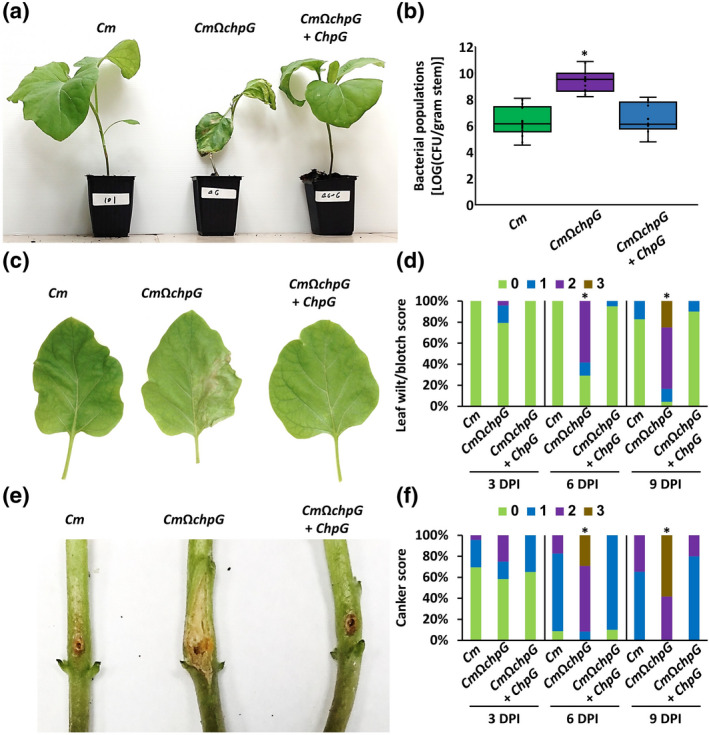
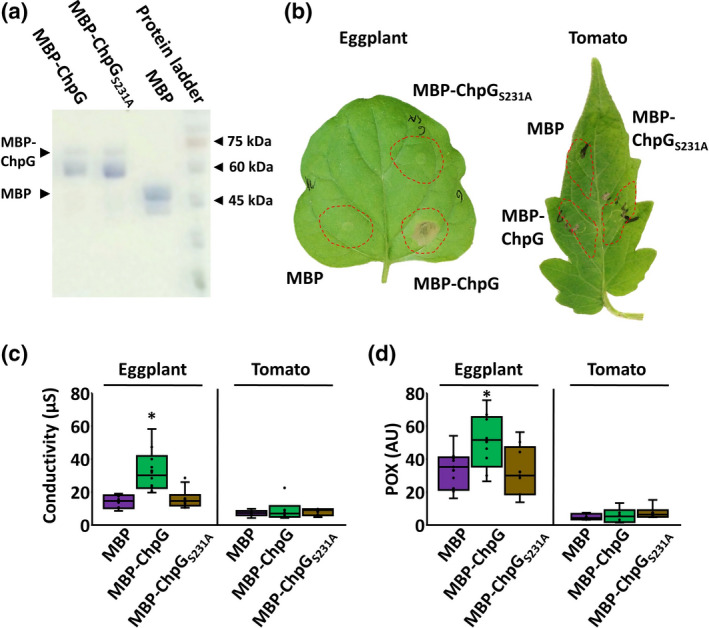
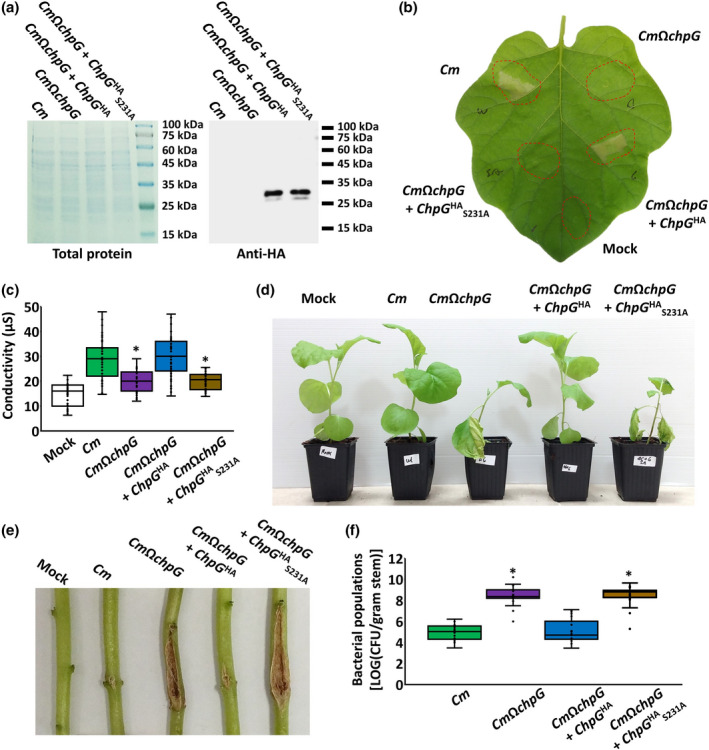
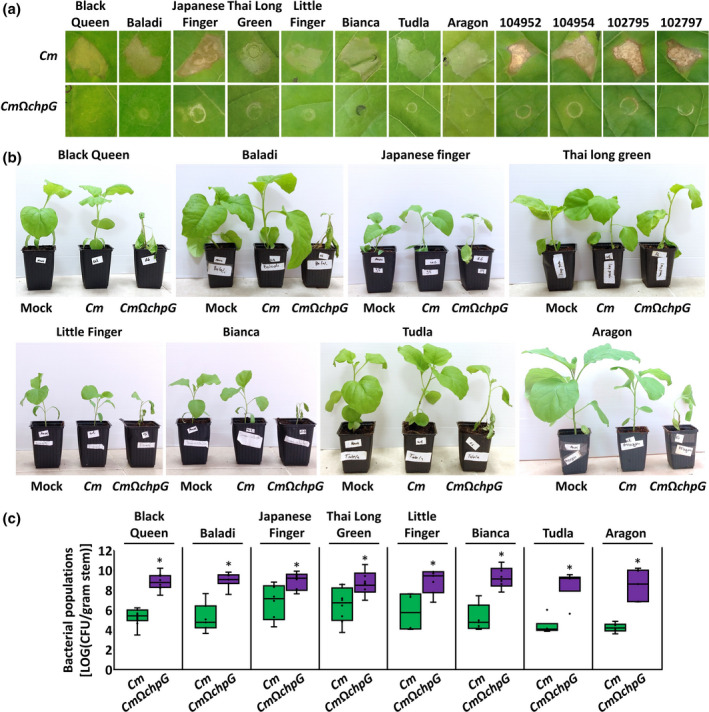
Bacterial wilt and canker caused by Clavibacter michiganensis (Cm) inflict considerable damage in tomato-growing regions around the world. Cm has a narrow host range and can cause disease in tomato but not in many eggplant varieties. The pathogenicity of Cm is dependent on secreted serine proteases, encoded by the chp/tomA pathogenicity island (PI), and the pCM2 plasmid. Screening combinations of PI deletion mutants and plasmid-cured strains found that Cm-mediated hypersensitive response (HR) in the Cm-resistant eggplant variety Black Queen is dependent on the chp/tomA PI. Singular reintroduction of PI-encoded serine proteases into Cm identified that the HR is elicited by the protease ChpG. Eggplant leaves infiltrated with a chpG marker exchange mutant (CmΩchpG) did not display an HR, and infiltration of purified ChpG protein elicited immune responses in eggplant but not in Cm-susceptible tomato. Virulence assays found that while wild-type Cm and the CmΩchpG complemented strain were nonpathogenic on eggplant, CmΩchpG caused wilt and canker symptoms. Additionally, bacterial populations in CmΩchpG-inoculated eggplant stem tissues were c.1000-fold higher than wild-type and CmΩchpG-complemented Cm strains. Pathogenicity tests conducted in multiple Cm-resistance eggplant varieties demonstrated that immunity to Cm is dependent on ChpG in all tested varieties, indicating that ChpG-recognition is conserved in eggplant. ChpG-mediated avirulence interactions were disabled by alanine substitution of serine231 of the serine protease catalytic triad, suggesting that protease activity is required for immune recognition of ChpG. Our study identified ChpG as a novel avirulence protein that is recognized in resistant eggplant varieties and restricts the host range of Cm.
由密执安棒杆菌(Clavibacter michiganensis,Cm)引起的细菌性萎蔫病和溃疡病在世界各地的番茄种植区造成了相当大的损害。Cm 宿主范围狭窄,可引起番茄发病,但茄子品种不发病。Cm 的致病性依赖于由 chp/tomA 致病性岛(PI)和 pCM2 质粒编码的分泌丝氨酸蛋白酶。筛选 PI 缺失突变体和质粒消除菌株的组合发现,Cm 介导的茄子品种“黑皇后”中的过敏性坏死反应(HR)依赖于 chp/tomA PI。PI 编码的丝氨酸蛋白酶单独重新导入 Cm 中,鉴定出 HR 是由蛋白酶 ChpG 引发的。用 chpG 标记交换突变体(CmΩchpG)浸润茄子叶片不会显示 HR,而纯化的 ChpG 蛋白浸润可在茄子中引发免疫反应,但不能在 Cm 敏感的番茄中引发免疫反应。毒力测定发现,野生型 Cm 和 CmΩchpG 互补菌株在茄子上是非致病性的,而 CmΩchpG 导致萎蔫和溃疡症状。此外,在 CmΩchpG 接种的茄子茎组织中的细菌种群比野生型和 CmΩchpG 互补的 Cm 菌株高 c.1000 倍。在多个 Cm 抗性茄子品种中进行的致病性测试表明,所有测试品种对 Cm 的免疫依赖于 ChpG,表明 ChpG 的识别在茄子中是保守的。丝氨酸蛋白酶催化三联体中的丝氨酸 231 的丙氨酸取代使 ChpG 介导的无毒性相互作用失活,表明蛋白酶活性是对 ChpG 进行免疫识别所必需的。我们的研究鉴定出 ChpG 是一种新的无毒蛋白,它在抗性茄子品种中被识别,并限制了 Cm 的宿主范围。