Department of Agricultural Science, University of Naples Federico II, Via Università, Portici, Naples, Italy.
Department of Pharmacy, University of Naples Federico II, Via D. Montesano, Naples, Italy.
Mar Drugs. 2020 Mar 18;18(3):169. doi: 10.3390/md18030169.
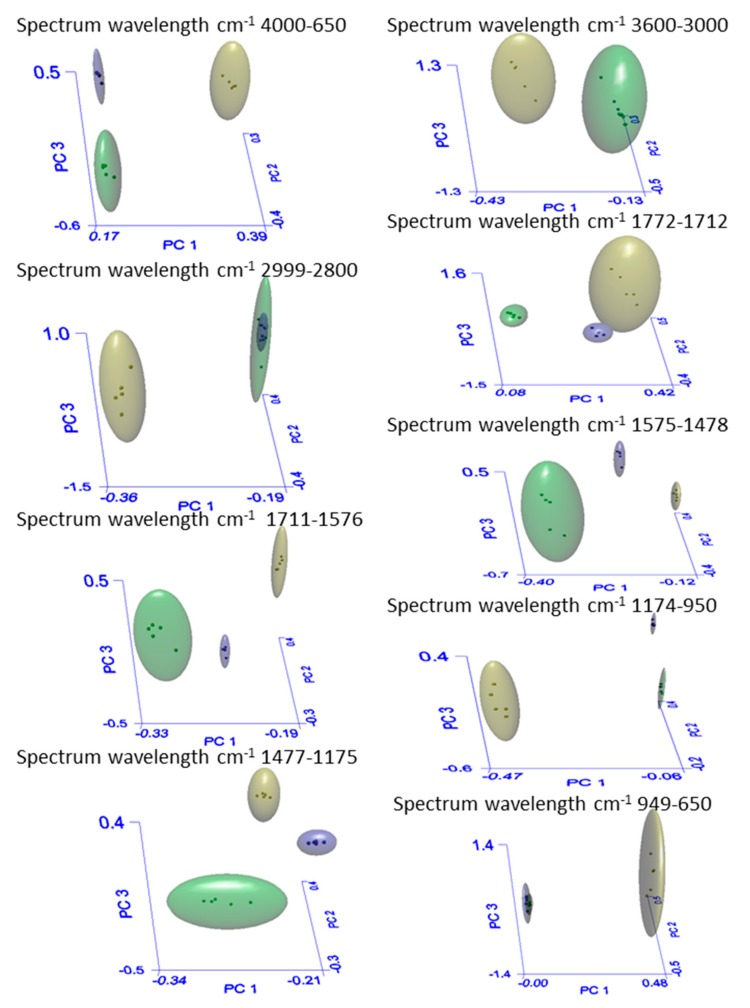
Algae have multiple similarities with fungi, with both belonging to the Thallophyt, a polyphyletic group of non-mobile organisms grouped together on the basis of similar characteristics, but not sharing a common ancestor. The main difference between algae and fungi is noted in their metabolism. In fact, although algae have chlorophyll-bearing thalloids and are autotrophic organisms, fungi lack chlorophyll and are heterotrophic, not able to synthesize their own nutrients. However, our studies have shown that the extremophilic microalga (GS) can also grow very well in heterotrophic conditions like fungi. This study was carried out using several approaches such as scanning electron microscope (SEM), gas chromatography/mass spectrometry (GC/MS), and infrared spectrophotometry (ATR-FTIR). Results showed that the GS, strain ACUF 064, cultured in autotrophic (AGS) and heterotrophic (HGS) conditions, produced different biomolecules. In particular, when grown in HGS, the algae (i) was 30% larger, with an increase in carbon mass that was 20% greater than AGS; (ii) produced higher quantities of stearic acid, oleic acid, monounsaturated fatty acids (MUFAs), and ergosterol; (iii) produced lower quantities of fatty acid methyl esters (FAMEs) such as methyl palmytate, and methyl linoleate, saturated fatty acids (SFAs), and poyliunsaturated fatty acids (PUFAs). ATR-FTIR and principal component analysis (PCA) statistical analysis confirmed that the macromolecular content of HGS was significantly different from AGS. The ability to produce different macromolecules by changing the trophic conditions may represent an interesting strategy to induce microalgae to produce different biomolecules that can find applications in several fields such as food, feed, nutraceutical, or energy production.
藻类与真菌有许多相似之处,都属于原植体生物,这是一组多系非运动生物,基于相似的特征而被归为一类,而不是基于共同的祖先。藻类和真菌的主要区别在于它们的新陈代谢。事实上,虽然藻类具有含有叶绿素的叶状体,是自养生物,但真菌缺乏叶绿素,是异养生物,无法合成自己的营养物质。然而,我们的研究表明,极端嗜热微藻 (GS) 也可以在真菌等异养条件下生长得非常好。这项研究采用了扫描电子显微镜 (SEM)、气相色谱/质谱 (GC/MS) 和红外分光光度法 (ATR-FTIR) 等多种方法进行。结果表明,在自养 (AGS) 和异养 (HGS) 条件下培养的 GS 菌株 ACUF 064 产生了不同的生物分子。特别是,当在 HGS 中生长时,藻类 (i) 增大了 30%,碳质量增加了 20%,比 AGS 更高;(ii) 产生了更高数量的硬脂酸、油酸、单不饱和脂肪酸 (MUFAs) 和麦角固醇;(iii) 产生了更低数量的脂肪酸甲酯 (FAMEs),如棕榈酸甲酯和亚油酸甲酯、饱和脂肪酸 (SFAs) 和多不饱和脂肪酸 (PUFAs)。ATR-FTIR 和主成分分析 (PCA) 统计分析证实,HGS 的大分子含量与 AGS 有显著差异。通过改变营养条件来产生不同大分子的能力可能代表了一种有趣的策略,可以诱导微藻产生不同的生物分子,这些生物分子可以在食品、饲料、营养保健品或能源生产等多个领域得到应用。